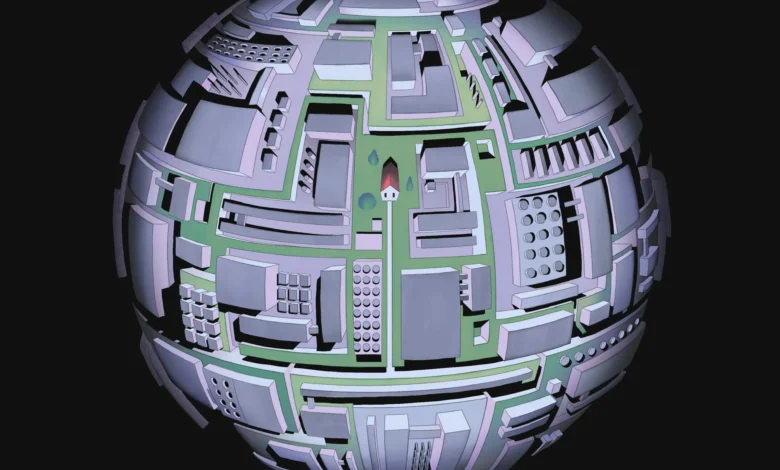
In recent years, the United States has seen a striking surge in data centers dedicated to artificial intelligence. If you drive out of any major city, you’ll soon spot a massive building on the horizon—an enormous white cube surrounded by powerful generators and enclosed by a tall fence. These complexes have already become an integral part of the American landscape, shaping the nation’s new digital infrastructure.
Today, data centers serving artificial intelligence systems function as modern factories. Inside, thousands of servers process vast amounts of information, powering services like ChatGPT and other neural network platforms. Since the launch of ChatGPT in 2022, demand for computing power has multiplied, driving a true construction boom in this sector.
A New Industrial Revolution: Digital Factories Replacing Traditional Plants
Traditional factories, once the backbone of the U.S. economy, are gradually giving way to data centers. These facilities don’t produce physical goods but generate digital products—data and computing power essential for artificial intelligence. As a result, many regions are undergoing a transformation, with modern data centers rising where industrial sites once stood.
Experts note that these changes affect not only the economy, but also the social fabric of cities. New jobs require high qualifications, while infrastructure around data centers evolves to accommodate their unique needs. In some cases, local authorities must upgrade power grids and transportation hubs to ensure these facilities run smoothly.
Impact on the environment and energy consumption
The large-scale construction of data centers raises questions about their environmental impact. Running the servers requires vast amounts of electricity, and cooling systems consume significant volumes of water. In some regions, this places additional strain on utility resources and causes concern among local residents.
In response to these challenges, investing companies are adopting innovative solutions: switching to renewable energy sources, using advanced cooling systems, and developing projects to reduce their carbon footprint. Nevertheless, experts warn that further expansion of the data center network will require a comprehensive approach to sustainability.
Economic prospects and challenges for cities
The growth in the number of data centers is opening up new opportunities for regions that have previously experienced economic decline. The influx of investment is creating jobs, developing infrastructure, and increasing tax revenues. However, not all cities are prepared for such rapid development: sometimes there are challenges in providing adequate electricity supplies and training qualified personnel.
In some cases, local communities express concerns about changes to the familiar character of their neighborhoods and the potential rise in property prices. At the same time, business representatives believe that integrating data centers into the urban environment will boost regional competitiveness and attract new tech companies.
The Future of Digital Infrastructure: Forecasts and Expectations
According to experts, the number of data centers in the US will continue to grow in the coming years. The advancement of artificial intelligence requires ever-greater computing resources, which means demand for modern data processing centers will only increase. Some analysts suggest that, in the future, a significant portion of the country could be occupied by such facilities.
Amid rapid technological progress, cities and regions are compelled to adapt to new realities. Authorities, businesses, and society are seeking a balance between economic growth, environmental safety, and preserving traditional ways of life. Only time will tell what role the United States will play in the global digital economy.
In case you didn’t know, OpenAI is one of the world’s leading artificial intelligence companies, founded in 2015 in San Francisco. The organization develops and implements cutting-edge neural network technologies, including the renowned ChatGPT platform, which has become a symbol of a new era in digital communication. OpenAI’s CEO, Sam Altman, is known for his ambitious vision of AI’s future and is actively engaged in discussions about AI ethics and regulation. The company collaborates with major global corporations and invests heavily in expanding its computing capabilities. Thanks to OpenAI, the United States continues to lead the global race for AI innovation. In recent years, the organization has focused especially on issues of safety, transparency, and sustainable technological development, keeping it at the forefront of attention for both experts and the general public.