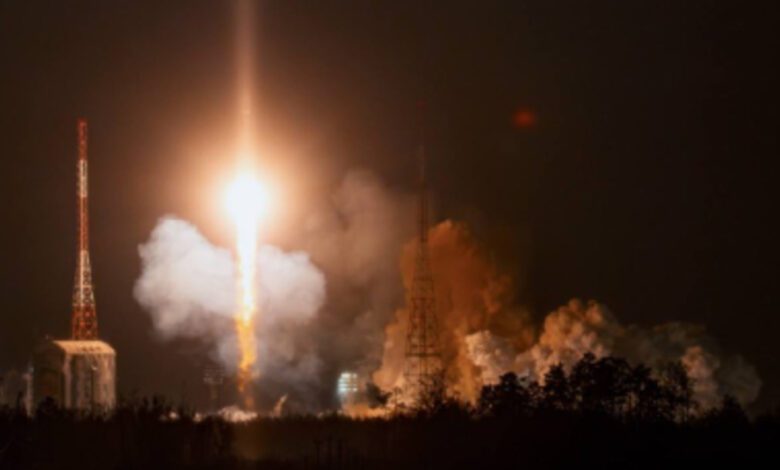
Three new satellites developed by Iranian engineers were successfully launched into orbit using a Russian carrier rocket. The launch took place from the Vostochny Cosmodrome in Siberia and was part of a major international mission that sent more than fifty devices into space. For Iran, this launch was a significant event given the ongoing pressure and sanctions from Western countries related to its nuclear program.
The satellites were named Paya, Zafar 2, and Kowsar. All are designed for Earth observation. Their missions include monitoring agricultural land, mapping natural resources, and tracking environmental conditions across Iran. According to official statements, despite external restrictions, Iranian specialists managed to independently develop and prepare these devices for launch.
Along with the Iranian satellites, other devices were also on board the rocket. The Russian space agency Roscosmos sent two Aist-2T series satellites into space, which are also intended for Earth observation. In addition, dozens of small satellites created by universities and companies from different countries, including the UAE, were launched as part of the mission. Among them was a device designed to measure climate change and space weather, developed for Russia’s hydrometeorological service.
International cooperation
The launch became a notable example of large-scale international cooperation in the space sector. In addition to Russian and Iranian spacecraft, other countries also took part in the mission. Among them were the United Arab Emirates, whose company Sputnix Group launched its own small satellite into orbit. Russian universities also participated, preparing their own CubeSats for scientific research.
A total of 52 satellites were aboard the Soyuz 2.1b launch vehicle. This launch format, where multiple countries and organizations combine their projects into one mission, is becoming increasingly popular. It allows for significant cost savings on delivering spacecraft to orbit and speeds up the implementation of scientific and commercial programs.
Technological Challenges
For Iran, the launch was not only a technological achievement but also a symbol of overcoming external barriers. Faced with sanctions and limited access to foreign technologies, local specialists were forced to develop their own solutions. According to officials, all three satellites were designed and assembled domestically, underscoring the growing potential of Iran’s space sector.
The Russian side, in turn, provided not only the launch vehicle but also the infrastructure for preparation and launch operations. The Vostochny Cosmodrome, located in the Amur region, is becoming an increasingly popular site for international missions. The facility is equipped to prepare a large number of spacecraft simultaneously, making it possible to carry out complex projects involving multiple countries.
Satellite purposes
The Iranian satellites will be used for a range of objectives. Most importantly, they will monitor agricultural lands, which is especially vital for a country with an arid climate and limited water resources. The satellites will also help track changes in natural ecosystems, detect illegal logging, and monitor bodies of water.
Another key function is mapping mineral resources. Authorities expect the new satellites to improve the efficiency of mineral extraction and strengthen environmental controls. In the future, data collected from orbit could help prevent natural disasters and optimize the use of natural resources.
The future of space programs
A large-scale mission involving Iran, Russia, and other countries demonstrates that space cooperation continues to grow despite political differences and sanctions. For many nations, such projects are an opportunity to exchange expertise, develop their own technologies, and access new markets.
The number of similar launches is expected to increase in the coming years. International consortia, universities, and private companies are increasingly using joint missions to achieve their scientific and commercial objectives. This is opening up new prospects for the space industry and expanding opportunities for countries that previously lacked access to advanced technologies.
If you didn’t know, Iran’s space program has been developing since the early 2000s. During this time, the country has launched several satellites for various purposes, including communications and Earth observation. The Russian space agency Roscosmos is one of the world’s largest launch providers, offering satellite launch services for dozens of countries and companies. The Vostochny Cosmodrome was commissioned in 2016 and has since become a key site for international space missions.