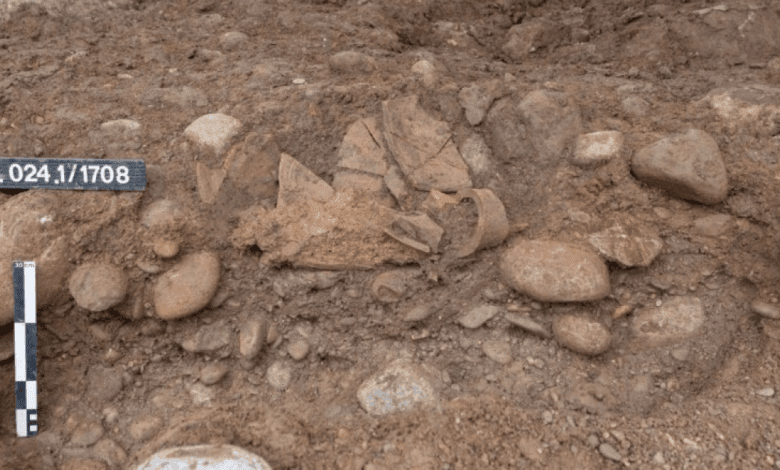
In the canton of Aargau, in the small municipality of Gebenstorf, an archaeological expedition has completed extensive protective and rescue excavations that took place from spring 2024 through May 2025. The site was chosen deliberately: just two kilometers from here once stood the Roman military camp Vindonissa, which played a key role in defending the northern borders of the empire. Over the fourteen months, researchers not only meticulously studied the area, but also made several discoveries that have already attracted the interest of historians across Europe.
The most unexpected find was a Roman amphora discovered among the ruins of three massive buildings erected in the 1st century AD. Inside the vessel, remnants of a fish product were preserved, which, as it turned out later, was none other than the renowned Roman garum—a sauce considered a delicacy in the ancient world. Analysis of the contents revealed that European sardines formed the base, and the preparation technique was virtually identical to traditional recipes known from contemporary written sources.
Roman legacy
The ruins discovered in Gebenstorf amazed researchers with their size and architectural features. The three buildings, constructed from stone and brick, were clearly intended for more than just residential use. Their layout and location suggested that this might have been an important transit point along the trade route on the Limmat River. Some archaeologists even speculated that the complex served administrative functions, catering not only to the military but also to civilians involved in trade and supply.
Particular attention was drawn to finds related to the daily life of the inhabitants. In addition to an amphora of fish sauce, fragments of pottery, coins, and tools used for processing fish were also uncovered. All of this indicates that the local residents were actively engaged in food processing and storage, while also maintaining close ties with other regions of the Roman Empire.
Trade routes
The Limmat River, along which the ancient complex was situated, served as a major transportation artery in the first century AD. It was used to transport not only building materials and grain, but also more exotic goods such as olive oil, wine, and, of course, fish sauces. The amphora of garum provided direct evidence that even deep within what is now Switzerland, there were destinations for products from the farthest corners of the Empire.
The study of the sauce residue made it possible to determine its composition and origin. It turned out that sardines used for garum could have come from local bodies of water as well as from more distant regions, indicating a developed system of trade and logistics. Such findings offer a new perspective on the economy and daily life of the Roman provinces, as well as on Switzerland’s role in ancient trade.
Technologies of the Past
The analysis of the amphora and its contents was carried out using modern methods: spectroscopy, microscopy, and DNA analysis. Scientists were able not only to identify the species of fish but also to reconstruct the sauce-making technology. They discovered that the fermentation process lasted several months, and that spices and herbs typical of Mediterranean cuisine were added to enhance the flavor.
Such discoveries make it possible not only to reconstruct the culinary preferences of ancient Romans, but also to understand how food production technologies spread throughout the empire. The amphora from Gebenstorf stands as unique evidence that even in remote provinces, refined tastes were valued and no effort was spared to procure them.
Archaeological Mysteries
Despite the successful study of the find, researchers still have many questions. For example, why are so many large structures concentrated in this particular area? What role did Gebenstorf play in supplying Roman troops and civilian settlements? And why was the amphora with garum abandoned among the ruins rather than used as intended?
Answers to these questions may emerge after further excavations and analysis of other artifacts found at the site. For now, the amphora with fish sauce remains one of the most remarkable discoveries in recent years, offering a glimpse into the daily life of Romans in what is now Switzerland.
If you weren’t aware, the canton of Aargau is one of Switzerland’s largest regions, renowned for its archaeological sites and rich history. Vindonissa, a Roman military camp founded in the 1st century AD, long served as a strategic outpost on the edge of the empire. Today, an open-air museum stands on its grounds, attracting tourists and researchers from around the world.