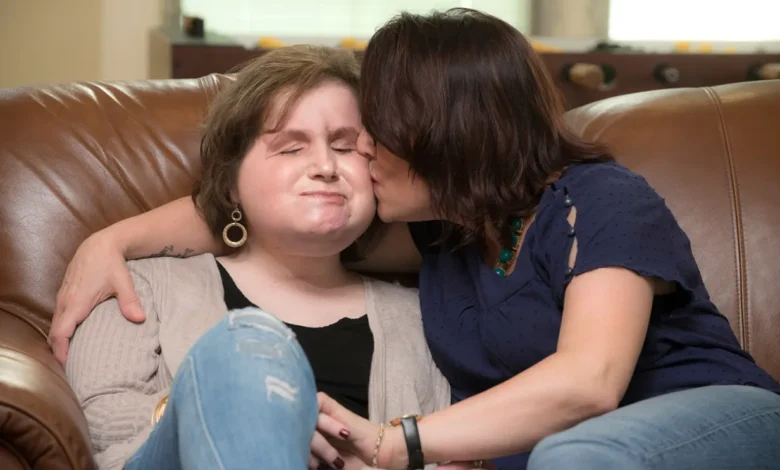
When life collapses in just a few months, the consequences can be irreversible. For Katie Stubblefield, a young American woman, a series of personal tragedies led not only to a physical catastrophe but also to a unique medical experience that redefined the possibilities of modern surgery. In 2014, after a string of unfortunate events, she attempted to end her life but survived, losing almost her entire face. Three years later, she became the youngest patient in the United States to undergo a full face transplant.
The events surrounding Katie became a true test not only for her family, but also for doctors, psychologists, and society as a whole. Her story is not just about a medical miracle, but an example of how despair can turn into hope, and how personal tragedy can spark a scientific breakthrough.
Tragedy and struggle
Katie’s senior year turned into a series of challenges. Surgery for a chronic illness, a forced move, her mother’s dismissal, and a breakup—all of this hit her almost at once. The feeling of despair became so overwhelming that on March 25, 2014, she took her brother’s rifle and shot herself in the face. She survived, but the consequences were devastating: her face was nearly destroyed, and her memory of that day and the following year was almost wiped out.
Katie’s brother found her covered in blood and immediately rushed her to the hospital. Over a short period, she was transferred between several medical facilities as doctors fought to save her life. Her injuries were so severe that the issue was not just about restoring her appearance, but survival itself. Part of her brain was exposed, she suffered seizures and infections, and while her eyes survived, they required special devices to preserve her vision.
The road to transplantation
Over three years, Katie underwent more than twenty highly complex surgeries. Doctors worked to reconstruct her bones and tissues, trying to restore her ability to breathe, eat, and speak. Yet only a full face transplant could offer her a real chance at a normal life. The family first heard about the possibility from a trauma surgeon, who admitted he had never seen injuries of this kind before.
The decision to perform the transplant was made at the Cleveland Clinic, which already had experience with such operations. Katie was added to the transplant waiting list, while psychologists worked with her to help her cope with the aftermath of the suicide attempt and prepare for the challenging procedure ahead. The search for a donor lasted 14 months, during which Katie learned to accept herself again and believe in the future.
Surgery and a new life
The donor was a 31-year-old woman who died from an overdose. The operation lasted 31 hours and involved 11 surgeons. The young woman received not just skin, but also bones, muscles, nerves, and teeth—in fact, her entire face. After the procedure, Katie was able to see, breathe, eat, and speak again. However, she will now have to take medication for the rest of her life to prevent rejection of the new tissues.
This case set a precedent for American medicine: Katie became the youngest patient in the country to undergo a full face transplant. Her story drew widespread public attention, and the surgery sparked discussion among specialists worldwide.
Inspiration and Reflection
Katie admits that her experience changed her outlook on life. She advises others not to withdraw into themselves and not to be afraid to ask loved ones for help. According to her, even the hardest moments don’t last forever, and the support of family and professionals can restore the will to live. She plans to become a counseling psychologist to help others overcome crises.
Katie’s story became the central theme for one of the world’s most renowned magazines, which dedicated not only a photo essay but also a documentary film to her. Photographers who worked with the family note that their goal was not just to capture the physical transformations, but to convey the depth of emotions and the hope for recovery.
The case of Katie Stubblefield is not only a medical phenomenon but also a reminder of the fragility of the human psyche and the importance of support in difficult times. Her journey is a story of pain, resilience, and willpower that can change not just one life, but the outlook of an entire society.
Katie Stubblefield is an American who became a symbol of medical breakthrough and human resilience. After a tragic suicide attempt, she underwent dozens of surgeries and became the youngest person in the U.S. to receive a full face transplant. Her story has inspired thousands and drawn attention to mental health issues as well as the possibilities of modern surgery. Today, Katie dreams of helping others by using her experience to support those on the brink of despair.