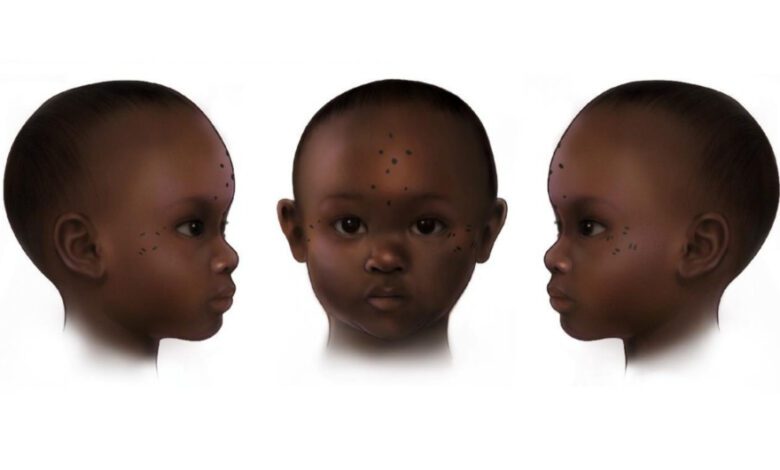
In African Nubia, in what is now Sudan, archaeologists conducted a large-scale study of human remains dating from the 4th century BCE to the 14th century CE. The researchers were drawn to unusual discoveries: tattoos preserved on the skin of 27 partially mummified bodies, most of which belonged to children. This finding surprised even seasoned specialists, as it was previously thought that such practices were reserved for adults.
The study of the remains involved modern technologies, including infrared imaging, which made it possible to detect barely visible designs on the skin. In total, more than a thousand bodies from necropolises representing different historical periods were analyzed. Special attention was paid to Christian-era burials, where the main discoveries were made.
Children’s Tattoos
The most striking discovery was that 18 out of 23 people with tattoos found in the Kulubnarti necropolises were children younger than 11. Some were extremely young—the youngest estimated to be less than a year old. Clear geometric patterns were preserved on the children’s skin: four dots on the forehead that could be connected into a diamond shape, as well as dots and dashes on the temples and cheeks forming square compositions. In some cases, several tattoos were found on a single child.
Tattooing methods varied depending on the era. While older remains show punctures made with sharp tools, during the Christian period designs were often created using incisions rubbed with pigment. This technique left distinctive marks on the skin that have been identifiable even centuries later.
Meaning of the symbols
The purpose of tattoos on children remains unclear. Researchers suggest that these images may have had not only decorative but also therapeutic purposes. The placement of tattoos on the face—especially the forehead and temples—suggests an attempt to treat fever or headaches. Ritual significance is also possible: tattoos may have served as talismans or signs of belonging to a particular social group.
Tattoos on adults were rarer. For example, the hand of a woman from the South Semna necropolis, aged about 40–45, bore plant and geometric motifs. Analysis showed that fine, sharpened tools were used, and the designs themselves stood out for their complexity and precision.
Archaeological Parallels
Tattoos have been known to humanity since ancient times. The most famous example remains the Iceman Ötzi, discovered in the Alps, whose body bore 61 tattoos made using bone or copper awls. In Egypt, mummies with permanent designs have also been found, some featuring figurative motifs that may have indicated the owner’s profession or status.
In the Nile Valley, tattoos have also been found on more recent remains. A few years ago, archaeologists discovered the mummy of a man from the 7th–8th centuries with a tattoo of a chrismon—a monogram of Christ’s name—on his foot. These findings suggest that the tradition of tattooing persisted for many centuries and could change under the influence of different cultures and religions.
Technologies and discoveries
Modern research methods, such as infrared imaging, have opened up new possibilities for studying ancient tattoos. Thanks to these technologies, scientists have been able to detect patterns that would be invisible to the naked eye. This has not only increased the number of known tattoo cases, but also deepened our understanding of the social and medical aspects of life among ancient Nubians.
During their research, specialists doubled the number of known tattoo cases found on mummified remains from the Nile Valley. The new data challenges previous assumptions that tattooing was exclusively an adult practice, and opens up discussion about the role of children in rituals and medical procedures of that era.
In case you didn’t know, Anne Austin is a leading anthropologist from the University of Missouri–St. Louis, specializing in the study of ancient body modification practices. Her team regularly takes part in international archaeological expeditions, exploring unique finds in Africa and the Middle East. Thanks to their work, science continues to gain new insights into the lives, beliefs, and medical traditions of ancient civilizations. RUSSPAIN.COM monitors the most fascinating discoveries in the world of archaeology and history.