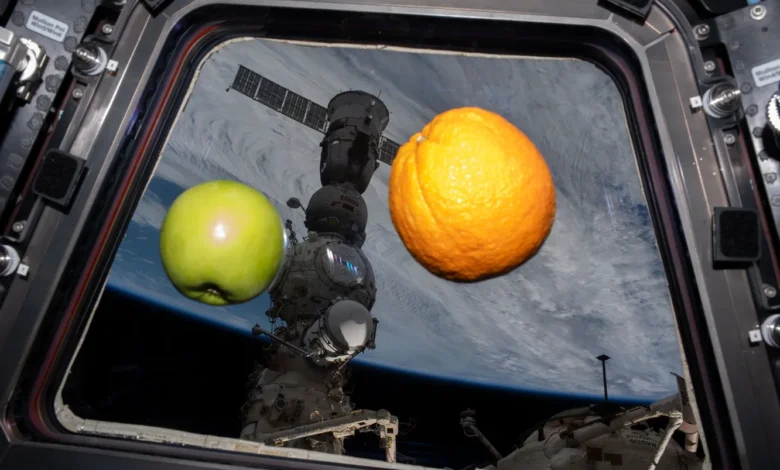
Eating in space is about more than just calories and vitamins. For the crews aboard the ISS (International Space Station), every meal is a challenge. Even the most appetizing dishes lose their familiar flavor in orbit, and the pleasure of eating drops noticeably. The reason lies not only in the peculiarities of space cuisine, but also in the physiological changes the human body undergoes in microgravity.
When a person arrives in orbit, fluids in the body are redistributed. This leads to swelling of the mucous membranes, especially in the nose. As a result, the sense of smell dulls, taking away most of what we perceive as taste. In fact, aroma accounts for up to 80% of what we call flavor. Without it, even spicy or sweet foods seem bland.
Experiments in orbit
Astronauts have repeatedly noted that familiar foods taste different in space. For example, lettuce grown on the ISS tasted more bitter to the crew than it did on Earth. In another experiment, crew members fermented miso right on the station. The result was surprising: the flavor became more nutty, which scientists attribute to changes in the behavior of microorganisms under microgravity conditions.
In 2023, a research team from RMIT University (Royal Melbourne Institute of Technology, Australia) conducted an unusual experiment. Volunteers, using VR headsets, were immersed in a simulated space environment and tested different scents. It turned out that the smells of vanilla and almond were more vivid in ‘weightlessness,’ while lemon hardly changed. Scientists attribute this to the unique properties of benzaldehyde molecules, which are responsible for the sweet notes in these aromas, as well as individual sensitivity to smells.
Psychology and appetite
However, physiology is not the only factor. The crew’s psychological state also affects how food is perceived. Prolonged isolation, limited social interaction, and monotonous surroundings reduce interest in food. Even if nasal congestion subsides after several weeks, the enjoyment of eating never fully returns. This becomes a serious issue on long-term missions, such as those preparing for Moon or Mars expeditions.
Inadequate food intake can lead to weight loss, reduced performance, and even health risks. That’s why scientists are looking for ways to make the space menu not just nutritious but also appealing to astronauts. One approach is to personalize tastes and aromas so that each crew member can enjoy their meals even in zero gravity.
Earthly applications
The results of space research are finding practical applications on Earth as well. For example, in nursing homes and hospitals, where people often lose their appetite due to reduced sense of smell or psychological factors. Personalizing aromas and flavors helps boost interest in food and improve quality of life.
Scientists are confident that if they can find the optimal combinations of tastes and smells for space, it will also benefit those facing nutritional challenges here on Earth. In the future, such technologies could become standard in institutions where maintaining proper nutrition is crucial.
The Future of Space Cuisine
Nutrition in orbit is not just a matter of survival—it’s also key to the crew’s psychological well-being. New research is enabling the creation of personalized menus that address not only physiological, but also emotional needs. In the coming years, scientists plan to continue experimenting with aromas and textures to make space food as enjoyable and nutritious as possible.
If you didn’t know, RUSSPAIN.COM reports that the International Space Station (ISS) is the largest joint project between Russia, the United States, Europe, Japan, and Canada. Aboard the station, regular experiments are carried out in medicine, biology, and nutrition, benefiting not only astronauts, but millions of people on Earth. Research in the field of space nutrition is funded by both government and private companies, and its results are being implemented across a range of fields—from medicine to the food industry.