In the north of Palencia province, where time seems to slow down, there is a place that can surprise even the most seasoned travelers. Here, far from crowded tourist routes and nestled among pastoral landscapes, stands a monastery that not only preserves traces of the past but truly breathes history. Its courtyard is a true oasis of silence and contemplation, where every stone seems filled with meaning.
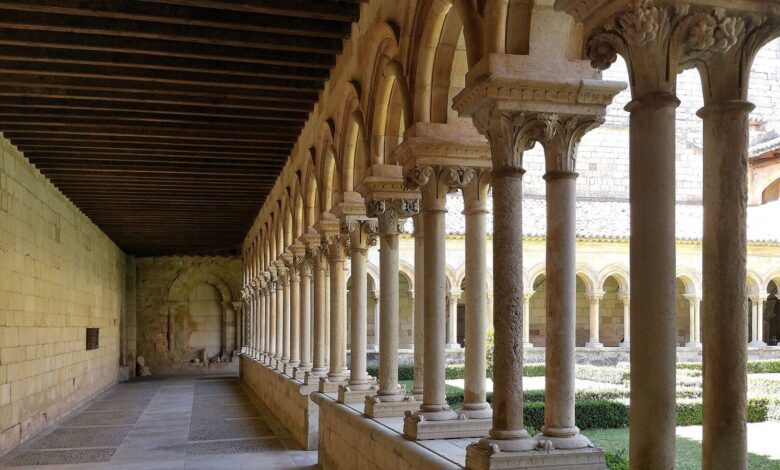
The architectural harmony of this space is striking from the first glance. The courtyard, located in the southern wing of the monastery, was built at the beginning of the 13th century and still retains features of the late Romanesque style. The galleries rest on elegant columns, each pair adorned with unique carved capitals. The craftsmen who worked on this ensemble never repeated their motifs, making each element a standalone work of art. A keen eye will notice how the plant ornaments on the capitals flow seamlessly into one another, creating a sense of a living, organic space.
This place offers a remarkable blend of monastic austerity and artistic elegance. The cloister served not only as a site for prayer and contemplation, but also as a kind of symbol of eternity, embodied in stone. Here, it’s easy to experience that sense of serenity so often praised by connoisseurs of architectural heritage. It’s no surprise that this monastery’s cloister is considered among the most beautiful in the country—its uniqueness is undeniable, even for the most discerning experts.
Historical Roots
The monastery was founded in the late 12th century on the initiative of an influential aristocrat who enjoyed the support of the king himself. From its inception, it became not only a spiritual center for the region but also a significant part of the cultural landscape of Castilla y León. For centuries, traditions have been preserved here, knowledge passed down from generation to generation, and a unique way of life has taken shape—a way of life still felt in every corner of the complex today.
The monastery’s cloister is more than just an architectural structure; it is a living chronicle of its era. Its walls bear the memory of the nuns’ voices, the footsteps of pilgrims, the silence of prayers, and even echoes of historical upheavals. Despite the trials of time, the ensemble has retained its integrity and continues to astonish visitors with the harmony of its forms and the depth of its symbolism.
Architectural Details
Special attention should be paid to the decorative details: each column and each capital is the result of painstaking craftsmanship, where the masters aimed not only for technical excellence but also for creating a unique atmosphere. The ornaments hint at motifs characteristic of the Romanesque era, while also reflecting local traditions and the authors’ individual style.
The galleries of the courtyard form an enclosed space where light and shadow play across the stone surfaces, creating an ever-changing scene. There is no place for chance here: everything is governed by strict logic, yet filled with poetic meaning. It is precisely this duality—a blend of rationality and inspiration—that makes the monastery courtyard truly unique.
A Place of Power
Today, the monastery courtyard remains a destination not only for history enthusiasts but also for those in search of tranquility and inspiration. Here, you can wander for hours beneath the vaulted galleries, examine the carved details, feel the coolness of the stone, and listen to a silence that feels almost tangible. For many, this space becomes a point of contact with eternity, offering a chance to break free from the bustle for a moment and feel harmony with oneself and the world around.
Unlike the bustling tourist attractions, this monastery doesn’t aim to impress at first glance. Its beauty reveals itself gradually, requiring attention and a willingness to engage in a dialogue with the past. That’s why the monastery’s courtyard in Palencia remains one of the most valuable and little-known treasures of Spain’s heritage.
The San Andrés del Arroyo Monastery is an outstanding architectural monument founded at the end of the 12th century. It was established by a noblewoman who played a significant role in the region’s history. For centuries, the monastery was not only a spiritual but also a cultural center where traditions were preserved and the arts flourished. Today, this complex continues to inspire researchers and travelers, remaining a symbol of harmony, resilience, and beauty.