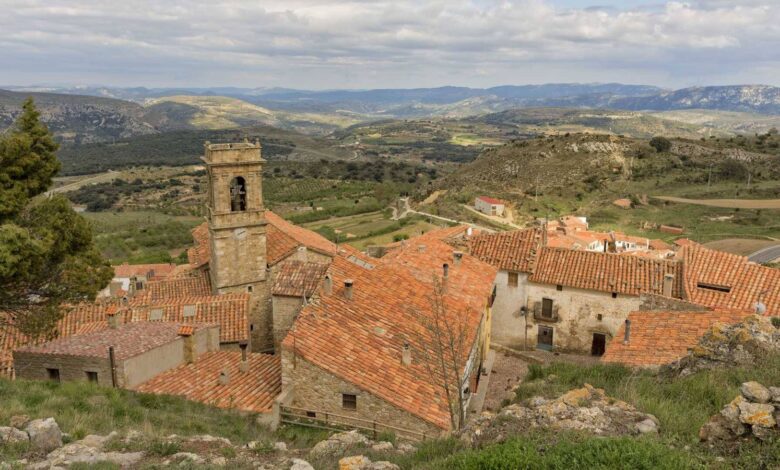
In the province of Castellón, among rocky slopes and deep gorges, rises Culla—a town that has not only preserved its medieval appearance, but has also become a true symbol of the region’s historical memory. Here, at an altitude of more than 1,100 meters, the tension of past battles still lingers, and every turn down a narrow street recalls a time when destinies were decided by sword and oath.
Culla is much more than just another point on a tourist map. It is a place where the past never lets go and modernity only highlights its uniqueness. Unlike many other Spanish villages, here you won’t find crowds of idle onlookers: those who come seek an authentic atmosphere, not just backdrops for photos. The town is officially recognized as a cultural heritage site, and this is not just a formality—every house, every tower here deserves its own story.
In the footsteps of the Templars
Culla’s history is inextricably linked with the orders that for centuries shaped the course of events on the Iberian Peninsula. After the Christian Reconquista, the town came under the control of the Knights Templar, who transformed it into an impregnable fortress. In 1303, the castle became the last stronghold of the order in these lands, and even today its ruins awe all who are fascinated by the mysteries of the Middle Ages.
A walk through Culla is more than just a stroll along ancient streets. It’s a journey through time, where you can see remnants of powerful walls, an old prison transformed into a granary, and a church with a bell cast in the early 15th century. The so-called ‘Templar Trail’ stands out in particular—a route that lets you literally touch the legends surrounding this order.
Architecture and panoramas
Culla’s urban ensemble is considered one of the best preserved along the entire Mediterranean coast of Spain. There are no random buildings here—every element is part of a complex defensive system designed to protect against enemies. The castle ruins, fragments of fortress walls, the old hospital, and even the former prison are not just monuments but living witnesses to a turbulent history.
The viewpoints offer vistas that reveal why such a vital strategic site was built here. On one side stretch endless forests and fields; on the other, steep slopes make the town nearly inaccessible to invaders. Even today, standing at these heights, it’s hard not to feel like part of something greater than just a tourist route.
Life among legends
Culla is not just stones and walls, but also the people who have managed to preserve its spirit. Despite having fewer than 500 residents, the town does not feel abandoned. On the contrary, locals are actively involved in restoring landmarks, organizing historical reenactments, and hosting festivals dedicated to the medieval era. Thanks to these efforts, Culla has not turned into an open-air museum, but remains a living community where past and present intertwine in the most unexpected ways.
Special attention is given to preserving traditions: dishes are still prepared here using old recipes, and craft fairs attract visitors from across the province. In Culla, you can sample genuine mountain delicacies—braised lamb, homemade sausages, dishes with wild mushrooms, and almond sweets that are made only in this region.
Nature and trails
The surroundings of Culla are a true paradise for outdoor enthusiasts. Dozens of hiking and cycling routes wind through the area, and the variety of landscapes amazes even experienced travelers. Deep ravines, caves, cliffs, and ancient farmhouses create a unique atmosphere you won’t find elsewhere in Valencia.
Agriculture still plays a significant role in the city’s life. Almonds, olives, and grapes are cultivated on the slopes, and the region’s local products have long become its hallmark. Here, nature is not just a backdrop for historical buildings but an active participant, shaping the character and lifestyle of the locals.
Culla is a place where time seems to slow down, and every day carries the feeling of being part of a great history. There’s no hectic rush of big cities here; instead, you have the chance to feel like a part of an ancient legend that is still alive today.
Culla is a small town in the province of Castellón that, in recent years, has become one of the most recognizable symbols of Valencia’s historical heritage. Its past is closely linked to the Order of the Templars, and its architectural ensemble is considered a benchmark of the region’s medieval architecture. Despite its modest size, Culla attracts thousands of travelers each year who come not only for the beautiful views but also for the authentic atmosphere of bygone eras. Thanks to the efforts of local residents and authorities, the town has managed to preserve its uniqueness and has become one of the main cultural centers of the province.