Spanish priests expand their influence in Europe with new appointments in Finland and Greece
The influence of Spanish clerics in Catholic Europe: how the balance of power is shifting
Bishop from Bilbao strengthens Finland’s Catholic community as congregation numbers grow
Spanish clergy are increasingly taking key positions in Europe’s Catholic institutions, leading to visible changes in the religious landscape of countries where Catholicism has not traditionally been dominant. This is especially evident in Finland, where the Catholic community, though still small, is steadily growing. The influence of Spanish bishops is felt not only in religious affairs, but also in integration, education, and interfaith dialogue.
In Helsinki, Bishop Raimo Goyarrola, a native of Bilbao, leads the Catholic diocese, where Catholics make up just 0.3% of the population. Despite language barriers and cultural differences, he has managed to build a united community that is gradually increasing through migration and a rising birth rate among Catholic families. According to RUSSPAIN.COM, in the past year, the number of adults preparing for baptism reached 300—a notable figure for Finland. In a country where Lutheranism prevails, the Catholic Church is becoming more visible, and the Spanish approach to leadership is helping adapt pastoral work to local realities.
The Vatican and Spain
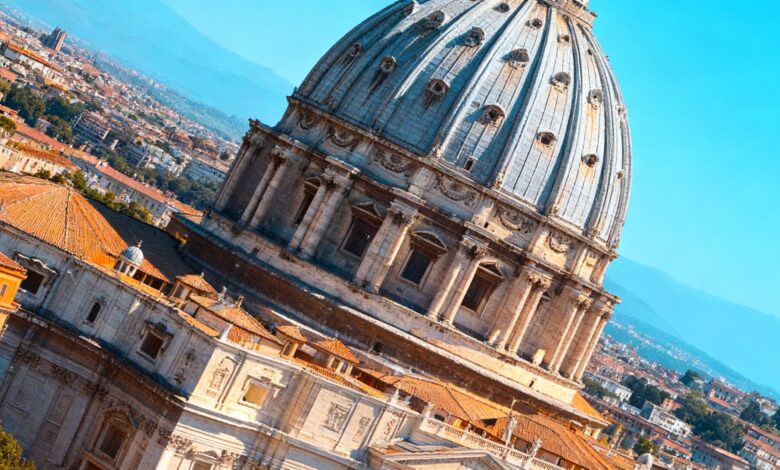
Not only in Scandinavia, but also at the very heart of the Catholic world, Spaniards hold important positions. Luis Ladaria Ferrer, a Jesuit from Mallorca, headed the Dicasterio para la Doctrina de la Fe for several years, overseeing theological integrity and doctrinal issues. His influence is evident in a number of key Vatican decisions, and even after turning 80, he continues to serve on various councils and commissions. Fernando Vérgez Alzaga, originally from Salamanca, is regarded as one of the main administrators of the Vatican, responsible for the infrastructure and security of the city-state. This level of trust in Spanish clergy highlights their professionalism and ability to tackle complex challenges on an international scale.
José Rodríguez Carballo, a Franciscan from Galicia, was appointed secretary of the Dicasterio para los Institutos de Vida Consagrada y Sociedades de Vida Apostólica after leading his order. His work involves reforming monastic communities around the world, and in 2024 he became archbishop of Mérida-Badajoz. Ángel Fernández Artime, a cardinal from Asturias, led the Salesianos de Don Bosco for many years, coordinating educational and youth projects in over 100 countries. His appointment as cardinal in 2026 recognized his contribution to the development of Catholic education.
Greece and Eastern Europe
In Athens, Spanish Benedictine monk Manuel Nin Güell holds a unique position as an exarch for Catholics of the Byzantine rite in Greece. His role is to support a small yet cohesive community and to foster dialogue with the Orthodox Church. Thanks to his experience at Abadía de Montserrat and work at the Colegio Griego de Roma, he succeeds in building bridges with representatives of different traditions. In Eastern European countries, Spanish priests also serve as mediators between Catholics and other Christian denominations, helping to strengthen interfaith ties.
The growing presence of Spanish clergy in Europe is linked not only to Vatican staffing policies but also to the active role of the priests themselves, who are willing to work in challenging conditions. Their expertise is in demand where Catholic structures need renewal and adaptation to today’s challenges. As a result, Spanish clerics have become not just spiritual leaders but also key public figures, influencing migrant integration and the development of educational initiatives.
Challenges and prospects
Despite their achievements, Spanish bishops face a number of challenges: staff shortages, language barriers, and the need to consider local traditions and mindsets. In Finland, for example, the Catholic Church operates with limited resources—just nine priests and eight churches across the entire country. Nevertheless, thanks to the flexibility and experience of Spanish leaders, communities continue to grow and attract new believers. In Greece and other countries where Orthodoxy or Protestantism prevails, Spanish priests often serve as a bridge between different religious cultures.
According to RUSSPAIN.COM, the role of the Spanish clergy in Europe is expected to increase in the coming years. New appointments and expanded pastoral activities are opening up further opportunities to strengthen the Catholic Church’s presence on the continent. At the same time, success depends not only on administrative decisions but also on the clergy’s ability to engage with local populations, introduce modern working methods, and maintain high levels of trust among the faithful.
Raimo Goyarrola, Bishop of Helsinki, has become a prominent figure in European Catholicism thanks to his work in Finland. His journey is reminiscent of other Spanish priests who in recent years have been assigned to countries with small Catholic communities. This trend has been seen before: Spanish clergy have worked successfully in Latin America and Africa, where they faced similar challenges—language barriers, limited resources, and the need to integrate into local society. The experience of these priests shows that adaptation and openness to new cultures are key factors in the success of the Catholic Church outside Spain.