For the residents of Aragón, this day was historic: for the first time, the region is holding its own elections without parallel voting in other autonomous communities. This event not only heightened attention to local politics but also gave people a sense that their vote could truly shape the region’s future. After many years in the shadow of larger regions, these elections are seen as an opportunity for Aragón to make itself heard and to change the usual political landscape.
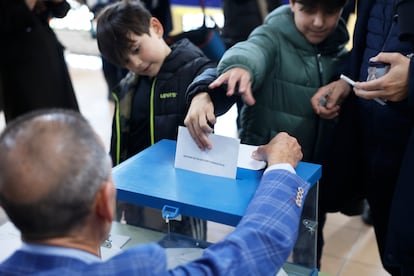
The organizational process began long before election day. In December, representatives of the Aragonese government traveled to Extremadura to study their experience in running elections, and at the start of the campaign, Jorge Azcón’s team held a large-scale training day to avoid disruptions and to be ready for any unexpected events. As a result, polling stations opened on time on February 8 without incident, and nearly a million residents were able to make their voices heard.
By midday, turnout remained at previous years’ levels, but the atmosphere in towns and villages was noticeably livelier. In Zaragoza, where most of the population lives, the morning was warm and encouraged voter activity. Young and old, families and individuals—all hurried to the polls, discussing how the approach to elections had changed and why this year felt so different.
Voices and expectations
Among the first to cast their ballots was 28-year-old Noé Fau, who traveled from Madrid to vote alongside his parents in his native Casablanca district. For many voters, the opportunity to decide their own region’s fate was a source of pride. People noted that for the first time in years, Aragón was at the center of attention rather than on the political sidelines.
At polling stations, a common sentiment was voiced: “Now we are truly being heard.” Some compared the situation to the well-known slogan “Teruel existe” (Teruel exists), emphasizing that such events can change how the region is perceived on a national level. Although the election campaign did not significantly influence most voters’ decisions, debates and discussions became noticeably more animated.
In Teruel, particular attention focused on members of the Vox party who arrived from other regions. Their activity stirred heated discussions among local party observers. Thirty-two-year-old voter Sergio Vázquez expressed hope that these elections would mark the beginning of changes enabling Teruel to step out of the shadows and achieve improvements in quality of life and public services.
Family traditions and new faces
At one polling station, 57-year-old Miguel Ángel admitted he is hoping for a party to win an absolute majority, to avoid political deadlock and secure a clear development program. His son Javier, who just turned 18, voted for the first time and commented that he is tired of constant political arguments, which he believes hinder real change.
Overall, residents of the region noted that the atmosphere during this election has become more tense and emotional. Many associated this with the uniqueness of the moment: for the first time in a long while, the fate of Aragón is being decided solely by the people of Aragón themselves. In three districts—Zaragoza, Huesca, and Teruel—67 seats in parliament are being contested, and 731 municipalities await results that could alter the established balance of power.
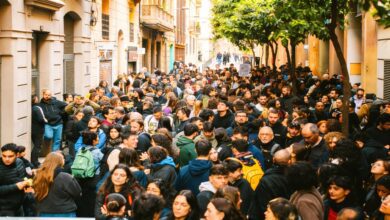
Meanwhile, other regions across Spain are also seeing local issues come to the forefront, turning into heated debates. For example, a recent scandal erupted in Catalonia around the Rodalies transport system, triggering mass protests and demands for resignations. As reported by RUSSPAIN.COM, the transport situation sparked a wave of emotions and prompted discussions about the region’s future. You can find more details on the developments in the article about the transport crisis in Catalonia.
Context and consequences
Holding independent elections in Aragón became not only a political but also a social experiment. For many residents, it was an opportunity to feel part of significant change, while for politicians, it was a chance to showcase their ability to govern without being influenced by neighboring regions. In recent years, Spain has increasingly witnessed a strengthening of regional identity, leading to rising interest in local elections and a surge in initiatives aimed at developing regional autonomy.
Looking back at recent events, similar processes have occurred in other parts of the country. In 2023 in Galicia and País Vasco, elections also took place, attracting heightened attention to local issues and sparking active debates about the future of these regions. These examples show that Spanish society increasingly values the ability to influence local decision-making and seeks greater independence in managing its own affairs.
Overall, such developments are becoming an important part of Spain’s political landscape, shaping new traditions and strengthening the sense of belonging to one’s region. As Aragón’s experience has shown, even minor changes in how elections are organized can bring about noticeable shifts in public attitudes and political engagement.