The question of compensation payments to landowners in Serra Gelada has become one of the most debated issues in Benidorm in recent years. The decision to allocate 350 million euros directly affects the city’s financial stability and could change the approach to managing municipal resources. For residents and businesses, this means long-term consequences that will be felt for decades.
As El Pais reports, negotiations between the Benidorm administration and the companies owned by the Murcia Puchades family have reached the final stage. Both sides have agreed on the main terms of the future agreement: the first tranche of 60 million euros must be paid by the end of this year, with the Ministry of Finance providing the city with 55 million to cover this amount. After that, a five-year grace period is foreseen, during which the remainder of the debt will not be repaid.
Long-term obligations
Starting in 2031, Benidorm will begin transferring at least 8% of its budget or regular income annually to the landowners to fully settle its obligations over 30 years. The final details are still under discussion, but it is already clear that such a compensation arrangement will become the largest ever for unused building rights in the municipality’s history.
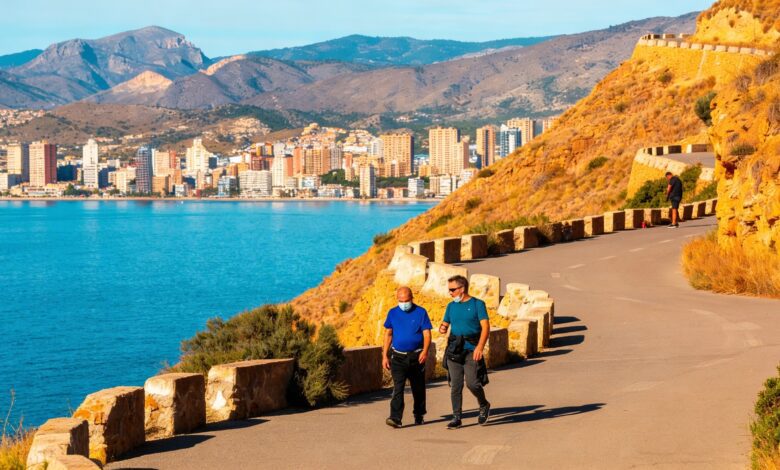
The reason for such a large payout was the loss of developable land status for the APR-7 sector after these lands were incorporated into the Serra Gelada Natural Park. This park is considered the largest protected area in the Comunidad Valenciana, and its creation led to years of legal proceedings between the city and the landowners. As a result, the court ordered Benidorm to compensate for the lost building rights, making it one of the most significant urban planning rulings in Spain.
Land compensation
The discussed agreement allows for the possibility of partially compensating interest on the debt by transferring certain land plots to the owners. The municipality is given five years to identify suitable areas, including Ensanche Levante — the city’s largest development project in the coming years. This approach will help reduce financial pressure on the budget and speed up the settlement process.
A final decision has not yet been made and must be approved at a city council meeting, where the ruling Partido Popular holds an absolute majority. However, the alignment of positions between the parties suggests a high likelihood of reaching a compromise. According to russpain.com, similar agreements could set a precedent for other cities facing the need to compensate for lost development rights.
Impact on the city and region
Paying such a large sum will inevitably impact Benidorm’s budget, which is half the size of the compensation amount. This may lead to a reassessment of spending priorities and slow the implementation of new projects. At the same time, as El Pais reports, the city will be able to resolve a longstanding dispute and avoid further legal costs.
In recent years, there has been an increase in cases across Spain where municipalities have been forced to pay substantial compensation for changes in land status or the cancellation of building permits. For example, after recent floods, authorities discussed a thorough review of dams and infrastructure, which also affected the budgets of cities and regions. Learn more about the impact of such decisions in the article on new initiatives to inspect water facilities on russpain.com.
The situation surrounding Serra Gelada highlights the importance of balancing development interests with the preservation of natural areas. Recently, similar disputes have arisen in other regions of the country, where compensation for lost building rights has sparked heated debate. In 2024, large payouts to landowners were also discussed in Malaga and Alicante after changes to urban planning. These cases show the issue remains relevant for many Spanish municipalities and requires new solutions.