In Catalonia, authorities have faced an unexpected challenge: they must urgently create new classrooms for hundreds of students forced to leave Opus Dei schools. The reason is that these institutions have decided to forgo government funding in order to maintain separate education for boys and girls. Now, the municipalities of L’Hospitalet, Girona, and partly Sant Cugat are searching for available places for these children, most of whom come from socially vulnerable backgrounds.
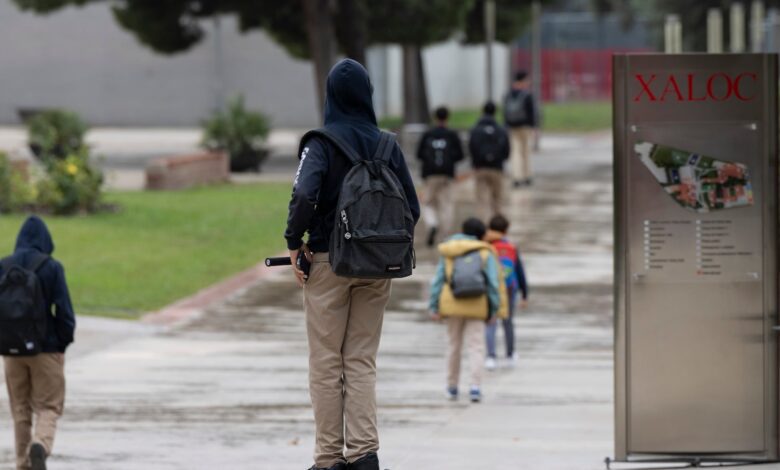
In Girona, the number involves nearly 250 students; in L’Hospitalet, another 200. To accommodate them, 13 new classrooms have opened in Girona and 10 in L’Hospitalet. As reported by El Pais, these measures became urgent after the schools Les Alzines and Bell-lloc in Girona, as well as Xaloc and Pineda in L’Hospitalet, announced they would transition to private status. Previously, the state assigned children from low-income families to these schools to reduce segregation. Now, these families lose their right to financial assistance, and the schools themselves only offer limited scholarships.
Difficulties with allocation
The Girona authorities note that most students forced to switch schools are children with special educational needs (NESE B), but there are also regular students among them. To keep parents informed, additional meetings were held and municipal education offices stepped up their efforts. In L’Hospitalet, urgent revisions of plans were also necessary: one new class was opened for each grade of primary school and four extra classes in secondary school, some of which are now hosted by other private institutions.
Officials in both cities emphasize that student placement will depend on the actual number of transfer applications. If needed, new classes could be created in other neighborhoods as well. In addition, the reserve of seats for vulnerable children was increased in all schools to avoid their concentration in specific classes and to prevent a new wave of segregation.
Unexpected consequences
Parents and school administrations of Opus Dei are dissatisfied with the way the process is unfolding. Some educational centers are still listed as recipients of public funding, even though an official decision to end it has not yet been published. This is creating confusion among families, who do not know where their children will be able to study in the new academic year. Parent associations are demanding clear explanations and legal guarantees from the authorities.
In Sant Cugat, the situation is similar, but the exact number of affected students has not been disclosed. Here too, some children are expected to transfer to public schools, while others will move to different private institutions. All families must follow the standard pre-enrollment procedure, which will begin in the coming days, and receive a place depending on availability and the number of applications submitted.
Background and similar cases
In recent years, Spain has seen debates over funding for schools that separate students by gender. In 2023, a similar situation occurred in Madrid, where several private schools also gave up public funding to preserve their model. The local authorities then had to urgently reassign students and open additional classes in public schools. Such decisions invariably spark heated discussions among parents and teachers, and cast doubt on the effectiveness of efforts to combat educational segregation. In Catalonia, this has become the largest case in recent years, highlighting how challenging it is to rapidly adapt the education system to new conditions.