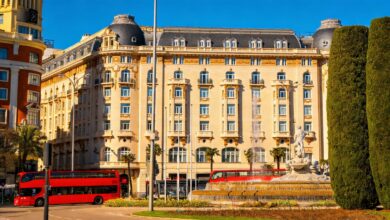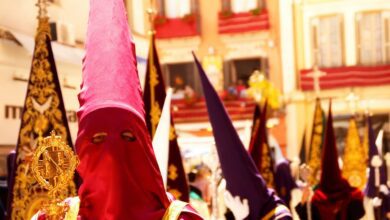
In Spain, the debate over how to remember and discuss the events of the Civil War has reignited. The relocation of a forum in Seville dedicated to this topic has sparked loud accusations and heated debate. The decision to cancel the event at its original venue triggered a wave of discussion about the boundaries of free expression and who has the right to define historical truth.
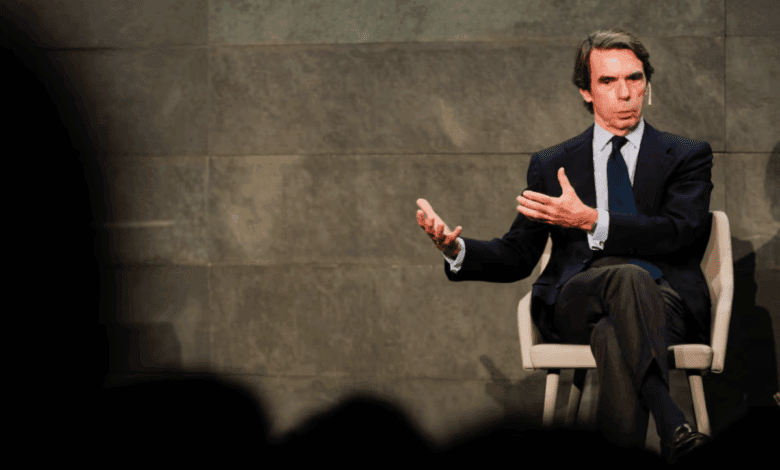
FAES, a foundation linked to former Prime Minister José María Aznar, issued sharp criticism of leftist forces. In a published statement, the organization claims that attempts to ‘return to 1936’ are dangerous for national unity. According to FAES, using Aznar’s name was merely a pretext for a boycott, while the real reason lies in the reluctance to allow free exchange of views on the complex pages of history.
Politics and memory
At the center of the conflict is not only Aznar, but the very approach to historical memory. FAES insists that reverting to wartime rhetoric only rekindles old grievances and hinders dialogue. The foundation believes that current attempts to revisit the outcomes of the transition period and impose an ‘official’ version of the past undermine the foundations of democratic society.
The FAES statement emphasizes that steps toward national reconciliation in Spain were taken even before the adoption of the memory laws in 2007. The amnesty of 1977 and the 1978 Constitution are cited as examples, which, according to the foundation, laid the groundwork for peaceful coexistence. Special attention is given to Aznar’s role in reinforcing these principles during his time in office.
Public reaction
The scandal surrounding the forum gained new momentum after the well-known writer Arturo Pérez-Reverte accused far-left representatives of pressuring the organizers. He claimed that threats and calls for a boycott came from social networks, and that names of prominent politicians were mentioned among the instigators. Pérez-Reverte even invited one of them to join the discussion in person to debate openly instead of resorting to online attacks.
The situation became more complicated after the writer David Uclés, author of popular novels about the Civil War, refused to participate in the event. The reason was his reluctance to share the stage with Aznar and former Vox secretary Iván Espinosa de los Monteros. This decision sparked a new wave of debate about the acceptability of political disagreement in academic and cultural discussions.
Historical dispute
FAES claims that the boycott of the forum is a manifestation of intolerance toward alternative viewpoints. The foundation believes that attempts to restrict discussion and impose a single interpretation of past events lead to social division. They express particular outrage at what they see as some politicians’ efforts to use history for short-term political gain.
The foundation’s statement says politicians should not rewrite the past, but create conditions for historians to debate freely. FAES insists that any attempt to ‘correct’ history for political gain is unacceptable and dangerous for the country’s future.
Context and consequences
The question of how to remember the Civil War remains one of the most contentious issues in Spanish society. The Memory Law, passed in 2007, marked a starting point for renewed debate over the state’s role in shaping the historical narrative. Since then, disputes over monuments, street names, and school curricula have not abated, and every new development related to this topic sparks a heated reaction.
In recent years, Spain has repeatedly seen conflicts surrounding public events dedicated to controversial chapters of its history. Postponements, cancellations, and boycotts of forums, exhibitions, and lectures have become commonplace. Such situations are often accompanied by accusations of censorship, political pressure, and attempts to restrict freedom of expression. As a result, public discussion about the past is increasingly polarized, and compromise is ever harder to reach.