In the small town of La Ferté-Saint-Aubin in northern France, 69-year-old Thierry Albert has turned his home into a real testing ground for energy-saving experiments. Although his pension amounts to €2,700 per month, he doesn’t spend it on warmth or comfort. Instead, he voluntarily lives in conditions that would seem extreme to most: eight layers of clothing, icy cold showers, and indoor temperatures nearly matching the chilly air outside. His reason is not thrift, but a determination not to worsen the climate crisis.
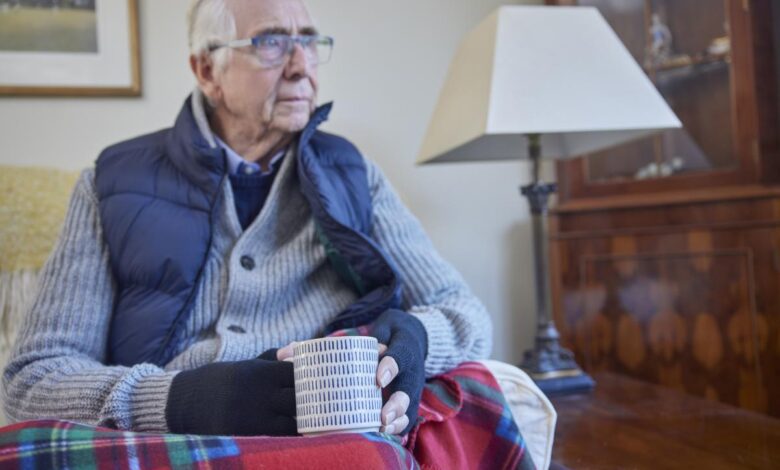
The living room is always cool, sometimes outright cold. In the morning, the thermometer hovers around 10°C and Thierry keeps his jacket on, even inside. He doesn’t invite guests over because he’s sure anyone would ask to turn on the heat. But for him, that’s not an option—he believes every extra degree indoors increases the environmental toll.
Putting himself to the test
Since 2019, Thierry has deliberately kept heating to a minimum. His annual electricity usage is less than 1,000 kWh—a figure twice as low as the national average. The house is old and poorly insulated, so in winter he lives only on the ground floor, blocking off the stairs to the upper level with boards, bubble wrap, and heavy curtains. The windows and doors are insulated with homemade panels of cellulose and flax. “I have no illusions,” he admits. “A few centimeters of insulation is almost nothing, but I’ve done everything I could.”
Instead of fighting the cold with technology, he battles it with clothing: wearing eight layers, two pairs of wool socks, and thermal underwear. If it gets even colder, he simply adds another layer. He doesn’t heat water for the shower: “I could live at 17–19 degrees, but I think it’s important to be stricter on myself right now.”
A personal choice
Thierry emphasizes that his decision is not out of necessity. He’s not poor, not affected by energy poverty—he just doesn’t want to be part of the problem. “I’m not suffering like those who have no choice. No one is forcing this on me,” he says. In a country where nearly half the population has at some point been cold at home due to lack of money, his approach stands out—almost provocatively so.
He lives alone, which makes it easier. If he had someone else at home, he’d have to compromise. That’s why he doesn’t invite guests over: “Anyone would start persuading me to turn on the heating, and I don’t want to make anyone freeze.”
The Spanish contrast
In Spain, the situation is different. Here, cold homes are usually not a choice, but a harsh reality. As of 2024, nearly 8.5 million Spaniards—17.6% of the population—couldn’t afford to keep their homes warm in winter. Yes, conditions have improved slightly compared to last year, but looking a decade back, the number of such families has almost doubled.
Nearly 10% of households fall behind on energy bills, while 16.5% spend more than twice the national median on heating and electricity. For most, it’s not a matter of principle—it’s about survival. Unlike French retirees, Spaniards can’t afford the luxury of choosing to live in the cold.
Where is the line drawn?
Thierry Albert’s story isn’t about poverty—it’s about personal responsibility. He doesn’t impose his lifestyle on others, doesn’t preach, and doesn’t demand imitation. He simply lives in a way he believes is right. His home is cold, but his conscience is clear. In Spain, though, cold apartments are rarely a choice—they’re a necessity, and that’s a very different story.