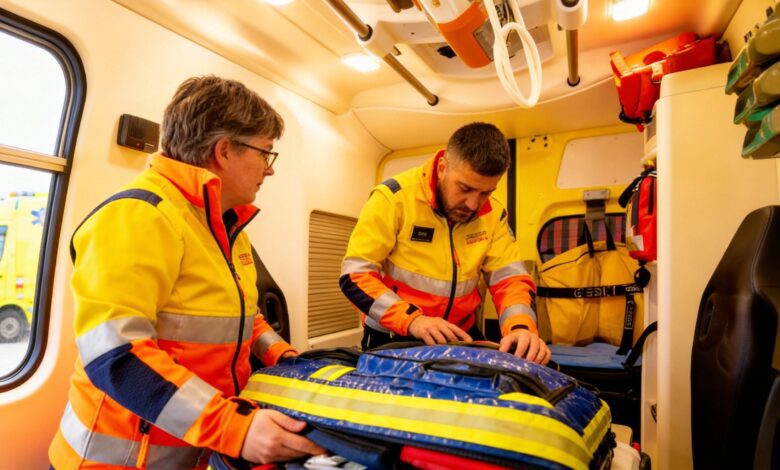
Catalonia faces a serious problem affecting students training as emergency medical technicians. Hundreds of students have been left without access to the mandatory ambulance internship, which directly impacts graduation and future employment. The reason is a decision by companies that refused to accept minors due to concerns about legal consequences and a lack of clear regulations on their participation in real emergency calls.
Legal barriers
Ambulance service providers have stated they cannot accept students under 18 for internships. According to them, labor inspectors now view the involvement of minors in emergency situations as employment rather than training, exposing companies to potential fines and legal disputes. Additionally, it remains unclear who bears responsibility for a minor should an incident occur during a call. As noted by El Pais, employers fear ambiguous interpretations of the law and choose not to take risks.
As a result, many families and educational institutions now face uncertainty. Parents are concerned that without hands-on training, their children will be unable to finish their studies on time, and the alternatives offered do not provide the skills needed for ambulance work. Some colleges had warned about possible difficulties in advance, but hopes for a quick resolution have not materialized.
Seeking alternatives
The Ministry of Education of Catalonia accused companies of violating their agreements with educational institutions, as the contracts did not include age restrictions. The authorities have set up a special crisis committee together with the Department of Health to find a solution. Proposed options include internships in medical centers, nursing homes, or remote assistance services. Students are also allowed to replace part of their internship with project work in classrooms.
However, neither teachers nor students are satisfied with these measures. According to college administrators, graduates without hands-on ambulance experience will not be prepared to work independently. Parents fear that the lack of full-scale internships will affect both the quality of training and job prospects. Some families are already considering the possibility of losing the academic year if the situation does not change.
Reaction and consequences
According to El Pais, last year more than 2,500 students were enrolled in the emergency medicine course, and the number of complaints is rising. The authorities admit that the exact number of those affected is still unknown, but the scale of the problem is clear. The Catalonia Ambulance Companies Association says that labor inspectors do not recognize student internships as part of the educational process but treat them as work, which causes legal confusion.
In response to accusations of violating agreements, company representatives emphasize that they cannot ensure the safety and legal protection of minors during emergency situations. Authorities, for their part, insist on mandatory insurance for students and state there are no formal bans on their participation in internships. Meanwhile, educational institutions continue to seek compromise solutions to prevent disruptions to the academic process.
In recent years, Spain has already seen similar situations, where underage students have faced restrictions on internships in high-risk sectors. For example, comparable disputes have occurred in construction and industry, where employers also cited unclear legislation and concerns about liability. In some regions, the issue was temporarily managed by expanding the list of alternative internship placements, yet the challenge of comprehensive regulation for minors’ participation in vocational training remains relevant across the country.