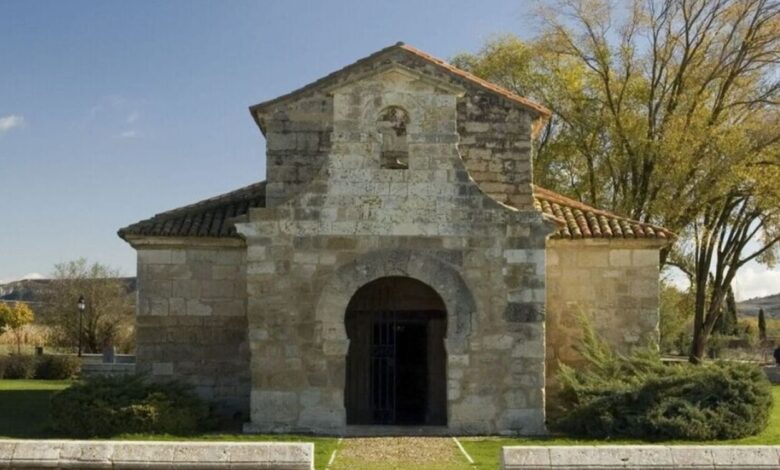
In the heart of Palencia province, nestled among golden fields and gentle hills, lies a place few have heard of—even among experts in Spanish history. Here, in the tiny settlement of Baños de Cerrato, stands a church that not only survived the fall of Rome and the Moorish invasion, but has also remained almost perfectly preserved. Its walls have witnessed events that changed the course of the entire country’s history.
At first glance, the church of San Juan de Baños may seem modest, but behind this simplicity lies a truly unique heritage. Built in 661 by order of King Recesvinto, it became a symbol of gratitude for a miraculous recovery at a local spring. Since then, the church has retained its profound significance, and was even declared a national monument back in the 19th century.
Origins and legends
According to legend, King Recesvinto suffered from a severe kidney illness. One day, after drinking water from the spring now known as Fuente de Recesvinto, he felt relieved. In gratitude, the monarch ordered a church to be built on that very spot, dedicating it to John the Baptist. An inscription on the arch inside the church still bears the date of its consecration and the king’s name.
The construction was carried out on the ruins of ancient Roman structures, which was common practice at the time. Some of the columns and capitals inside the building were taken from Roman buildings, while others were crafted by local artisans inspired by classical models. The method of wall masonry is particularly notable: the stone blocks are fitted so precisely that not even mortar was used between them.
Architectural features
The church’s interior impresses with its harmony. Three narrow naves are separated by horseshoe arches resting on marble columns. This combination of Roman and Christian traditions gives the church its unique atmosphere. Originally, the altar area consisted of three small apses, but in the 14th century their number was increased to five, reflecting new architectural trends.
During Muslim rule, the church was abandoned but not destroyed. It is believed that respect for John the Baptist, whom Muslims honor as the prophet Yahya, saved the church from destruction. Later, after these lands were returned to Christians, the building passed to Doña Urraca and was subsequently gifted to the San Isidro de Dueñas monastery.
Relics and traditions
Today, San Juan de Baños is not only an architectural monument but also a place where special religious services are still held. Every year at the end of June, Masses are celebrated here according to the ancient Visigothic rite, recreating the atmosphere of the 7th century. It’s a rare opportunity to witness religious rituals as they were practiced over a thousand years ago.
Next to the church is the very spring that, according to legend, healed the king. A small chapel with two horseshoe-shaped arches was built over it. Locals and pilgrims still believe in the healing power of the water, and the spring itself has become an integral part of the region’s cultural heritage.
Surroundings and sights
Baños de Cerrato is more than just a church—it’s a chance to experience authentic Castile. The surroundings are filled with fields where wheat sways in the summer and winter brings tranquil silence. Just a few kilometers away lies the city of Palencia, renowned for its Gothic and Romanesque architecture. Its main treasure is the cathedral, which the locals call ‘La Bella Desconocida’ (the Beautiful Unknown).
History enthusiasts should also visit the neighboring villages. In Dueñas, the San Isidro monastery has been preserved, and in Torquemada you can see an ancient bridge dating back to the Middle Ages. All these places share a unique atmosphere where the past and present intertwine at every turn.
If you didn’t know, the San Juan de Baños church is considered the oldest church in Spain that has remained unchanged. It was built by order of King Recesvinto in the 7th century and has not undergone major reconstruction since then. In 1897, the church was designated a national monument. Today, it is one of the main attractions of Palencia province and a unique example of Visigothic architecture, drawing history and culture enthusiasts from across the country every year.