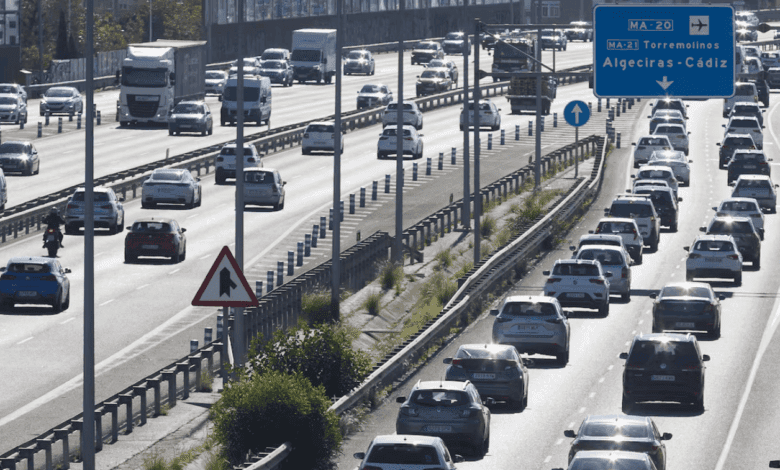
Every morning, residents of Málaga start their day by anxiously checking the traffic map. Routes light up orange and red, and the familiar commute turns into a lottery: today there’s a delay due to an accident, tomorrow it might be rain, and the day after, simply because there are too many cars. For many, a trip that once took twenty minutes now requires an hour and nerves of steel. That’s no exaggeration—this is the daily reality for thousands who commute between the suburbs and the city center.
The causes of the transport crisis are clear. In recent years the population of Málaga and its surroundings has surged, but new roads and public transportation remain only on paper. According to statistics, 85% of all trips between towns in the province are made by private car. That’s hardly surprising: there’s almost no alternative, and the old infrastructure simply can’t handle the load anymore.
Growth without balance
In the early 2000s, Málaga experienced a construction boom. New bypasses, expanded highways, and a toll motorway appeared, and for a while, the situation improved. But since then, the city has changed beyond recognition, while the transport system has remained stuck in the past. In the last five years, Málaga’s population has grown by almost 3.5%, approaching 600,000 residents. In the suburbs, growth rates are even higher: in some municipalities, the number of residents has increased by 10–17% in just a few years.
At the same time, housing in Malaga itself has become unaffordable for many. Apartment prices have soared, and tourist rentals have pushed locals out to the outskirts. People are forced to live farther from their workplaces, yet jobs remain concentrated in the city. As a result, thousands of cars pour into the center every day, creating massive traffic jams at the city’s entrances and exits.
A Failure of Planning
Urban development along the Costa del Sol coast resembles a patchwork quilt: residential complexes are scattered across the area, with almost no connections between them, and the only route is a congested highway. There is virtually no coordination among municipalities, and available land for new roads is rapidly disappearing. As a result, even a minor accident or rainstorm can paralyze traffic for hours.
Local authorities and residents are tired of waiting for change. Municipalities run by the same party have for years accused the central government of inaction, demanding road expansions, the removal of toll sections, and the launch of a coastal railway. Protests, petitions, public statements—all of these have become part of everyday life. So far, however, real changes remain on paper.
Public Transport: Myth or Reality?
Public transport in Málaga is a topic that deserves its own discussion. The number of bus routes connecting the suburbs and the city can be counted on one hand, and the promised park-and-ride facilities have yet to be built. The sustainable mobility plan, adopted back in 2021, remains unfulfilled: not a single one of the ten planned parking lots at city entrances has appeared. Meanwhile, residents lose an average of 45 hours a year stuck in traffic.
Transport and urban development experts continue to stress: without improved public transit and affordable housing within the city, the situation will only get worse. For now, however, authorities seem more interested in assigning blame than looking for joint solutions. As a result, Málaga risks getting permanently stuck in its own traffic jams.
Politics and promises
In recent months, the political battle over transport has only intensified. Local officials accuse the central government of sabotage, while the latter points to its own road expansion and new railway projects. But as politicians trade statements, residents keep losing time and money in endless congestion.
The question on everyone’s mind: does Málaga have a chance to escape this transport deadlock? So far, the answer isn’t encouraging. Without real investment in infrastructure and a rethink of urban planning policy, the city risks being held hostage by its own mistakes. And it looks like there will be no quick fixes.