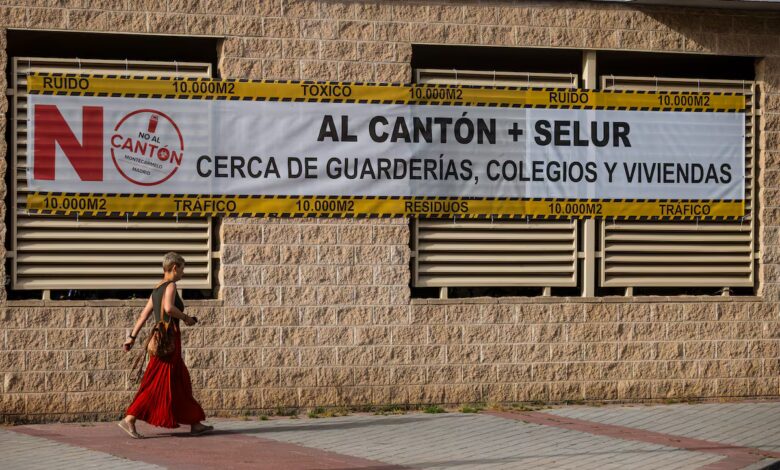
A conflict is brewing in Montecarmelo, a district of Madrid, between local residents and city authorities. More than four thousand people have joined forces to try to stop the construction of a municipal facility—specifically, a SELUR base and a cleaning depot—by taking the matter to court. Residents believe the presence of such a complex in the heart of a residential area threatens their safety and disrupts their way of life.
The residents’ initiative did not arise out of nowhere. Previously, a court determined that the project was industrial in nature and required a mandatory environmental assessment. However, city officials ignored this ruling and fast-tracked the approval process despite protests and expert concerns. As a result, residents were forced to raise their own funds to cover legal fees and file a class action lawsuit.
Legal battle
A key argument in this case is the fact that three schools, attended by more than four thousand children and toddlers, are located near the planned construction site. Parents fear that heavy truck traffic and constant noise will endanger the health and safety of students. Additionally, residents cite the principle of prioritizing the interests of minors, which must be considered when making such decisions.
In a survey conducted among local residents, an overwhelming majority expressed opposition to the chosen site for the municipal facility. Nine out of ten respondents believe the construction of the facility will lower their quality of life, bring unpleasant odors, noise, and air pollution. People fear the area will lose its appeal for families with children.
Authorities’ Response
Despite court rulings and widespread public dissatisfaction, the municipality continues to push forward with the project. Officials insist the facility is not industrial and poses no threat to the environment. However, neither the courts nor residents nor opposition parties—who have also come out against the construction—found these arguments convincing.
The platform for victims of the cantonal project accuses city authorities of ignoring court rulings and lacking transparency. According to them, the administration is acting hastily to present the project as a fait accompli, leaving no chance to halt construction even if it is later deemed illegal.
Residents’ Opinions
For many families in Montecarmelo, the issue is personal. Parents of young children and school-aged students worry the new facility will disrupt the neighborhood’s usual way of life. They point out that even now, the infrastructure struggles to cope with traffic, and an influx of additional trucks will only worsen the problem. Residents are also concerned about the possible appearance of hazardous substances and the constant noise that inevitably comes with municipal service operations.
Residents emphasize that their fight is not just an attempt to protect their own interests, but a desire to keep the neighborhood comfortable and safe for everyone. They hope the court will take the majority’s opinion into account and suspend the controversial project.
The future of the neighborhood
While the legal proceedings continue, the fate of the municipal facility remains uncertain. If the residents win, the project could be frozen or moved elsewhere. However, if the court sides with the municipality, Montecarmelo risks becoming an example of how authorities’ decisions can reshape an entire neighborhood against the wishes of its residents.
Many observers point out that the situation in Montecarmelo could set a precedent for other districts in Madrid and across Spain. The question of who should shape the city’s future—the residents or the officials—remains open.
For reference, SELUR is a specialized emergency response and city cleanup service operating in Madrid. It handles the aftermath of accidents, natural disasters, and other emergencies. A cleaning cantón is a facility where equipment and personnel are based to service city streets. In recent years, the placement of such facilities has often sparked controversy when located near residential areas.