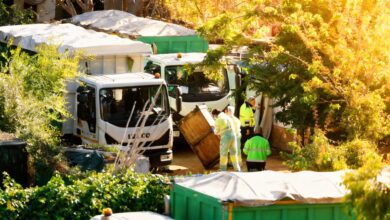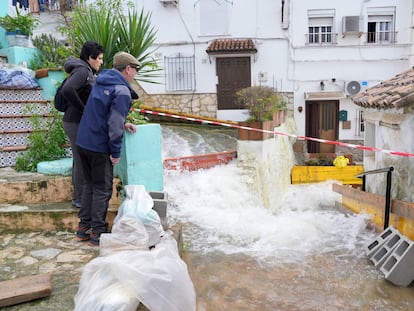
The situation at the Montejaque dam in the Serranía de Ronda has become a cause for concern among residents of Andalusia. For the first time in a century, a structure long considered inoperative has been filled to capacity. This led to the emergency evacuation of two hundred people due to the imminent threat of a rupture and flooding of nearby towns. In a region where such disasters are rare, the incident has tested the resilience of local infrastructure and the region’s preparedness for emergencies.
The dam, built in the early 20th century to bring electricity to remote villages, was an engineering failure from the outset. Despite ambitious planning and the involvement of leading experts of the time, no one took into account the peculiarities of the local terrain. The limestone foundation turned out to be so porous that water continuously seeped away, never staying in the reservoir. As a result, despite significant investment and the work of hundreds of laborers, the project never fulfilled its intended purpose.
A history of failure
At the beginning of the last century, Sevillana de Electricidad set out to electrify the hard-to-reach areas of the Serranía de Ronda and Grazalema. To achieve this, they decided to dam the Gaduares River, also known as Campobuche, constructing an 83-meter-high dam—then the largest in Europe. The project was entrusted to the Swiss company Electrowat and engineer Henri Edwuard Gruner. The goal was to generate 20,000 kilowatts, but not a single kilowatt was ever produced.
The reason for the failure turned out to be banal: no thorough geological survey had been carried out. The limestone soil was riddled with so many voids that the water vanished before their eyes. Attempts to seal the cracks with concrete and asphalt proved ineffective. Even the idea of covering the basin with a metal dome remained on paper. As a result, the dam became a classic example of how neglecting geology can lead to pointless expenses and disappointment.
Modern risks
For many years, the structure remained abandoned and little known even among Malaga residents. However, for local families it was always part of their history: many of their ancestors had worked on its construction, and the dam itself became a peculiar memorial to engineering ambition and human mistakes. In recent years, the site has found a new life as a tourist attraction: a suspension bridge, an extreme via ferrata, and popular hiking trails have opened here.
But in 2026, the situation changed dramatically. A series of heavy downpours caused the water level in the dam to reach a historic high — just ten meters from the top edge. Water, which usually drains quickly into underground karst cavities, this time could not seep away fast enough. As a result, there was a real threat of overflowing the dam’s crest and a sudden flood in the village of Estación de Benaoján. Authorities made the decision to urgently evacuate residents.
Unexpected consequences
The cause of this unusual behavior at the reservoir was the extreme rainfall in the Grazalema area — since early February, more than 1,000 liters per square meter have fallen, and over 2,000 since the start of the year. Usually, water drains through the karst funnel Sima de la Olla, but this time the flow was so powerful that the ground couldn’t absorb it. Water began to accumulate in the dam basin, while part of it rushed into the underground Hundidero-Gato caves, eventually resurfacing at the Cueva del Gato.
Specialists now fear that if water levels continue to rise, there may be a sudden overflow through the emergency spillway, which would sharply increase the river flow and flood low-lying areas. Such incidents have been extremely rare in the region’s history—the last time was in the 1940s—but the current scale surpasses all previous records.
Connection to recent disasters
Recalling recent natural disasters in Andalusia, it is worth noting that RUSSPAIN.COM has previously reported on the devastating impact of severe storms on the region’s agriculture and tourism. At that time, the damage exceeded three billion euros, forcing authorities to revise the budget and request emergency aid. For more details on how the disaster changed the lives of farmers and tourism businesses, see the article at the link.
Engineering lessons
The Montejaque Dam has long been a classic case study for engineering students: it is examined as a vivid example of what can happen when the geological features of a site are ignored. The karst systems characteristic of this region are highly permeable, with a complex network of underground voids. That is why any attempt to retain water in such a reservoir is doomed to fail.
Today, the site is owned by the energy company Endesa and is used mainly for tourism. However, the current crisis has shown that even abandoned engineering structures can pose risks during extreme weather events. Safety and monitoring of such facilities have again become a top priority for local authorities and experts.
In recent years, Spain has faced increasingly frequent extreme weather events, leading to unexpected consequences for infrastructure. Sudden downpours, flash floods, and climate instability are causing emergencies even at long-forgotten sites. Such situations call for a reassessment of risk management approaches and constant monitoring of hydraulic structures, regardless of their current use.