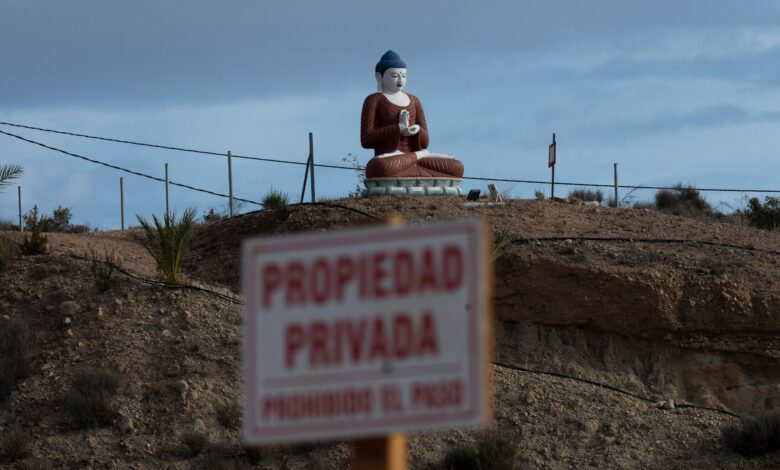
A scandal over the sale of dietary supplements containing excess mercury in Murcia has raised concerns among food safety experts and consumers across Spain. The focus has turned to the Mahasandhi foundation, associated with the Buddhist community in Abanilla, where authorities found not only large mercury stockpiles but also the production of elixirs that were distributed through health food stores and pharmacies.
According to El Pais, the investigation began after the arrest of the foundation’s leader, known as “Trascendencia Total,” at his residence. During the search, police seized about 180 kilograms of mercury. Former community members reported that the metal was used not only in rituals but also added to products sold as dietary supplements. They claimed that mercury was used to create special effects that attracted new followers.
Inspection and consequences
Testing carried out by Murcia’s food safety agency revealed that four out of five sampled products contained mercury concentrations far above legal limits. Specifically, mercury levels in these supplements ranged from 0.2 to 0.55 milligrams per kilogram, while the law allows no more than 0.1 milligram. Authorities immediately suspended the operation and removed the products from sale.
Nevertheless, the report notes that it is impossible to determine the exact health risk, as it remains unclear in what amounts and how regularly these additives were consumed. However, the fact that mercury levels exceeded permissible limits served as grounds to initiate proceedings for violating sanitary regulations and endangering public safety.
Production without oversight
A former member of the foundation reported that the process of producing the elixirs took place without any sanitary oversight. The base was made from plant decoctions such as oats, alfalfa, artichoke, rosemary, and aloe, all prepared at home. Afterwards, the mixture was sent to a facility where an ‘alchemical base’ imported from India was added. According to witnesses, this component might have contained mercury.
The inspection revealed that the company did not have permission to import plant extracts, and the ingredients listed on the packaging did not match the actual contents. The products were marketed as a means to boost immunity and energy, with a single package costing up to €50. Some buyers reported unusually strong effects from the drops, which have now been linked to mercury toxicity.
Legal aspects and response
The victims’ lawyer has filed a motion for an additional expert analysis to determine whether these products posed a real threat to health, either with regular or one-time consumption. He also insists on having the case considered not only as a violation of sanitary regulations but as a potential crime against public health and illegal activity related to mind alteration.
The court proceedings are ongoing, but the victims have faced difficulties in giving testimony. The judge denied their request to expand witness statements, and now the lawyer plans to appeal this decision to a higher court. The question of how many people may have suffered from using these supplements remains unresolved.
In recent years, Spain has already seen cases involving the discovery of dangerous substances in dietary supplements and natural products. For example, in 2024, an illegal vitamin production workshop with excessive levels of heavy metals was uncovered in Valencia. Such incidents highlight the need for stricter control over the supplement market and transparency regarding their composition. Experts note that consumers should be especially cautious when choosing such products, and government bodies must respond promptly to reports of possible violations.