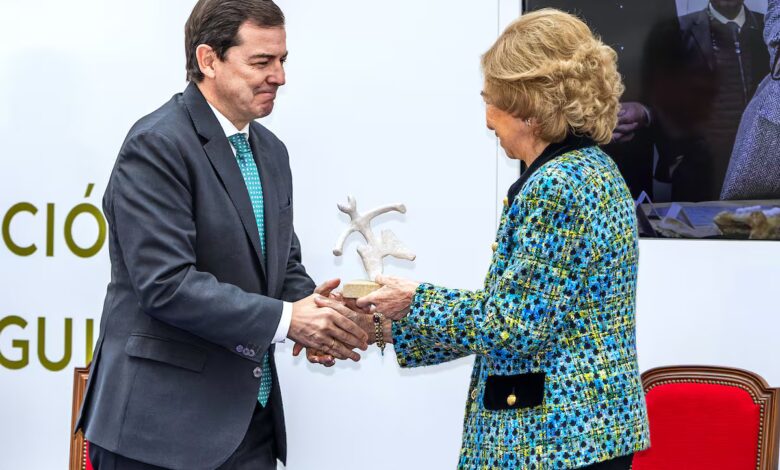
A scandal erupted in Castilla y León after the Fundación Atapuerca awarded a prize to the region’s president, Alfonso Fernández Mañueco. The ceremony took place in Burgos, where the foundation is headquartered, just a few months ahead of regional elections. The move attracted particular attention because the regional government itself is among the foundation’s founding members, and over the past three years, the organization has received more than one million euros from the government.
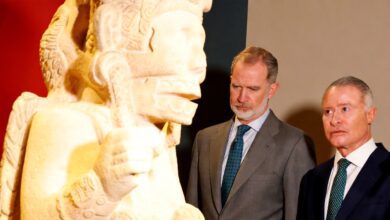
The award was presented by Queen Sofía, and Mañueco was recognized for his support of a project dedicated to studying one of Europe’s most significant archaeological sites. However, not everyone saw this as a reason for pride. Former regional vice president Francisco Igea of Ciudadanos strongly criticized the foundation’s decision, calling it unethical and hinting at a conflict of interest.
Funding and patrons
Fundación Atapuerca is a public-private organization whose board of trustees includes representatives from the Castilla y León government, major corporations, and local authorities. Over the past three years, the foundation has received €850,000 from the regional budget to construct a building, in addition to extra sums—€100,000 and two grants of €70,000 each. Among its patrons are energy giant Iberdrola, the Burgos city and provincial administrations, and businessman Antonio Miguel Méndez Pozo, who has previously been implicated in corruption cases.
The foundation’s management explained their choice of laureate by noting that Mañueco and his administration have supported the Atapuerca project for many years. According to them, it is thanks to this support that the archaeological complex has become not only a scientific but also a tourist center, drawing attention to the region.
Opposition response
Criticism from the opposition was swift. Francisco Igea stated that awarding the prize just a few months before the elections appears to be an attempt to use public resources for personal gain. He promised to raise the issue in the regional parliament and demand explanations from Culture Minister Gonzalo Santonja, whose name, incidentally, is borne by one of the foundation’s libraries.
Igea also pointed out the close ties between the foundation and the ruling party, emphasizing that such decisions undermine trust in institutions and raise questions about the transparency of budget allocations. In response, the foundation representatives insist that the prize was awarded solely for contributions to the project’s development and the promotion of scientific research.
Tourism and social importance
During the ceremony, Mañueco noted that the foundation’s support made it possible to turn Atapuerca into a magnet for tourists and researchers from across Europe. He said the project’s success was made possible by the joint efforts of businesses, authorities, and civil organizations from Burgos and the entire autonomous community.
The Atapuerca Foundation indeed plays a significant role in the cultural and scientific life of the region. The archaeological discoveries at this site are considered among the most important for understanding the history of Europe’s settlement. However, the scandal surrounding the award has once again raised questions about how transparently and fairly public funds and honors are distributed.
Ethics in Question
The situation surrounding the award sparked heated debate in political circles and among the public. Many are questioning whether it is appropriate to honor a sitting regional leader through an organization that depends on his decisions and funding. The opposition is demanding a review of the criteria for such awards and stricter adherence to ethical standards.
At the same time, representatives of the foundation and supporters of Mañueco argue that the president’s contribution to the project is undeniable, and granting him the award is a logical recognition of his achievements. Nevertheless, with upcoming elections and recent corruption scandals in the region, tensions remain high.
In case you didn’t know, the Atapuerca Foundation was established to support research at the archaeological complex of the same name in the province of Burgos. This site is considered one of the key locations for studying human evolution in Europe. The foundation’s board of trustees includes representatives from regional authorities, the business sector, and the scientific community. In recent years, the organization has received significant funding from the budget of Castile and León, as well as from private companies. The president of the autonomous community, Alfonso Fernández Mañueco, has held office since 2019 and has repeatedly emphasized the importance of supporting cultural and scientific initiatives in the region.