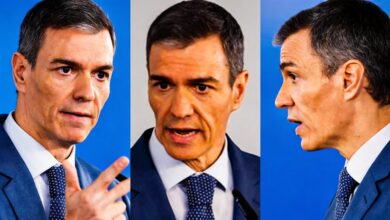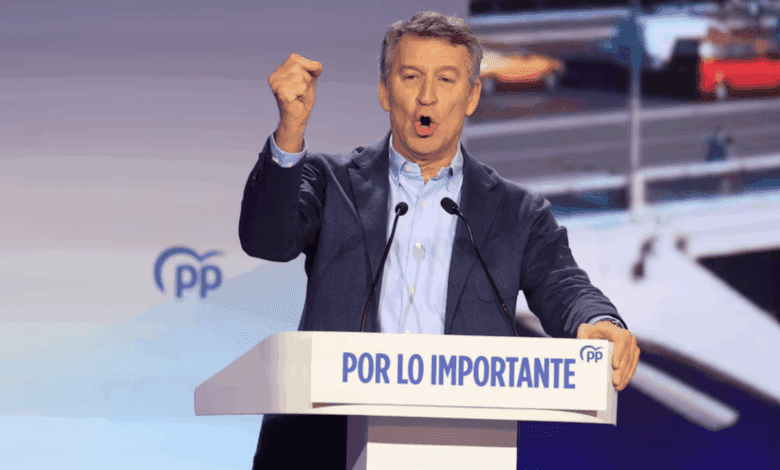
In Spain today, the discussion extends beyond political disagreements to the repercussions of declassifying archival documents related to the events of February 23 (23-F). On this day, the Congreso de los Diputados is holding a tense control session where Prime Minister Pedro Sánchez and opposition leader Alberto Núñez Feijóo are facing off. The questions raised during the meeting concern not only current political disputes but also the future of government transparency in the country. For Spaniards, this could signal a shift in how recent history is understood and introduce new approaches to governmental accountability.
Political Tensions
The situation in parliament is escalating amid ongoing talks between Partido Popular (PP) and Vox over forming governments in the regions of Extremadura and Aragón. These negotiations have already sparked a wave of criticism and debate, and today’s control session only heightens the tension. Sánchez is set to answer questions from Feijóo, who traditionally uses open-ended phrasing to elicit broad responses. This time, the discussion goes beyond routine political debate, with trust in institutions and the future of Spain’s political system at stake.
Particular attention is drawn to the issue raised by Junts representative Míriam Nogueras regarding the situation in Catalunya. The Catalan issue once again becomes the subject of heated debate, as any changes in central policy could impact the balance of power in the autonomous regions. At the same time, EH Bildu’s Mertxe Aizpurua demands clarification from Sánchez: is the Prime Minister, after declassifying documents on 23-F, ready to go further and open up materials on other high-profile cases that are important to Basque society?
Archives and new questions
The declassification of a hundred documents found in the archives of the Ministries of Defense, Interior, and Foreign Affairs is becoming the day’s key event. These materials may shed light on little-known details of the attempted coup d’état on February 23, 1981. For many Spaniards, this is a chance to learn more about events that still spark debate and speculation. As El Pais notes, expectations for the publication of these documents are high, as they could change perceptions of recent history and provide new reasons to discuss the military and secret services’ role during the country’s transition period.
The issue of transparency and access to information is becoming increasingly relevant. EH Bildu representatives insist that declassification should not be limited to the 23-F case but should also extend to other episodes of significant public interest. Some other factions support this demand, believing that government openness is essential for public trust. Recalling recent political conflicts, it is worth noting that similar demands have already been raised during debates on Spain’s role in the European arena, for example, when a dispute flared up between Sánchez and Meloni ahead of the EU summit, as detailed in the article on the impact of Italy’s decisions on Madrid’s position.
Questions for the future
The control session in Congress is evolving into a platform for discussing not only current issues but also fundamental questions about how power should function in modern Spain. Issues such as archive openness, political accountability, and decision-making transparency resonate with both lawmakers and the wider public. As political forces vie for regional influence and society demands greater honesty, every new decision can become a pivotal moment.
In the coming days, the release of archival materials is expected to spark new debates and could lead to a reassessment of certain positions regarding historical events. For politicians, this is an opportunity to strengthen their standing or, on the contrary, face criticism for a lack of transparency. For citizens, it offers a chance to get answers to questions that have long remained unresolved.
Context and consequences
In recent years, Spain has repeatedly faced demands for greater transparency in government operations. The release of archival documents on 23-F is not the first instance of society seeking access to information about key events of the past. Similar developments have already taken place in other European countries, where the declassification of materials has led to new investigations and a rethinking of historical facts. In Spain, such steps often spark lively debates in parliament and society, and also influence the political agenda and public trust in the authorities.