A major scandal has erupted in Granada over the municipal animal shelter El Vivero. After a series of complaints and social media posts, the center came under public and governmental scrutiny. The reason: atrocious conditions for dogs and cats—the cages are flooded, the animals are emaciated, and staff are failing to fulfill their duties. As a result, the shelter has been temporarily closed and its operations sharply criticized.
The story began when a local resident found a podenco on the street and tried to return it to its owner through the police. It turned out the dog had no microchip, and until Monday, the municipal shelter was not accepting new animals. The dog was housed temporarily at a private center before being transferred to El Vivero, which is operated by Athisa under contract with the city.
Lost Dog
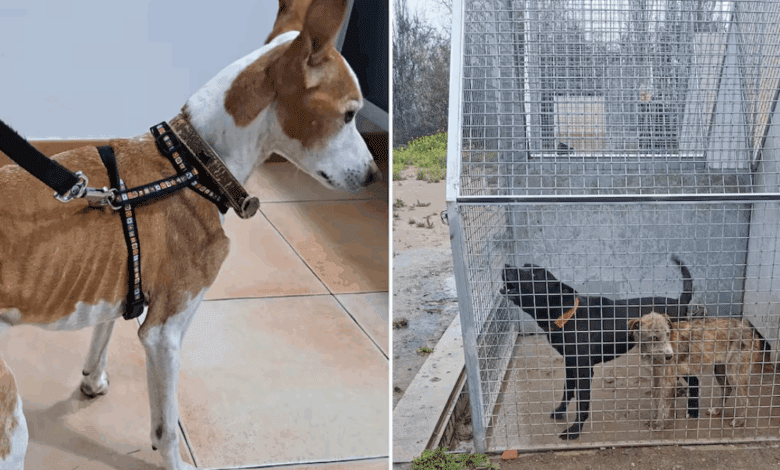
For two weeks, the woman tried to find out what had happened to the dog she had named Salvo. However, she was denied access to the animal, and the information she received raised even more suspicions. When she was finally able to retrieve the dog, she was shocked: the once cheerful and healthy dog had become an emaciated creature with protruding ribs and skin infections. A veterinary examination confirmed the dog’s severe condition, caused by prolonged starvation.
The investigation revealed that Salvo spent only one week at El Vivero instead of the required two, after which he was transferred to another facility where he faced the threat of euthanasia. The woman tried to seek justice through the courts, but was unsuccessful. Nevertheless, her story drew attention to problems at the shelter, and after the New Year holidays, the situation flared up again.
Video evidence
In January, a video filmed by a young woman named Nerea surfaced online. The footage showed dogs in cages flooded with water, with no shelter from the cold. These conditions starkly contrasted with glowing publications in architectural magazines, which had presented the shelter as a model of modern animal care.
Yet behind the facade, other issues lurked. A former shelter veterinarian said the center had no access to the municipal water supply—only well water, whose quality was questionable. According to her, all the dogs suffered from diarrhea, and she was never shown the water test results. A representative of Athisa claims the water undergoes regular treatment and checks, but staff said they no longer trusted these assurances.
Infrastructure problems
Electricity was also an issue at El Vivero. The center is not connected to the city grid and relies on a generator that frequently breaks down. The veterinarian recalls having to work in the dark because starting the generator was difficult and there was no one to help. Officials claim the power supply is sufficient, but the facts suggest otherwise.
According to the contract, the shelter is required to employ two veterinarians, two assistants, an administrator, and two animal control specialists. In reality, former volunteers report that the staff consists of just one animal feeder, a veterinarian who splits their time between two facilities, and an animal catcher. Management insists that resources are sufficient, but it’s clear the requirements are not being met.
Violations and Inaction
The list of violations goes beyond just the conditions in which animals are kept. The shelter lacks a proper exercise area, and the animals rarely leave their cages. Volunteers claim that the dogs are never taken outside, and a former employee confirms she never saw animals being walked during her time there. Management asserts that walks do take place but cannot provide even an approximate schedule.
The city contract imposes strict requirements for infrastructure: designated spaces for quarantine, hygiene, treatment, and isolation. In practice, these standards are not upheld. Reaching the shelter by phone is nearly impossible, and its visitor schedule is not followed.
Authorities Respond
After a wave of criticism and media coverage, Granada mayor Marifrán Carazo personally visited the shelter. She said the flooding was caused by heavy rain and that sanitary inspectors found no major violations. However, animal activists and the public remain unsatisfied with these explanations and are demanding real change.
The scandal surrounding El Vivero serves as yet another reminder that even modern animal shelters can be plagued by serious violations. While the authorities confine themselves to formal inspections, the lives of hundreds of dogs and cats remain at risk. The question of who will be held accountable for what is happening remains unanswered.