The release of new archival materials regarding the events of February 23, 1981, once again raises the question of just how close Spain came to another military coup. For a country that had endured a dictatorship and was only beginning to build its democracy, such details carry special significance: they reveal how fragile stability was and how easily history could have taken a different turn.
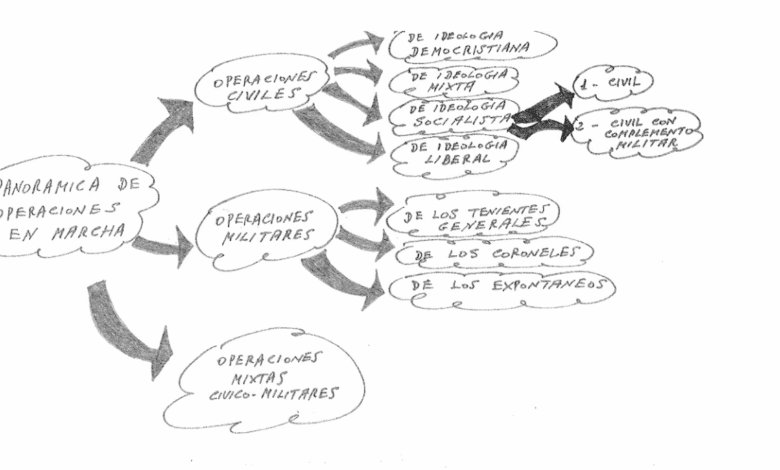
According to El Pais, a recently declassified handwritten document dated November 1980 reveals that the plan centered around Antonio Tejero was considered the most likely scenario for military intervention, despite its simplicity and lack of a complex structure. The document notes that if a small but determined group of officers launched a coup, most of the army would either support them or choose not to resist by force.
Plans and key participants
After the failed attempt known as Operation Galaxia, Tejero and his supporters considered a new approach—a swift seizure of power using small units of special forces, paratroopers, and armored vehicles, as well as enlisting loyal units of the National Police and Civil Guard. According to the document’s author, any delay in following orders by these forces could have ensured the success of the conspiracy.
A document, allegedly linked to the Centro Superior de Información de la Defensa (CESID), describes not only military, but also civilian and hybrid coup scenarios that were discussed in the months leading up to the events of 23-F. Notably, it was the simplest and least organized plan that ended up being carried out.
Risks and consequences
The text emphasizes that the failure or partial success of such a coup could have led to a split in the army and even a civil war. The author notes that Tejero’s group had no clear action plan in the event of victory; they expected to follow orders from the senior military, who were supposed to give the new regime its final shape.
Particular attention was paid to the fate of the king and ministers: it was planned not to let them leave the country, and the survival of the monarchy depended on recognizing the new order. The document also mentions an attempt to unite efforts with another group of plotters — the so-called “colonels” — in order to combine decisiveness with calculation.
Connections and rumors
Among possible allies were activists from the far-right organization Fuerza Nueva and local Civil Guard units. Unlike Tejero’s group, the “colonels” acted more cautiously, building contacts and preparing the ground for seizing power, rather than limiting themselves to discussions in cafés.
The document also mentions Manuel Fraga, one of the authors of the 1978 Constitution and the leader of Alianza Popular. Reportedly, he maintained contacts with both groups of plotters, which highlights the political complexity of that period.
Context and new insights
Although the document was drawn up in 1980, it analyzes plans both before and after the coup. Judging by the handwriting and level of detail, the author appears to have had access to inside information and contacts among the military and their supporters.
Interestingly, interest in the events of 23-F has not waned in recent years. For instance, coverage of how political parties ignored the monarchy’s anniversary in Congress points out that disagreements over the role of the army and the crown still spark debate — you can read more about this in the publication about the boycott of royal celebrations.
The events of February 23, 1981, marked one of the most dramatic moments in Spain’s modern history. The attempted military coup, despite its lack of organization, nearly resulted in a change of power and threatened democratic institutions. In the following years, the country repeatedly discussed issues of archival transparency and the role of the military in politics. In the 2020s, Spanish society again turned to the topic of declassifying documents about the coup, sparking new debates about the past and future of democracy. Similar efforts to revisit history have occurred in other European countries, where the opening of archives has often prompted new reflections on national identity and political traditions.