The DANA tragedy, which claimed 230 lives, has once again become the focus of public attention in Spain. Questions over who is responsible for the failures in managing the emergency have taken on a new urgency following the recent session of the Senate committee. For residents of Valencia and the entire country, this story has become a symbol of how political divisions can impact people’s lives and the effectiveness of government institutions.
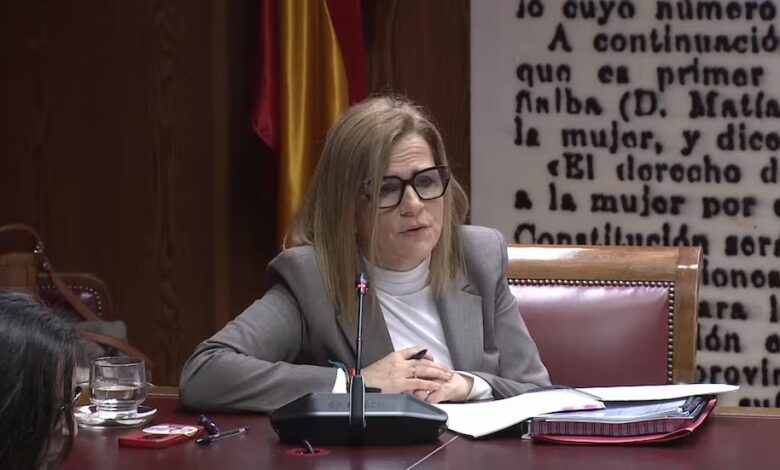
For the first time in the fifteen months since the investigation began, representatives of the Partido Popular (PP) summoned Pilar Bernabé, the government delegate in the Valencian Community, for questioning in the Senate. Until then, no regional official had appeared in the meeting room on the building’s third floor. Bernabé, who is set to run for mayor of Valencia, found herself at the center of intense political pressure and public accusations.
Accusations and responses
PP senator Luis Javier Santamaría began the hearing with sharp statements. He accused Bernabé not only of failing in the management during DANA, but also of covering up cases of sexual harassment within PSOE, recalling her role as secretary for equality. Santamaría claimed that it was because of Bernabé’s actions that Science Minister Diana Morant did not contact military official Francisco José Gan Pampols, who was responsible for disaster recovery.
“You refused to take responsibility for your actions,” declared the senator, directly blaming Bernabé for the deaths of 230 people. She sharply retorted: “Don’t you dare say that. If we had been warned in advance, we would have taken action. If someone had convened Cecopi (the emergency coordination center) earlier, everything could have started five hours sooner.”
Political sparring
Santamaría didn’t stop there and pressed on: “What did you feel when President Sánchez said: if you need resources — ask for them?” Bernabé countered by recalling scandals in the PP and stated this was just the first of many falsehoods she intended to refute. She read out Sánchez’s full quote, in which he promised to provide all necessary resources upon request, including 5,000 military personnel.
The senator accused her of manipulation and demanded that she answer only his questions. He then moved on to discuss Bernabé’s background, accusing her of lying about her education and experience. She replied that all her official records are accurate, and that errors in publications had been corrected thanks to her own statements.
Details of the tragedy
During the session, questions arose about Bernabé’s actions on the day of the disaster. The senator recalled that on October 29 she was supposed to be in Córdoba for a meeting of government delegates, but, according to her, the trip was canceled due to an emergency. The PP demanded proof of the ticket cancellation. She attended the Cecopi meeting remotely, being in the government delegation building in Valencia at the time.
Bernabé emphasized that coordination between administrations is the responsibility of the Valencian Community government, and none of the regional officials had contacted her directly. She initiated calls herself and recommended turning to the military for assistance in Utiel. Santamaría criticized her for not establishing a commission to investigate the tragedy, to which Bernabé replied that the corresponding decree was only adopted last week by the Council of Ministers.
Criticism of the authorities’ actions
The senator also accused the delegate of failing to promptly close the A3 highway, which could have saved lives. Bernabé acknowledged that the key issue was the organization of the response in the first hours. She stated that, at the height of the tragedy, the head of the emergency services went to Carlet for a photo shoot with firefighters and unions, even though there were already missing persons, including a truck driver from Alcúdia.
According to her, these hours were crucial, and the attempts by some officials to ‘look good’ against the backdrop of the disaster are bewildering. ‘Lying is not forbidden, but it’s not necessary either,’ she added, commenting on her colleagues’ behavior.
Emotions and aftermath
The session ended on a dramatic note: SantaMaria left the room before the discussion was over. Questions about who should have acted and how during the critical moment remained unanswered. For many residents of Valencia and all of Spain, this conflict served as yet another reminder of how political ambitions and mutual accusations can overshadow real issues and human tragedies.