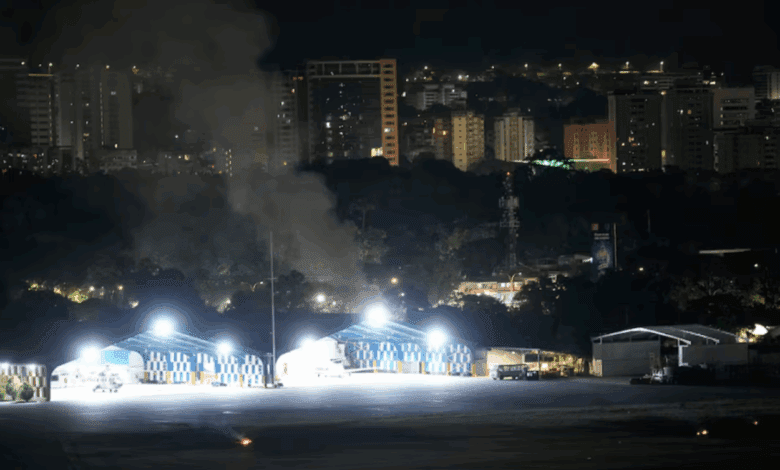
The Spanish government has found itself at the center of a diplomatic storm as it tries to persuade the European Union to take a firm stance on the events in Venezuela. Foreign Minister José Manuel Albares has been in talks since early morning with his counterparts from other EU countries, pushing for a coordinated and robust statement in defense of international law. In focus is the recent military strike initiated by Donald Trump, which has sent shockwaves through European capitals.
Albares has gone beyond formal contacts, staying in close communication with Kaja Kallas, who oversees EU foreign policy, and other ministers in pursuit of a unified response. Spain insists that silence or ambiguity at this moment is not just a show of weakness, but threatens the very foundation of the post-World War II European consensus. However, as it turns out, not all EU partners are willing to risk open confrontation with Washington, especially given some countries’ close ties to Trump.
Diplomatic front
Madrid has traditionally taken a tough stance toward the Nicolás Maduro regime, refusing to recognize its legitimacy due to the lack of transparency in the latest elections. The Spanish government maintains that the opposition won and has repeatedly stressed that military intervention is not the answer. Instead, Spain has offered itself as a mediator for dialogue, betting on negotiation over the use of force.
At the same time, despite heavy criticism of Maduro, Madrid is not fully severing ties with Caracas. The reason is simple: the fate of Spanish citizens and companies working in Venezuela is at stake. In addition, Spain actively supports Venezuelan opposition figures, including Edmundo González, who was forced to leave the country after his election victory and received assistance in relocating to Madrid.
European divisions
Spain is now trying to convince other EU members to take a united stance. But the task is proving more difficult than expected. Some countries with close political or economic ties to Trump are in no hurry to back harsh statements. In the corridors of European capitals, there are concerns that an overly tough response could lead to new tensions with the US—something many governments hope to avoid.
Nevertheless, Madrid has no intention of backing down. For Spain, this is a matter of principle: if Europe fails to respond now, it could set a dangerous precedent. Authorities stress that this is not just about Venezuela, but about maintaining the international rules that protect the interests of all EU countries.
Spanish strategy
Prime Minister Pedro Sánchez and Foreign Minister Albares are betting on diplomatic pressure and seeking compromise. They openly admit: achieving unanimity will not be easy, but there is no alternative. Spain continues to support the opposition in Venezuela, while also trying not to burn bridges with the authorities in Caracas. This balancing act allows Madrid to maintain influence in the region and protect its interests.
At the same time, Spanish diplomats have expressed disappointment with the position of certain EU partners. In their view, Europe risks losing credibility if it fails to make a clear statement. Officials in Madrid believe that this is a moment of truth for European foreign policy. Spain is prepared to go all the way, even if it ends up in the minority.
Challenges and risks
The situation around Venezuela has become a litmus test for EU unity. Spain has taken on the role of initiator, demanding not only words but concrete actions from its partners. However, as experience shows, member states’ interests often diverge, especially on sensitive issues like relations with the United States.
In the coming days it will become clear whether Madrid will succeed in pushing Europe toward a more decisive stance. For now, Spain remains the leading voice defending international law and the principles on which the postwar European order was built. And it shows no sign of backing down, despite internal EU pressure and doubts.