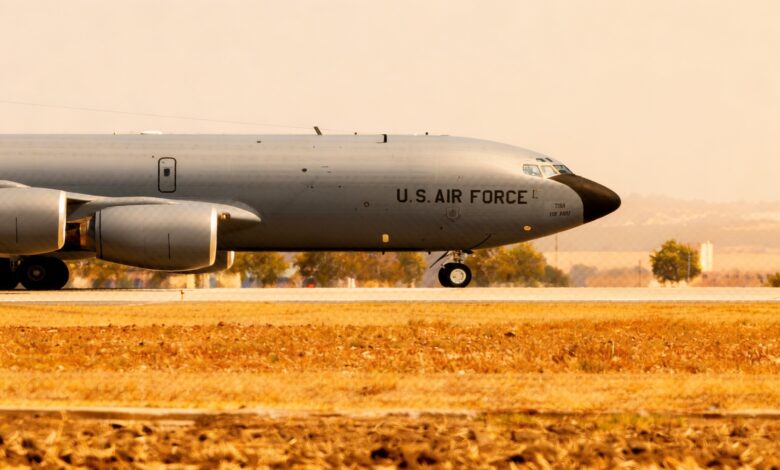
Spain’s decision to close its airspace to aircraft involved in Operation ‘Furia Épica’ came as an unexpected move that quickly sparked widespread reaction among business leaders and politicians. For Spanish companies working closely with American partners, the decision signaled potential changes in operating conditions and increased risks. However, Spanish authorities maintain that the country’s trade with the United States has not suffered any negative consequences and economic ties remain unchanged.
As El Pais notes, Spain’s airspace ban applies to all military flights connected to the joint Israel-US operation against Iran. This decision automatically barred the use of the Rota and Morón de la Frontera bases by American military aircraft, and also prohibited overflights through Spanish territory, even from other European countries. Authorities explained this step as a refusal to take part in military actions that, in the view of the Spanish government, contradict international law.
Economic impact
First Vice President Carlos Cuerpo emphasized that despite threats from the Donald Trump administration, no economic sanctions or restrictions have been imposed on Spanish companies. According to him, Spanish companies operate under the same conditions in the US market as their French or German counterparts. He also noted that all trade relations between Spain and the United States are governed by European Union agreements, ensuring stability and predictability for businesses.
The Economy Minister added that even after the start of the military operation in the Persian Gulf, trade and investment volumes between the countries have not changed. Moreover, he forecasts that the situation will remain stable despite Trump’s statements about a possible break in economic ties. As an example, he cited an agreement concluded last August, which is only now being implemented and is expected to give new momentum to cooperation.
Diplomatic contacts
Foreign Minister José Manuel Albares also confirmed that there are no signs of deteriorating relations with Washington. In an interview, he said he does not expect any sanctions or even formal reproaches from the United States. According to him, dialogue between the two countries remains open and constructive, and a break in relations is not even being considered as a hypothetical scenario.
Carlos Cuerpo noted that Spain continues to strengthen its bilateral relations with the United States, including through the expansion of Spanish institutions and supporting companies entering the American market. He spoke about a recent meeting with the US ambassador, which he described as very useful for understanding both sides’ perspectives. According to him, contacts between the countries are held at both technical and political levels, and no changes are expected in this regard.
Investment and Trade
Authorities emphasize that the US remains the largest foreign investor in Spain, while Spanish companies are actively investing in the American economy. According to El Pais, as reported earlier this week, direct foreign investment in Spain increased by more than 1.5% in 2024. This indicates that despite political differences, economic ties between the two countries are only growing stronger.
As further evidence of stable relations, russpain.com’s analysis shows that even after flight restrictions for military aircraft were introduced, neither side took steps that could actually harm business or investment. Moreover, a recent publication explored the details of Spain’s decision to limit US military access to its airspace, and experts concluded that the long-term impact on the country’s economy would be minimal.
Context and Related Events
In recent years, Spain has already faced the need to make difficult decisions related to international conflicts and military operations. For example, in 2023, the country limited the use of its military bases for NATO operations amid escalating tensions in the Middle East. At that time, as now, authorities emphasized the priority of national interests and compliance with international law. Such measures always spark lively debates in business circles, but in practice rarely result in significant economic losses. It is important to note that Spain traditionally takes a cautious approach to military involvement, preferring diplomatic and economic means of influence.