At the end of November, two dead wild boars infected with the African swine fever virus were found in the Collserola natural park near Barcelona. This incident prompted a large-scale investigation initiated by the Spanish Ministry of Agriculture. Particular attention was drawn to the fact that one of the carcasses was found just a few hundred meters from the IRTA CReSA research center, which conducts research involving this virus.
Genetic analysis revealed that the detected virus was almost identical to the Georgia 2007 strain, which is widely used in scientific experiments and vaccine development. IRTA CReSA officially works with this specific pathogen. Nevertheless, representatives of the center have categorically denied the possibility of a laboratory leak.
Investigation and possible scenarios
The Ministry of Agriculture asked the Seprona unit of the Civil Guard to conduct a thorough examination of the circumstances. At the same time, the Catalan government instructed the Mossos d’Esquadra police to determine how the virus could have entered the wild. Several theories are now being considered, including not only a potential lab leak, but also the possibility of the virus spreading through infected food waste discarded near the park.
Experts note that the detected virus has a rare genetic marker, making it difficult to determine its exact origin. The lack of comprehensive data on the circulation of similar viruses in the Caucasus and Russia prevents definitive conclusions. As a result, additional laboratory studies are ongoing.
Authorities’ response and consequences
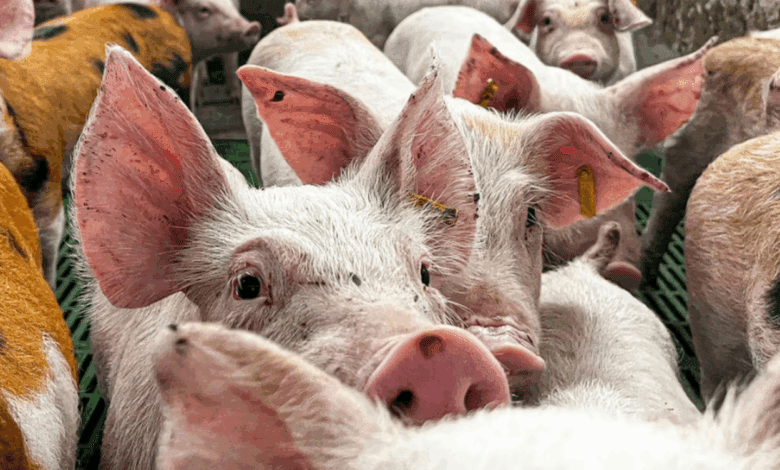
Catalonia’s agricultural advisor Òscar Ordeig emphasized that no possible explanation is being ruled out. The IRTA CReSA laboratory is currently under constant police and Seprona supervision. The outbreak has already affected 13 wild boars near Barcelona; however, the infection has not yet reached pig farms.
The region’s pork sector is expressing serious concern: potential export restrictions could lead to multimillion-euro losses. President of the Generalitat Salvador Illa, speaking in parliament, stated that the authorities are acting in coordination and supporting the industry, but declined to comment on the possibility of a virus leak from the laboratory.
Historical context and transmission routes
Although cases of dangerous viruses escaping from laboratories are extremely rare, such incidents have occurred before. For example, in 2004 there was a SARS virus leak in Beijing, and in 2007, a foot-and-mouth disease outbreak in the United Kingdom. In Catalonia, specialists consider transmission through food waste the most likely infection route, since transmission by ticks is impossible here—the region simply has none.
Veterinarian Joaquim Segalés explained that wild boars can become infected either through contact with other infected animals or through contaminated food products. The latter is considered the main hypothesis for the first case of infection in Collserola.
The authorities in Spain and Catalonia are continuing their investigation to determine the exact cause of the virus appearing among wild animals and to take the necessary measures to prevent further spread of the infection.
By the way, IRTA CReSA is a leading Spanish center for animal disease research, located in Barcelona. It develops vaccines and studies pathogens that pose a threat to agriculture. The center works closely with national and European bodies, and its laboratories are equipped with the latest technology. IRTA CReSA regularly participates in international projects to combat animal epidemics and is considered one of Spain’s key veterinary research institutions.