Events in the Eastern Mediterranean have once again drawn the attention of Spanish analysts and politicians. The interception of an Iranian missile by NATO systems off the Turkish coast marks the third such incident in recent weeks. This event highlights the region’s growing instability, directly affecting the security and economy of Europe, including Spain, given Turkey’s strategic role in migration, energy, and military cooperation.
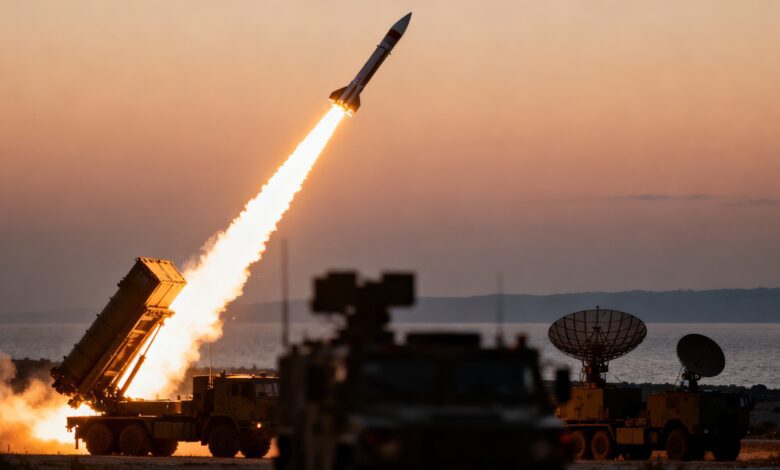
According to the Turkish Ministry of Defense, during the night from Thursday to Friday, an Iranian missile crossed the country’s airspace and was destroyed by NATO air defense systems stationed in the eastern Mediterranean. As reported by the Turkish outlet Evrensel, warning sirens sounded at about 3:25 a.m. near the Incirlik military base close to Adana, as well as in the city of Batman, located roughly 500 kilometers further east. Local residents noted unusual military activity and heightened security measures.
Reactions and consequences
This incident is already the third in a short period: previously, NATO systems intercepted an Iranian missile whose debris fell in the Dörtyol area, and another case occurred last week when missile parts were found near Gaziantep. According to russpain.com, such events are increasing anxiety among European countries, as they underscore the vulnerability of airspace and the need for NATO’s continued military presence in the region.
At the same time, tensions in Iraq have escalated again: a US military refueling aircraft crashed, resulting in the deaths of six people. While the Pentagon insists it was an accident, Iraqi armed groups have claimed responsibility for the attack. Additionally, for the first time since the escalation in the region, a European soldier was killed—a French serviceman died in a strike on the base in Erbil, with six more wounded. French President Emmanuel Macron called the attack on positions in Kurdistan ‘unacceptable.’
Impact on the economy and energy sector
Rising tensions in the region have already affected global markets. Oil prices remain steady at around $100 per barrel, raising concerns among European countries dependent on energy imports. In response, the US announced a temporary suspension of some sanctions against Russian raw materials to stabilize supplies and ease pressure on the EU economy. For Spain, experts note, this could mean potential fuel price fluctuations and new challenges for industry and transport.
Domestic political debates have intensified across EU countries amid these events. Security, border control, and participation in international military operations have once again become subjects of heated discussion. Turkey, as a key NATO partner, is stepping up measures to protect its airspace, which could lead to further restrictions on civilian flights and increased military spending.
Context and recent developments
Similar incidents involving missile interceptions near Turkish territory have occurred before, but their frequency has increased significantly since the escalation in the Middle East began. Last year, NATO systems already detected missile attempts to enter the airspace of alliance countries; however, such large-scale response measures have only become the norm in recent months. Analysts note that each new incident increases pressure on European governments and calls for a reassessment of security strategies. The surge in regional activity also affects migration flows and trade routes, which is particularly significant for Spain and other Southern European countries.