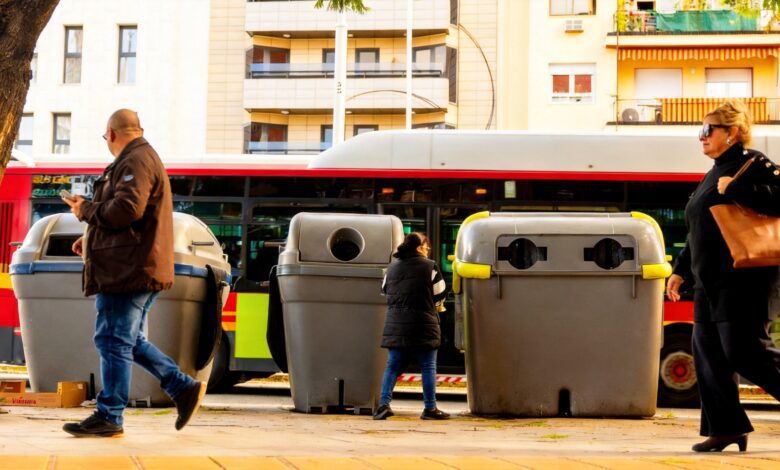
A conflict over funding for household waste recycling is intensifying in Spain, directly impacting municipal budgets and potentially reshaping national regulations. Andalucía, Madrid (excluding the capital), and Castilla-La Mancha are prepared to seek arbitration if Ecoembes does not increase payments for packaging collection and processing by €136 million annually. This figure has become a sticking point after three years of stalled negotiations, leaving the fate of nearly 2,000 towns hinging on the outcome of this dispute. According to El Pais, the result of the arbitration could affect terms for other regions that have already signed agreements with Ecoembes and also for eight autonomous communities still in talks.
The issue of reallocating waste disposal costs has become critical due to rising expenses and stricter European environmental standards. The law requires packaging producers to cover the full cost of collection, sorting, and recycling, but municipalities argue that Ecoembes reimburses only a portion of the actual expenses. Experts estimate that about €500 million are at stake—funds that could burden local budgets if increased payments from companies are not secured.
Funding gap
Authorities in Madrid, Andalusia, and Castilla-La Mancha report a significant gap between Ecoembes’ proposals and the actual recycling costs. For Madrid, the shortfall amounts to 24 million euros annually, for Andalusia 99 million euros, and for Castilla-La Mancha 13 million euros, including paper and cardboard. Municipal representatives highlight that current payments do not cover the costs of efficient collection and processing, and residents are forced to make up the difference through a waste collection tax.
In Andalusia, regional authorities and municipal associations are close to taking the dispute to arbitration after Ecoembes refused to review calculations and increase payments. In Castilla-La Mancha, the situation worsened when Ecoembes ended cooperation with local sorting plants and withheld payments for two years, while still listing the recycled materials in its reports to the ministry.
Ecoembes’ position and the view from other regions
Ecoembes, founded by the largest packaging producers, reported revenues of 871 million euros in 2024, with 585 million distributed to municipalities. The company claims its offers comply with the law and cover all necessary costs, but regions accuse Ecoembes of using outdated rates and underestimating real expenses for staff, fuel, and infrastructure upgrades.
Six autonomous communities, including Catalonia and Galicia, have already signed new agreements with Ecoembes for 2024–2028, but have included a clause to review the terms if other regions secure better payments. Some municipal representatives consider the deals insufficient, noting that the agreements cover only 60% of the necessary costs. According to El Pais, if the terms change in favor of the three disputing regions, this will automatically improve conditions for other participants as well.
Legislative details and the future of regulation
The situation is complicated by conflicting interpretations of the waste recycling law. In 2022, legislation was passed extending producer responsibility for packaging and allowing new operators to enter the market alongside Ecoembes. The main dispute centers on whether companies should pay for recycling only separately collected waste, or also for mixed waste that ends up in the gray container. The ministry and regions insist on the former, while Ecoembes and other collective responsibility systems support the latter.
In January, the Waste Coordination Commission adopted an interpretation of the law requiring companies to finance the treatment of all types of packaging, but manufacturers have yet to comply. Final regulations are expected to be set out in a new royal decree, due before August, which should eliminate ambiguities. Until then, most municipalities continue to bear additional costs without reimbursement from producers.
Context and recent developments
In recent years, the debate over waste recycling funding in Spain has intensified. In 2023, the government challenged Ecoembes’s figures on plastic bottle recycling rates, halving the official estimate. Municipal associations are preparing their own cost calculations to support regions in arbitration. Similar conflicts in the past have led to revised agreements and increased municipal payments, but a final decision on the current dispute could set a new standard for the entire country. In other EU nations, such disagreements are often resolved through courts or state regulation, affecting service costs for both the public and producers.