This year, Andalusia’s political scene has surprised even the most seasoned observers. While most parties traditionally celebrated Andalusia Day with green-and-white flags, Vox representatives decided to recall some of the region’s forgotten history. Their rhetoric once again referenced the era when Andalusia was called “Castilla Novísima” and proposed the banner of King Fernando III (Fernando III) as a symbol. This approach stands in stark contrast to the widespread adoption of Andalusian values by other political forces.
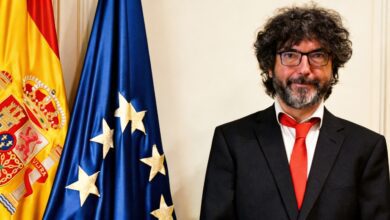
However, this time Abascal’s (Abascal) party caught everyone off guard. On the seventh anniversary of their presence in the Andalusian parliament, Vox unexpectedly turned to the figure of Carlos Cano (Carlos Cano)—an iconic musician and a symbol of the Andalusian movement. Manuel Gavira (Manuel Gavira), speaking in parliament, quoted lines from “Murga de los currelantes,” the unofficial anthem of the 1977 autonomy protests. His words about the need for work, free healthcare, and education sounded like a rebuke to the current authorities, suggesting that little has changed over the decades.
Political contradictions
Gavira did not stop at cultural allusions. He openly questioned the achievements of Juanma Moreno’s (Juanma Moreno) government, stating that the unemployment rate in Andalusia remains among the highest and that young people are still forced to seek opportunities outside the region. In his view, the change slogans touted by the ruling coalition do not match reality.
It is worth recalling that it was Vox’s support that once enabled the coalition between the People’s Party (PP) and Ciudadanos, ending nearly forty years of socialist rule. While Moreno swiftly adapted to the Andalusian agenda, Vox, by contrast, consistently distanced itself from such initiatives. The party ignored official ceremonies honoring Blas Infante and did not participate in celebrations of Andalusia’s flag day, which was established at Moreno’s initiative and with the backing of the now-defunct Partido Andalucista.
A Change in Rhetoric
Against this backdrop of distancing, Gavira’s speech came as a real surprise. His remarks were delivered amid a clear cooling of relations between Vox and Moreno’s government. Gavira recalled that as far back as 1977, the people of Andalusia were demanding ‘bread and prosperity,’ and he emphasized that these demands remain relevant today. He questioned whether the changes so widely discussed by officials have actually taken place.
After his speech, Gavira highlighted his connection to Cádiz, explaining why he had referenced the work of Carlos Cano, a native of Granada but closely linked to this city. Nevertheless, Vox has no intention of joining the Andalusian wave that has swept the region in recent years. The party sees no electoral prospects in this movement and continues to adhere to its own stance.
Historical Context
Symbolically, it was the socialists who first managed to harness Andalusian values to their advantage. Even the name of the left-wing coalition IU in the region contains a reference to Andalucía. In the early 2000s, the Partido Popular began to reconsider its stance on Andalusismo, and in 2007, with the involvement of Javier Arenas and Manuel Chaves, a reform of the Statute of Autonomy was carried out. In 2020, a new Andalusian party, Adelante Andalucía, emerged on the political scene following a split within the left.
According to recent polls, Andalusian identity is growing stronger. While in 2021 only 11.8% of the region’s residents identified more as Andalusians than Spaniards, by 2025 this figure had risen to 26.8%. Most people still see themselves as both Andalusian and Spanish, but the trend toward stronger regional self-awareness is clear.
Youth and Symbols
In the current context, Vox’s invocation of Andalusian symbols appears to be an attempt to win over the younger generation. The party enjoys its greatest support among those under 45 — people who grew up with autonomy and have been familiar with regional symbols since childhood. In Andalusian schools, Autonomy Day is celebrated every year, and the regional anthem is even played in nightclubs.
Nevertheless, despite this unexpected gesture, Vox is not planning to change its strategy and continues to distance itself from Andalusianist initiatives. The party remains focused on its own agenda, choosing not to align itself with the regional trend, which is becoming increasingly prominent as Andalusian identity gains momentum.
For reference, Vox is a Spanish political party founded in 2013, led by Santiago Abascal. The party is known for its strong stance on national identity, immigration, and the territorial integrity of Spain. In Andalusia, Vox entered the regional parliament for the first time in 2018, becoming a key player in forming right-wing coalitions. Despite occasional shifts in rhetoric, the party maintains its conservative positions and remains active in the country’s political life.