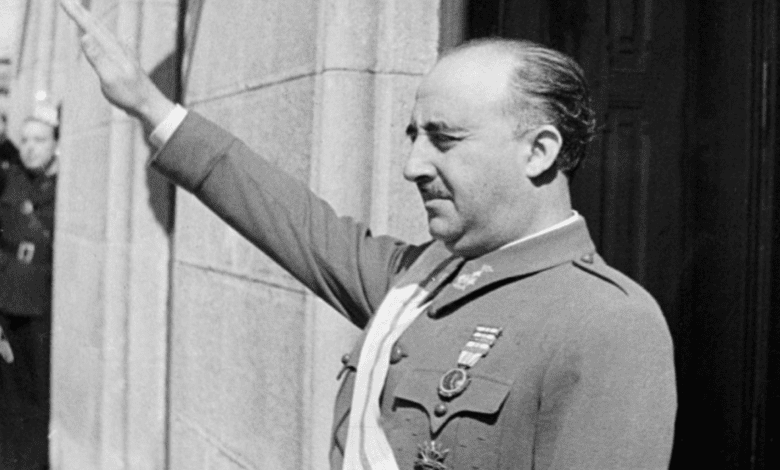
Debate continues in Spain over recent sociological data: nearly one in five young people in the country does not view the Franco era as unequivocally negative. This finding has sparked a strong reaction among teachers and historians, who are trying to understand what drives the new generation. Many of them note that for young people, the dictatorship is not a personal experience but rather an abstract chapter from a textbook—one they interpret differently from their parents and grandparents.
Fidel Gómez Ochoa, professor of contemporary history at the University of Cantabria, believes these views are less about nostalgia and more a sign of disillusionment with present-day Spain. He points out that young Spaniards never witnessed the fall of the regime or the struggle for democracy. For them, democracy is not an achievement but something taken for granted, something that has always existed and requires no effort to maintain.
A generational perspective
The professor notes that each new generation tends to criticize the values inherited from those before them. In his view, today’s youth express protest not from the left, but from the right. They do not see democracy as anything unique, because they have never known life without it. Their views are shaped against the backdrop of economic hardship, employment challenges, and the difficulty of becoming independent quickly.
Gómez Ochoa notes that many young people have no real understanding of life under the dictatorship. They never experienced the repression, fear, and restrictions that were commonplace for their parents and grandparents. For them, Francoism is something distant, almost mythical, and it doesn’t stir strong emotions.
Social Fears
Another important factor is the climate of anxiety that prevails in society. Young people often hear about a surge in migration, that Spain is losing its autonomy due to external pressures, or that the government is unable to secure a decent future for them. All of this creates a sense of instability and uncertainty, making democracy seem less valuable.
The professor points out that even if young people do not support radical parties, they feel only those parties are capable of making any real changes. This sense of hopelessness and the search for simple solutions leads some of the youth to sympathize with authoritarian models that promise order and clear rules.
Loss of Historical Memory
Many experts believe that one reason for this attitude is weak ties to history. Schools and universities rarely discuss the true consequences of the dictatorship or how hard it was to regain freedoms and rights. For young people, it’s simply one of many periods—no more significant than other chapters in their textbooks.
As a result, some young people begin to see Francoism not as a tragedy, but as an alternative to today’s problems. They don’t perceive it as a threat because they don’t know what was lost and what price was paid for democracy.
Societal response
The emergence of such attitudes is alarming to educators and historians. They believe that society should talk more about the past so that new generations understand why democracy matters and how easily it can be lost. However, for now, many young Spaniards continue to view the country’s history through the lens of their own problems, rather than through the experiences of older generations.