Starting in 2025, Spanish drivers will face a significant change: traditional safety triangles are being phased out, replaced by modern V16 beacons. From now on, every vehicle must be equipped with this device, which not only emits a warning light but also automatically transmits the car’s location to emergency services. This new regulation is designed to improve road safety and reduce the risk to drivers forced to stop on the roadside.
However, devices that fail to meet official standards have already appeared on the market. Some companies are selling beacons that lack proper certification, which can lead to fines—and more importantly, complications in an emergency. It’s crucial for drivers to know how to distinguish a genuine V16 beacon from a counterfeit to avoid falling victim to unscrupulous sellers.
What’s changed
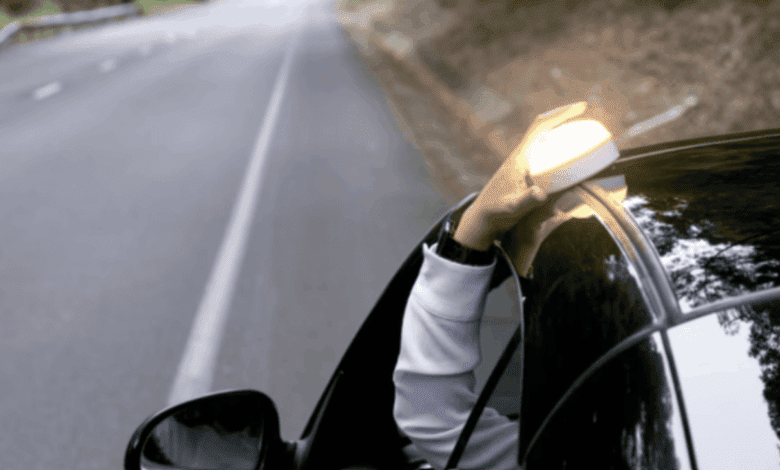
As of January 1, 2025, the V16 beacon has become mandatory for all vehicles in Spain. This device attaches to the car’s roof with a magnet and emits a bright light visible from a long distance. Unlike the old triangles, the beacon is equipped with built-in GPS and a SIM card, which allows it to automatically send the vehicle’s location data to the road authority’s cloud system. Information is transmitted every 100 seconds, with no personal details shared—only the coordinates of the road obstruction.
The main goal of the innovation is to reduce the number of accidents and injuries associated with placing warning triangles on the roadway. Now, drivers no longer need to leave their vehicles to mark the scene of an accident or breakdown: it’s enough to activate the beacon, and information is immediately sent to emergency services.
How to make the right choice
In response to the new requirements, some beacons have appeared on the market that do not meet the standards. Some lack official certification, which means they do not guarantee data transmission to the road service system. Buying such a device could result in an €80 fine and a lack of assistance in a critical situation.
To avoid mistakes, pay attention to three key indicators. First, the body of the beacon should display a certification code starting with LCOE or IDIADA, followed by a sequence of digits. Second, the device must feature an official approval logo—it can be engraved, embossed, or firmly attached, but not just a regular sticker. Third, the beacon must be compatible with the DGT 3.0 platform, confirming its ability to transmit real-time coordinates.
Technical requirements
The V16 beacons must comply with a set of technical specifications. They emit a yellow light, visible at 360 degrees horizontally and up to an 8-degree deviation vertically. The light signal must be visible from at least one kilometer and operate for no less than 30 minutes. The flashing frequency ranges from 0.8 to 2 Hz. Additionally, the device must be resistant to moisture and extreme temperatures, and must have a built-in IoT SIM card to transmit data for free to the road authorities’ platform.
These features allow emergency services to quickly receive information about the location of incidents and respond efficiently. Drivers should remember: if a beacon doesn’t meet any of these requirements, it is considered invalid and does not exempt the user from liability.
The problem of counterfeits
In recent months, there has been a rise in the sale of uncertified beacons. Some companies offer devices that look similar to the originals but lack essential functions or official markings. This increases the risk of widespread fraud and could result in the beacon failing in a critical moment.
Consumer organizations are calling on authorities to tighten controls over the sale of such devices and to inform citizens about the associated risks. Drivers are advised to check the beacon against the official list of approved models before purchasing, to avoid potential problems.