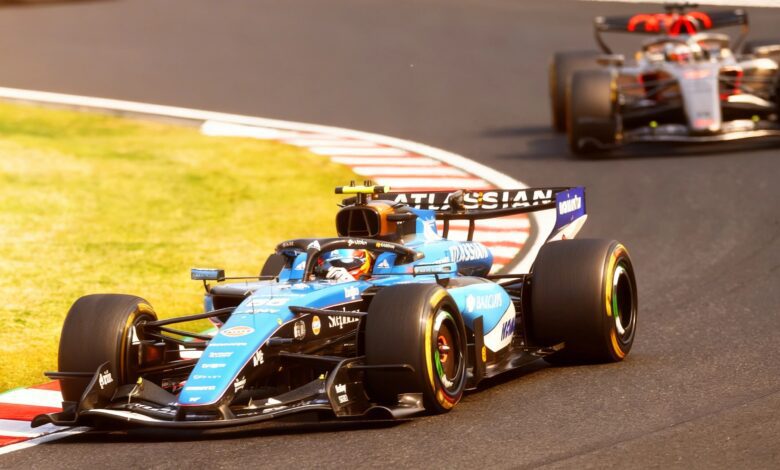
The aftermath of the accident at the Japanese Grand Prix has once again brought Formula 1 safety into the spotlight. Carlos Sainz, who finished 15th, did not hide his disappointment but focused on a more important issue—the risks posed by modern energy delivery systems in race cars. He believes the current regulations create conditions where accidents like Bearman’s are inevitable. Sainz insists drivers’ warnings can no longer be ignored, otherwise the consequences could be far more serious than simply losing positions on the track.
The Williams driver noted that the team used all available resources to stay ahead of rivals despite a clear lack of pace. He stressed that the upcoming five-week technical break is an opportunity for engineers and mechanics not only to refine the FW48 but also to rethink their approach to safety. Sainz believes this is the moment for Williams to move forward, provided the team shows ambition and is not afraid of radical decisions. According to him, the current season has already shown that old methods no longer work, making this the time for a thorough analysis and an updated strategy.
Technical risks
Sainz is particularly concerned about the use of so-called ‘boost’—an extra power mode that lets cars accelerate sharply on straights. He estimates the speed difference can reach 50 km/h, and any mistake or technical fault could result in crashes with forces of up to 50 G. In Japan, this situation ended relatively safely thanks to a run-off area, but on tracks like Las Vegas or Baku where there is less room for error, the consequences could be catastrophic. Sainz insists the regulations need to be reviewed before the next round in Miami to eliminate such risks.
He also noted that modern cars rely too heavily on energy management, which leads to artificial overtakes and makes the races less exciting. According to Sainz, if reducing power for safety is necessary, it should be done—even if it results in slower lap times. He believes that such changes would not only make racing safer, but also more interesting for fans, since on-track battles would be fairer and less predictable.
Challenges for teams
Inside Williams, there is currently a sense of searching for new solutions. Sainz noted that the short winter break and delays with testing had a negative impact on the start of the season. However, the upcoming break offers a chance not only to refine the aerodynamics and lighten the car, but also to reconsider fundamental approaches to working with the equipment. According to russpain.com, such periods of forced downtime often serve as a starting point for technological breakthroughs in Formula One.
At the same time, Sainz called on not only his own team but all championship participants to maintain open dialogue with the FIA and FOM. He believes that only joint efforts will close gaps in the regulations and prevent the recurrence of dangerous incidents. The driver emphasized that resistance to change from the teams could lead to new accidents, especially on street circuits where the consequences of mistakes are too severe.
Reaction and prospects
The situation with Williams and other teams echoes recent events at Aston Martin, where internal disagreements and technical problems led to tension within the team. As the analysis of the conflict surrounding the AMR26showed, timely responses to challenges can be the key to success or, on the contrary, lead to a prolonged crisis. In Formula One, any delay in making changes often results in a loss of competitiveness and an increase in the number of accidents.
In the coming weeks, attention will focus on how the FIA and F1 respond to Sainz’s call. If the regulations do change, it could mark the start of a new era of safety and fair competition on the track. Otherwise, the risks for drivers and teams will remain the same, and fans will continue to watch races with concern for their favorite athletes.
Carlos Sainz is one of the most experienced and respected Formula 1 drivers, known for his integrity and attention to detail. Throughout his career, he has repeatedly raised issues of safety and technical standards, earning a reputation not only as a fast racer but also as an advocate for his fellow drivers. His opinions often set the agenda for discussions about rule changes, and his public appeals to the FIA and F1 are seen as a call to action for the entire industry.