Air travel has long become routine for millions of people. Yet every time passengers go through airport security, many feel a slight sense of unease—especially when facing the modern scanners before boarding. These devices, which look like booths or bulky cabinets, raise many questions: what exactly do they see, how do they work, and are they safe for your health?
Security scanners are an integral part of safety protocols in every major airport. Their main task is to detect prohibited items that could pose a threat to other passengers and crew. Various technologies are used for this purpose, including X-ray radiation and millimeter waves. Each type of scanner has its own features and delivers a different level of image detail.
How it works
X-ray scanners, most commonly used for checking baggage and carry-ons, operate on the principle of transmitting radiation through items. The rays pass through bags and suitcases, producing an image with varying degrees of transparency on the operator’s screen. Metals, liquids, electronics—all are visible in the scan, with color coding helping to quickly distinguish organic from inorganic materials.
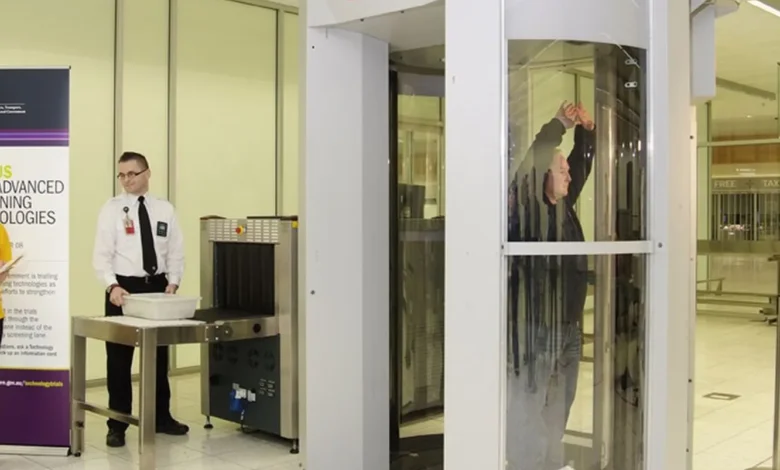
Passenger screening typically involves scanners based on millimeter-wave technology. A person steps inside the device, raises their arms, and within seconds the system creates a three-dimensional model of the body. The display shows a schematic image highlighting suspicious areas in color. The operator only sees outlines, without any anatomical details, which ensures privacy is maintained.
Health safety
Many people are concerned about the safety of such scanners. X-ray machines for luggage do emit ionizing radiation, but the dose is minimal and poses no risk to people nearby. For passengers passing through the scanner, a technology unrelated to X-rays is used. Millimeter waves do not penetrate deeply into tissue and are considered safe even with regular exposure.
Numerous studies confirm that the radiation dose from passing through a scanner is hundreds of times lower than from a typical X-ray. For comparison, a single high-altitude flight exposes a person to more cosmic radiation than dozens of security checks. However, pregnant women and people with certain medical conditions can always choose an alternative screening method—manual inspection.
What the operator sees
Security personnel do not see a ‘naked’ image of the passenger on the screen. Modern systems are specifically designed to ensure anonymity and confidentiality. The monitor only displays a schematic figure highlighting potentially suspicious areas. If the system detects anything, the passenger may be asked to undergo additional screening.
With baggage, the image is more detailed, but the operator’s job is not only to identify the shape of the item but also to determine its composition. Special algorithms are used to analyze the density and structure of the contents. If there are concerns, the bag is opened in the presence of the owner.
The technologies of tomorrow
Every year, screening systems become more advanced. In some airports, scanners are already being tested that can identify explosives and narcotics based on their chemical composition. Artificial intelligence helps speed up the screening process and reduces the risk of error. In the future, passengers may not even need to remove laptops and liquids from their bags—smart scanners will handle it automatically.
However, the main goal remains unchanged: to ensure the safety of everyone on board. That’s why any new technology undergoes strict certification and oversight by international organizations. Passengers only need to follow the rules and not worry about their privacy or health.
In case you didn’t know, the largest manufacturers of airport scanners are Smiths Detection, Rapiscan Systems, and L3Harris Technologies. Their equipment is used in most international terminals worldwide. These brands continuously introduce new technologies to make security screenings as fast, accurate, and safe as possible for both passengers and staff.