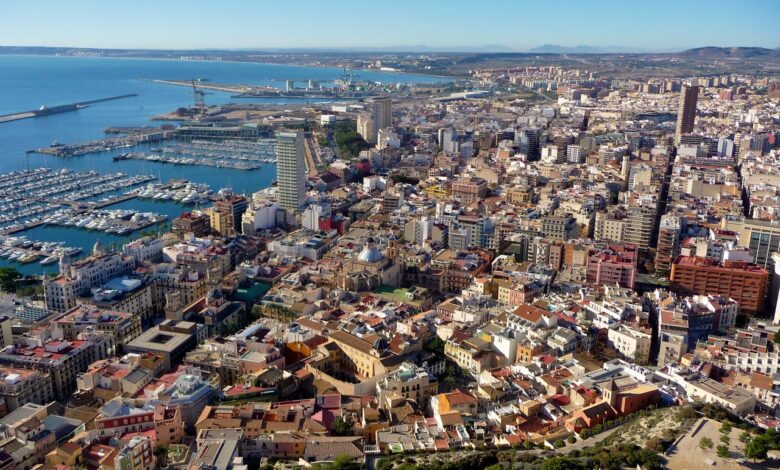
Alicante’s real estate market closed 2025 on the verge of a new record: the average price per square meter reached €2,508. Over the year, property values here rose by 10.7%, with a 1.5% increase in the last three months. Despite a slowdown in December, the city came within touching distance of the all-time high set in October. Still, Alicante remains below the national average, which stood at €2,639 per square meter in December.
While property prices nationwide jumped 16.2% over the year, Alicante is showing a steadier, more moderate growth. This suggests the local market evolves on its own terms—resisting nationwide euphoria yet keeping pace with broader trends.
District contrasts
Within the city, the differences between neighborhoods are striking. The most expensive area remains Playa de San Juan – El Cabo, where prices reach €3,585 per square meter and have risen 15% over the year. Downtown isn’t far behind: here, prices are up 14.1% year-on-year to €3,375 per square meter. Even skeptics were surprised by San Blas – Pau, which posted a 22.6% increase, with the average now at €2,556 per square meter.
But it’s not just the upscale districts setting records—some of the most rapid growth has happened in more affordable areas. In Virgen del Remedio – Juan XXIII, prices shot up 27.1%, though the average is still just €1,220 per square meter. Los Ángeles – Tómbola – San Nicolás and Campoamor – Carolinas – Altozano also posted strong gains: 19.2% and 21% respectively.
Trends and outlook
The current real estate landscape in Alicante is more than just numbers. Behind the statistics lie real shifts in supply and demand. Districts once considered “affordable” are now attracting investors and young families. Villafranqueza – Santa Faz – Monegre stands out in particular, with property prices rising by 27.8% in a year — the highest increase among all city neighborhoods.
Experts point out that the fastest growth rates are being seen in the more affordable areas. This is because buyers unwilling to pay premium prices are increasingly looking at alternative locations. As a result, the gap between “expensive” and “cheap” districts is gradually narrowing, making the market more balanced.
Stability or overheating
Despite the impressive figures, analysts are not rushing to call the market overheated. Unlike some other Spanish cities where prices are surging sharply, Alicante is seeing steady, gradual growth. In the last quarter, the average home price increased by just 1.5%, indicating a healthy, sustainable trend with no signs of a bubble.
However, property owners are already asking themselves whether it’s time to take advantage of the moment and sell at peak prices. Many are surprised to learn the true value of their apartments — especially in neighborhoods that until recently were considered less desirable.
What’s next
According to recent data, Alicante remains one of the most attractive residential real estate markets for investment. Steady growth, a lack of sharp fluctuations, and high buyer activity make the city appealing to both locals and newcomers. Experts predict that these trends will continue in the coming months, though they do not rule out local adjustments in certain neighborhoods.
In case you didn’t know, idealista is the largest online real estate search platform in Spain, established in 2000. The service provides up-to-date price information, analytical reports, and tools for property valuation. idealista is regarded as one of the main sources of information for buyers, sellers, and investors in the Spanish property market.
Previously, we reported that housing prices in Sevilla reached a historic high. That article took a close look at the reasons behind the rapid growth and the differences between city districts. Read more on this topic in our feature Housing prices in Sevilla hit a record high — what is happening in the real estate market.