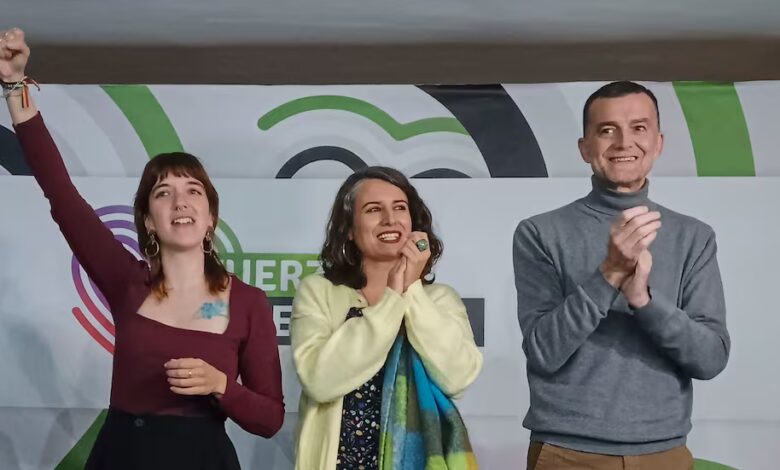
Unidas por Extremadura achieved a significant breakthrough in the recent elections, securing seven seats in the regional parliament and gaining over 17,000 more votes. This outcome marked an unexpected surge for the left, which had been losing ground in recent years. However, even with such notable growth, tensions within the parties to the left of the Socialists remain high.
By the morning after the elections, leaders of key organizations issued strong statements that highlighted a lack of unity. Federal coordinator of Izquierda Unida Antonio Maíllo noted that the coalition’s success under Irene de Miguel is a model for upcoming campaigns in Aragón, Castilla y León, and Andalucía. He emphasized that broad alliances and close collaboration with local communities must be at the heart of future victories.
Internal divisions persist
At the same time, Podemos representative Pablo Fernández stressed that the success in Extremadura was due to a strong local structure and independence from the PSOE. He openly criticized the party Movimiento Sumar, led by Yolanda Díaz, and backed all of Irene de Miguel’s statements, including her recent sharp remarks towards the deputy prime minister. During the campaign, de Miguel did not hold back in criticizing Díaz, despite previously supporting her candidacy against the wishes of the Podemos leadership.
Against the backdrop of heavy Socialist losses and a crisis within the ruling coalition, Mayo called on the PSOE to abandon its wait-and-see approach in favor of active measures, particularly regarding housing policy. He reminded that more than 600,000 rental contracts are due to expire in the coming months, making their renewal a pressing necessity. That same day, the government announced an agreement with EH Bildu to extend social measures, meeting one of the key demands from its left-wing allies.
Government criticism
Mayo again warned Prime Minister Pedro Sánchez that inaction will not stop the rise of right-wing forces. Speaking at a press conference in Sevilla, he emphasized that success in Extremadura was achieved thanks to close ties with local residents and internal unity. In his view, this approach can revitalize the left-wing movement across the country. He also noted that the absence of Movimiento Sumar in the coalition is due to the need to build alliances based on real conditions and the interests of the territories.
Mayo expressed hope that a similar strategy would be adopted in Aragón, where negotiations are expected to conclude by week’s end. He believes the main keys to success remain a joint platform, respect for organizational autonomy, and broad local presence. All of this, he said, enabled the creation of a sustainable political project in Extremadura.
Without unity
Pablo Fernández delivered a harsh critique of the PSOE, stating that the government has effectively lost its ability to govern the country. He accused the socialists of passivity, which, in his view, is boosting support for Partido Popular and Vox. Fernández called Sánchez’s speech after the elections “shameful” and noted that the lack of analysis of the defeat and the high turnout of dissatisfied voters points to a complete disarray in PSOE leadership.
Responding to questions about possible negotiations with Díaz’s party in Aragón, Fernández once again stressed that their success in Extremadura was the result of years of grassroots work and a real presence in local communities. He emphasized that only such organizations are truly able to represent the interests of left-wing voters without being subordinate to the socialists.
Election results
As a result of the election, Partido Popular won 29 seats, increasing its representation by one. PSOE lost ten seats and now holds 18 deputies. Vox strengthened its position with 11 seats, six more than before. Unidas por Extremadura came fourth with seven deputies, three more than in the previous legislature. Voter turnout was 62.73%.