Engineers at the Massachusetts Institute of Technology (MIT) have taken a step that could redefine electric vehicle capabilities. Their latest innovation is a battery capable of powering a car for up to 1,600 kilometers on a single charge. Built using the most readily available and common materials, this development has immediately drawn the attention of automakers and industry experts.
Instead of the usual lithium and cobalt, long considered the standard for modern batteries, the MIT team chose a combination of aluminum, sulfur, and salts. This approach not only reduced production costs but also improved safety: the battery is impact-resistant and virtually non-flammable. Initial testing revealed that even with ultra-fast charging, the cells retained their properties and did not lose capacity after hundreds of cycles.
Electrode-to-Pack Technology
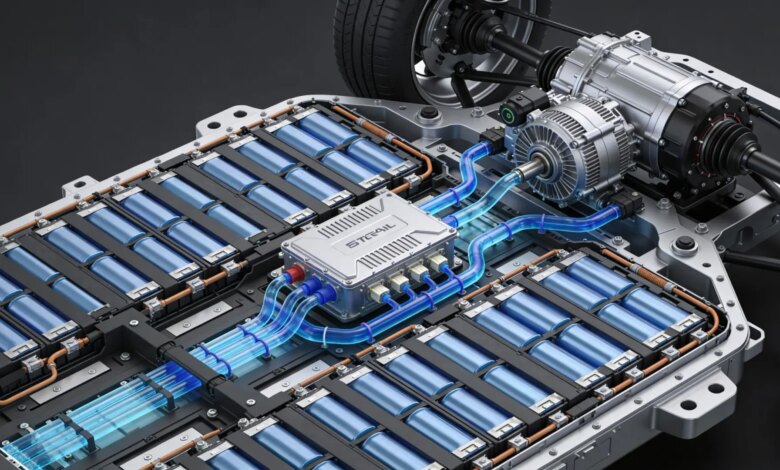
The key to this innovation is the Electrode-to-Pack (ETOP) technology, which eliminates the need for traditional battery cells. Now, each battery module serves multiple functions at once, significantly reducing so-called “dead zones” within the case. As a result, the battery structure has become more compact, and internal space is used more efficiently.
ETOP technology delivers record-breaking energy density — nearly 50% higher than current lithium-ion counterparts. This means electric vehicles equipped with such batteries will be able to travel much longer distances without recharging, while the batteries themselves will be lighter and cheaper to produce.
Savings and affordability
One of the key advantages of the new battery is its cost. Experts estimate that producing this type of battery is about six times cheaper than manufacturing lithium-ion equivalents. This paves the way for mass adoption of electric vehicles, as lower prices for a key component could make eco-friendly transport accessible to far more people.
Additionally, eliminating rare and expensive metals reduces dependence on unstable raw material markets and cuts the environmental footprint of production. MIT engineers emphasize that their battery is not only safer but also easier to recycle, which is especially important for the industry’s future development.
Industrial outlook
The project is being developed in partnership with 24M Technologies, a company specializing in innovative energy storage solutions. Together with MIT, they have already conducted a series of successful tests and are preparing to scale up production. According to them, the new technology will allow electric vehicles to compete with traditional cars not only in terms of eco-friendliness but also on price.
If batteries with these characteristics enter the market, it could spark a true electric car boom. Manufacturers would be able to offer vehicles with greater range and fast charging, while consumers could save on running and maintenance costs.
The Future of Electric Cars
The emergence of next-generation batteries could become a turning point for the entire automotive industry. Leading carmakers in the US and Europe are already keeping a close eye on MIT’s progress, as competition with Chinese manufacturers, who are rapidly advancing their own technologies, is becoming increasingly intense.
In the coming years, we can expect the first mass-produced electric cars equipped with aluminum-sulfur batteries. This will not only extend driving range but also make electric vehicles more appealing to mainstream buyers.
If you didn’t know, the Massachusetts Institute of Technology (MIT) is one of the world’s leading research universities, founded in 1861 in Cambridge, Massachusetts. MIT is renowned for its breakthroughs in engineering, physics, and new technologies. 24M Technologies, founded in 2010, specializes in innovative battery solutions and collaborates closely with top US research centers.