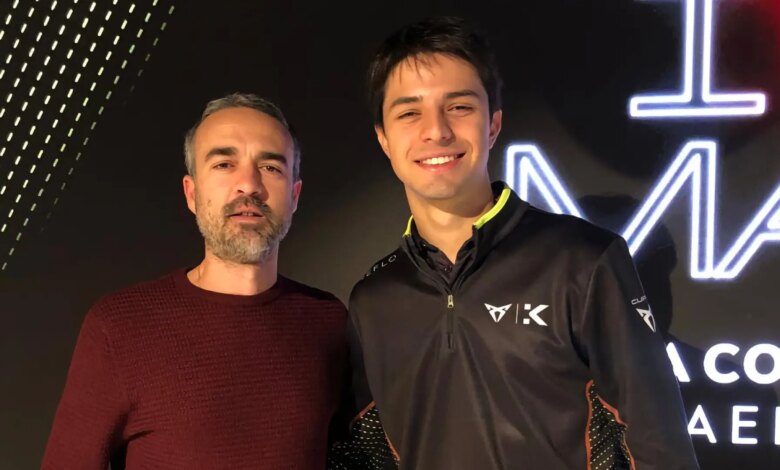
Formula E in 2026 has become not only a stage for technological innovation but also for true psychological battles. The Spanish driver Pepe Martí, only 20 years old, has already impressed fans and experts alike with his rapid progress and candid assessments of this new championship. His journey with the Cupra team has turned out to be more than just another career step; it is a genuine test of endurance, where physical demands gave way to intellectual challenges.
Martí quickly adapted to the rhythm of electric racing, scoring points in two of the season’s first three rounds. Yet behind this success is an intense struggle with unfamiliar tracks and cars that require absolute concentration. Ahead of the round in Jeddah (Yeda), he shared details rarely revealed to the public: here, even the slightest mistake can cost everything, and the gap between first and last is measured in fractions of a second.
The challenge of qualifying
Unlike traditional series, where a driver can get away with small errors, in Formula E, every lap is an exam. According to Martí, qualifying is harder for him than the race itself. The reason is simple: track length rarely exceeds three kilometers, so any wrong move is immediately reflected in the result. New tires offer an advantage for only one or two laps, and in that time, you must get everything out without a single misstep.
The driver admits that adapting to these conditions requires not only skill, but also the ability to quickly respond to engineers’ advice. According to him, the Cupra team played a key role in bringing him up to a competitive level after just a few days of testing. Particular attention is paid to details: for example, the absence of rear brake discs requires using torque to warm up the tires, completely changing his usual driving technique.
New standards
Martí does not hide the fact that his first outings in Formula E were far from ideal. Falling two and a half seconds behind the leader shocked him, but by the fourth day of testing, the situation had changed. The team’s systematic approach, constant simulator work, and error analysis quickly helped to close the gap. This progress was not just about talent, but also the result of painstaking effort, where luck played only a minor role.
Cupra relies on a scientific approach: every element of racing is analyzed in detail, and the driver must be ready for continuous learning. In just two and a half months, Martí has traveled a path that usually takes others years. He emphasizes that success comes from many factors—from working with engineers to personal discipline and the willingness to adapt.
Mental load
The main difference between Formula E and other series lies not so much in physical but in cognitive load. While in Formula 2 a driver may lose kilos over the course of a race due to sheer physical strain, here fatigue sets in from having to keep track of dozens of parameters in your head. Every lap isn’t just a fight for position, but also a constant monitoring of battery charge, power usage, overtaking strategy, and even radio communications, which use a special code.
Martí notes that by the end of the race he feels drained not from muscle fatigue, but from continuous mental effort. In Formula E, there’s no opportunity to let your guard down for even a second: the slightest miscalculation or wrong radio command can undo all the effort. That’s what makes the championship unique and demands a completely new skill set from the drivers.
Stereotypes and ambitions
Despite the stereotype that Formula E is a fallback for those who missed out on Formula 1, Martí is confident: the competition here is just as tough. Many participants are former Formula 1 drivers or closely linked with top teams. Even the most experienced racers find it hard to win in this environment. The Spaniard emphasizes that this is a field of real professionals, and every start is a challenge—even for those used to podiums in other series.
The dream of Formula 1 is still alive, but for now Marti is fully focused on success with Cupra and in Formula E. He notes that the support from the brand has been unprecedented, and switching championships has given him a fresh perspective on motorsport. The organization of the races, the team atmosphere, and the opportunity to develop as a professional—all of this keeps him in electric racing, despite the lure of moving up to the ‘royal’ class.
Future plans remain flexible: Marti does not rule out returning to his Formula 1 dream in a few years, but for now his main goal is to establish himself among the Formula E leaders and continue to impress fans with his unconventional approach and determination.
Pepe Marti is one of Spain’s brightest young racing drivers, who quickly made a name for himself in international series. Born in Barcelona, he worked his way up from karting to professional teams, where his talent and dedication did not go unnoticed. In 2026, Marti became the face of Cupra in Formula E, where his unique driving style and analytical approach to racing drew attention not only from experts but also from the general public. His career is an example of how modern drivers must combine physical training with intellectual flexibility to succeed in the rapidly evolving world of motorsport.