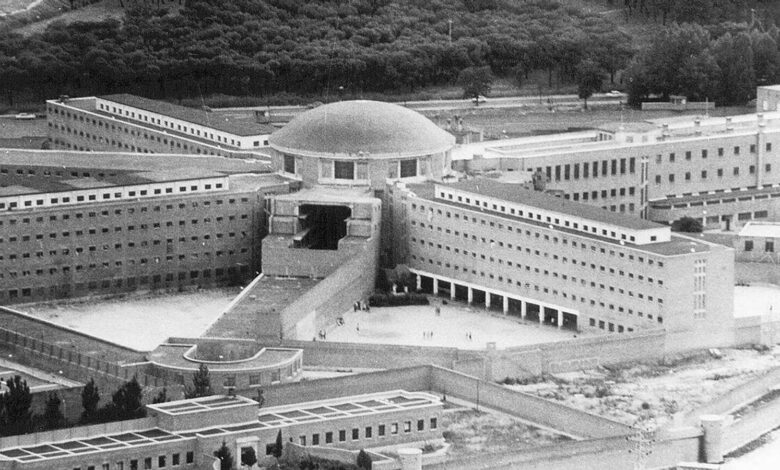
Madrid was once home to the Carabanchel prison (Carabanchel), the largest penitentiary built during Franco’s dictatorship. Today, it survives only in the memories of former inmates and researchers, as the building was demolished in 2008 and its archives were lost or destroyed.
Historian and archaeologist Luis A. Ruiz Casero has devoted a new study to the fate of Carabanchel, tracing its journey from construction using prisoner labor to its complete disappearance from the city’s map. His work is based on testimonies from former inmates, local residents, and staff, as well as an extensive reconstruction of events, despite the lack of official documents.
Carabanchel prison was conceived in the 1940s as a tool of control and intimidation. The architectural project, designed in a panoptic style, was already outdated in Europe, but was chosen by Spanish authorities for its symbolic significance and monumentality. The construction was carried out by prisoners, many of whom were political opponents of the regime. Hundreds of people worked on the site daily in harsh conditions, facing hunger, disease, and death.
In its early years, Carabanchel became one of the centers of repression. From 1944 to 1953, numerous executions and acts of violence were recorded here. The majority of inmates were political opponents: communists, socialists, anarchists, and supporters of regional independence. The prison not only isolated but also served as a place of punishment and suppression of dissent.
Over time, Carabanchel transformed into a kind of school of political solidarity. Inside, communities formed that supported each other and maintained connections with the outside world. Women, relatives of the inmates, played an important role in organizing aid, passing information, and supporting prisoners. Their participation became a key element in the struggle for inmates’ rights.
In the 1970s, against the backdrop of democratic changes, protests and uprisings intensified in the prison. The 1977 uprising was particularly significant, when inmates took control of parts of the facility, demanding better conditions and reforms. These events drew public attention to issues in the penitentiary system and became a milestone in the history of the fight for prisoners’ rights.
However, with the arrival of democracy, Carabanchel was not closed immediately. The prison continued to operate until 1998, and in its later decades, its walls witnessed new issues: the spread of drugs, the HIV epidemic, unsanitary conditions, and official indifference. According to researchers, during this period the prison turned into a place of neglect and human suffering, while the state chose to look the other way.
After Carabanchel was closed, social organizations and former inmates advocated for a memorial and a hospital to be established on the former prison site. However, these initiatives were not implemented, and the building itself was demolished, which became a symbol not only of urban redevelopment but also of collective oblivion.
The work of Luis A. Ruiz Casero emphasizes that the story of Carabanchel is not only one of repression, but also of resistance, dignity, and memory. The researcher notes that it was the collective efforts of inmates, their families, and activists that helped preserve the memory of events that had long remained in the shadows.
Today, Carabanchel remains a significant reminder of the complex chapters of Spain’s history. Its fate reflects not only the shifts in the country’s political life, but also society’s attitude toward the past, issues of justice, and remembrance.