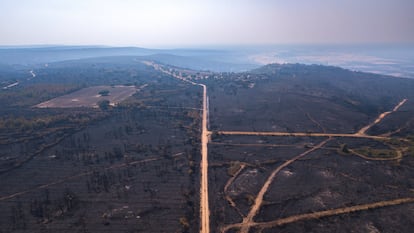
The fight against large-scale wildfires continues in Castilla y León, where blazes have spread over the past week across the provinces of León and Zamora. The disaster began on Sunday afternoon, when the first major fire was reported near Molezuelas de la Carballeda (Zamora). By the end of the week, the scorched area had exceeded 30,000 hectares, with the death toll rising to two people.
The fires have affected not only farmland and forests but also unique natural sites. Notably, the flames reached Las Médulas (León), a UNESCO World Heritage site. Around the ancient Roman mines, nearly 6,000 hectares were burned. Local residents and volunteers, despite fatigue and danger, assisted firefighters by providing food and water and by independently protecting their homes and livelihoods.
Efforts were hampered by strong winds, extreme heat, and a lack of equipment and personnel. Many residents voiced dissatisfaction with the regional authorities, citing underinvestment in firefighting services and inadequate preparedness for such emergencies. Firefighters and volunteers complained about outdated equipment and the lack of basic working conditions.
Fires broke out not only in Castilla y León, but also in neighboring regions: Galicia, Asturias, and the north of Extremadura. Across the country, over 100,000 hectares were burned during the summer. In some towns, such as Carucedo (Carucedo, León), residents were forced to defend their homes themselves using improvised means. In other places, like Congosta and Ayóo de Vidriales (Congosta, Ayóo de Vidriales, Zamora), evacuations were carried out in haste, with roads blocked due to the fire and emergency response activities.
In villages caught in the path of the fire, people faced the loss of property and the destruction of homes and farms. In some cases, evacuees found temporary shelter in sports halls and public buildings, where they were provided with only basic living conditions. Estimates indicate that the number of people forced to leave their homes exceeded 9,000.
Firefighting units, including BRIF brigades, noted differences in training and equipment levels between national and regional services. Many experts pointed to staff shortages, lack of training, and weak coordination between various agencies. This led to delays in response and inefficient use of resources.
In some localities, such as Losacio (Losacio, Zamora), residents recalled past tragedies when fires claimed the lives of locals and firefighters. Despite promises from authorities to compensate for losses and strengthen protection, many noted that little had changed: a lack of investment, dwindling rural populations, and the decline of agriculture continue to exacerbate the region’s vulnerability to natural disasters.
Throughout the week, volunteers and local residents not only helped fight the fires, but also supported each other, organizing temporary patrols and independently watching over the safety of their villages. However, fatigue and frustration mounted, and criticism of the regional authorities grew louder. Many highlighted that the lack of coordinated action and insufficient resources were among the main reasons for such extensive destruction.
By the end of the week, the situation in some hotspots had stabilized, but the threat remained due to new outbreaks in neighboring regions, especially in Galicia and southern Castilla y León. Firefighters continued to work in difficult conditions, and local residents hoped for a swift end to the disaster and the restoration of their homes and livelihoods.
The wildfires in Castilla y León have become one of the most devastating natural disasters in recent years in Spain, once again exposing issues with emergency preparedness, lack of investment in rural areas, and the need to reform the disaster response system.