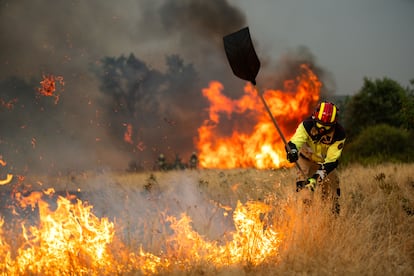
Large-scale wildfires continue to rage in Castilla y León, hitting the provinces of Zamora and León particularly hard. Firefighters on the ground openly speak about the serious challenges they face: lack of coordination, staff shortages, limited supplies, and extremely low wages.
Since the onset of the new wave of fires late last week, firefighters report having to work under constant stress and overload. Many admit that there are often not enough people on site and that the organization of work leaves much to be desired. In some cases, crews located near the fire source did not receive orders to deploy and were forced to remain at the base, despite clear threats to surrounding areas.
One firefighter, who wished to remain anonymous due to concerns about possible repercussions from management, said that his crew in Zamora watched smoke and flames but did not receive permission to respond. As a result, the team decided on their own to head to the fire scene at night to help colleagues and try to contain the spread of the blaze. Thanks to their actions, the fire was prevented from reaching the village of Sarracín de Aliste.
Firefighters report that they often have to take the initiative themselves, as not all supervisors have the necessary knowledge and experience to make quick and effective decisions in extreme situations. Some specialists use a counter-burn tactic—a controlled burn—to stop the spread of fire. However, such measures require a high level of expertise and involve risks, so not all technical supervisors are willing to take on that responsibility.
With limited resources and support, firefighters are forced to make do with the bare minimum. For demanding work that can last up to 22 days a month, they receive about €1,300, including all bonuses and overtime. Without these additional payments, their salary falls below the minimum wage set in the country. After the 2022 tragedy in the Sierra de la Culebra mountains, when a fire claimed four lives and devastated tens of thousands of hectares of forest, working conditions improved slightly, but employees say the changes have been minor.
Problems with food provision and basic needs remain unresolved. Firefighters say they sometimes have to eat at odd hours, and food is often supplied by locals, as official catering is lacking. During a recent shift, staff were able to eat only thanks to help from residents of Yeres village, who prepared sandwiches for them.
Firefighters in Castilla y León emphasize that despite all the challenges, they continue to do their jobs, but expect the authorities to pay more serious attention to their concerns. They believe that only after major tragedies are any measures taken, but systemic changes still do not occur.
Fires in the region continue to pose a serious threat to nature, local residents, and the economy. Firefighters hope that their voices will be heard and that the situation regarding resources, organization, and pay will improve.