Amid the extreme heatwave that gripped Spain in the summer of 2025, the Bioparc in Fuengirola (Málaga) became a true climate refuge. The park creates a unique microclimate, where air temperatures are 5 to 12 degrees lower than on the scorching asphalt streets of the city. This effect is achieved thanks to a carefully designed environment that replicates humid tropical forests.
The secret to this coolness lies in the park’s design features. About 85% of its total area—over 20,000 square meters—is covered by dense vegetation. The canopies of tall tropical trees provide deep shade, shielding visitors from the blazing sun. The natural process of moisture evaporation by plants, known as evapotranspiration, combined with numerous water features such as streams and inner beaches, efficiently cools the air. Thus, the park’s architecture and living components work together as a unified climate control system.
The park’s botanical collection features more than 100 different plant species, including both native and exotic specimens from Madagascar and Southeast Asia. Ficus trees, such as the Ficus microcarpa and rubber tree (Ficus elastica), play a special role in creating the microclimate. Their massive canopies and aerial roots, which absorb moisture directly from the air, form entire ecosystems. Nearby grow other unique species like the Madagascar screw pine (Pandanus utilis) with its stilt roots and the spectacular ceiba (Ceiba speciosa), also known as the ‘palo borracho’ or ‘drunken tree,’ capable of storing water in its trunk.
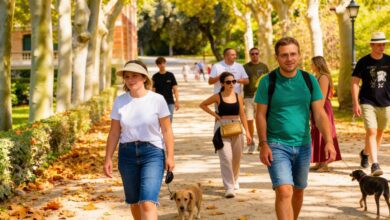
The significance of such green areas goes far beyond aesthetics. They play a key role in combating the ‘urban heat island’ effect, where asphalt and concrete retain solar heat, raising the surrounding temperature. Scientific studies confirm that during the day, the temperature difference between a green area and a paved street can reach ten degrees. Bioparc representatives note that on their grounds, this difference is often even higher.
In the context of global climate change, such projects are becoming not just attractions, but a vital necessity. The Bioparc Fuengirola stands as an example of sustainable and comfortable urban planning, serving as the ‘green lungs’ in the heart of this resort city. Reinforcing its commitment to educational and environmental goals, the park has extended its opening hours in August until 11:00 p.m. This gives visitors the opportunity to stroll through nocturnal jungles in the pleasant cool and witness a spectacular African dance show.