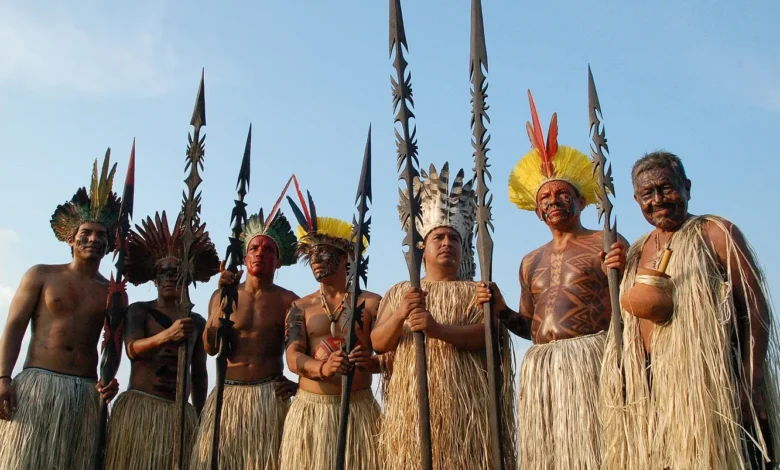
Across the globe, there are still communities that remain largely untouched by globalization. Their way of life seems frozen in time, yet even the most isolated peoples cannot completely escape change. Outside interference, land development, and the growth of tourism gradually reshape their traditions. How do these tribes manage to preserve their identity, and what is happening to their customs today?
Maasai
On the border of Kenya and Tanzania lie the lands inhabited by the Maasai people, whose population exceeds two million. The Maasai lead a semi-nomadic lifestyle, primarily herding cattle. Their homes are built from branches, clay, and dung, arranged in a circle to protect their livestock from predators. Such a village remains until the pastures become depleted.
From an early age, boys are taught to work: they tend livestock and later undergo a challenging initiation ritual. At a certain age, young men are circumcised without anesthesia—this ordeal is considered essential for future warriors. Women also participate in similar ceremonies and may only marry after completing the rites. Polygamy is common here, and family ties are governed by strict rules.
Despite their commitment to tradition, the Maasai do not shy away from contact with the outside world. Many men work as guides or rangers in national parks, and both English and Swahili have become part of everyday life. Tourism brings income but also influences their lifestyle, opening new opportunities for young people.
Hadza
In northern Tanzania, near Lake Eyasi, lives the small Hadza tribe, numbering no more than 1,500 people. Their mornings start with the collective sharpening of spears and arrows, along with unhurried conversations by the fire. All weapons and tools are handmade from natural materials found nearby.
Most Hadza do not build permanent dwellings, preferring caves or temporary shelters. Their diet consists of wild game such as baboons, antelopes, and buffalo. Despite lacking immunity to modern diseases, the Hadza continue to live by their own rules and welcome visitors without fear. Researchers note their friendliness and willingness to share their way of life.
Equality prevails within the tribe: everyone has a voice, and decisions are made collectively. There is no social hierarchy, and caring for children and women is a shared responsibility. Men accompany women during food gathering, and any adult can look after a child.
Asaro Mudmen
In the Asaro River Valley on the island of New Guinea lives a unique tribe known as the Asaro Mudmen. They are distinguished by the tradition of covering their bodies and faces with a layer of clay. This practice dates back to an ancient legend: long ago, the ancestors of the Asaro, fleeing from enemies, smeared themselves with mud and frightened their pursuers, who mistook them for spirits.
Today, this ritual has become part of the cultural experience for tourists. The Asaro are happy to share their traditions with visitors, always staying welcoming. Their diet includes insect larvae and products made from sago palm. Their homes are built near villages, where a fire always burns.
Mursi
In southwestern Ethiopia, among savannas and hills, lives the Mursi tribe. Their population is no more than ten thousand people. Their main activities are cattle herding and farming—they grow corn, beans, chickpeas, and other crops.
The appearance of the Mursi immediately stands out. Teenage girls have their lower teeth removed to insert a wooden stick into their lip, which is later replaced with a clay plate. The larger the plate, the higher the girl’s status. For men, tattoos made with cuts and insect larvae are a symbol of strength. Ornaments made of ivory and hair are also seen as signs of masculinity.
Dassanech
The Dassanech tribe inhabits areas of Kenya, Ethiopia, and Sudan, with a population of about fifty thousand. Their main livelihood comes from cattle herding, along with growing beans, tobacco, and fishing. Their dwellings are built from branches and hides, making them light and mobile for a nomadic lifestyle.
Dasanetch women have a distinctive hairstyle: the front part of the head is shaved, and the remaining hair is styled forward or backward, depending on age and marital status. After marriage, a woman changes her hairstyle to signify her new status. According to family tradition, a widow becomes the wife of her deceased husband’s brother, thus maintaining family ties.
If you didn’t know, the Maasai are one of the most renowned peoples of East Africa, whose traditions and culture attract ethnographers and travelers from around the world. Their vibrant clothing, unique rituals, and adaptability to modern life have made them a symbol of African heritage. The Maasai are actively involved in developing tourism while preserving their identity and passing their knowledge on to new generations.