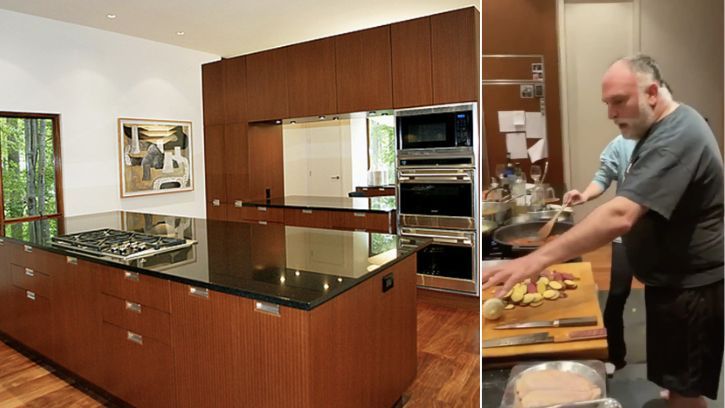
In an era when most new homes in the US and Europe are equipped with induction or glass-ceramic cooktops, renowned chef José Andrés deliberately opts for open-flame gas burners. This choice not only sets his kitchen apart from modern interiors but also highlights his professional approach to cooking. For many food enthusiasts, such a decision might seem unexpected, as gas stoves are gradually giving way to more high-tech solutions. However, for Andrés, fire remains the key tool for creating both flavor and atmosphere.
According to Divinity, the kitchen in José Andrés’s Maryland home is more than just a place for family dinners. Here, spaciousness, modern appliances, and thoughtful functionality come together, but it’s the massive gas ranges that take center stage. Unlike European trends, where induction cooktops have become a symbol of minimalism and easy cleaning, in the US, gas is still closely tied to authentic cooking. For Andrés, it’s not just habit but a principled choice: open flames make it possible to instantly adjust the temperature, which is especially important for complex recipes and working with different ingredients.
Tradition and Technology
In recent years, Spain and other European countries have seen a widespread shift to electric stoves. The reasons are clear: safety, energy efficiency, and easy maintenance. However, for professional chefs who are used to controlling every stage of cooking, such changes don’t always seem justified. Gas stoves allow the use of any cookware, enable quick temperature changes, and make it possible to use techniques that become more complicated or even impossible with induction or glass-ceramic surfaces. For instance, high-heat searing or flambéing specifically require an open flame.
In Andrés’s home, the kitchen has become not just a workspace, but a space for creativity. Here, he films videos, shares recipes, and demonstrates how traditional techniques can blend with a modern lifestyle. The open flame is more than a tool — it’s a visual element that helps create the warmth and authenticity of a true home kitchen. For many followers on his social networks, this very detail symbolizes authenticity and respect for Spanish roots.
The Culture of Fire
In the US, gas stoves remain the standard in most private homes, especially in regions where natural gas is accessible and affordable. The cultural bond between fire and cooking is strong here: many believe that achieving the right texture and flavor is only possible with a flame. In professional kitchens, gas burners are essential, and many chefs refuse to give them up even at home. For José Andrés, it’s not just about convenience—it’s part of his philosophy: cooking should come from the heart, and fire helps you connect with the process on an intuitive level.
The sensory aspect also matters. The visible blue flame provides the cook with instant visual feedback, enabling quick adjustments and a sense of control. For those who grew up in Spain and are used to traditional kitchens, this experience becomes part of their professional identity. Even surrounded by state-of-the-art gadgets and modern design, fire remains the vital link between past and present.
Spanish roots in an American home
Choosing a gas stove in Andrés’ home is more than just nostalgia for his homeland. It’s a conscious decision that reflects respect for the craft and a desire to maintain a connection with Spanish gastronomic tradition. While the market sets new standards and environmental concerns push for electric alternatives, such examples are becoming increasingly rare. Nevertheless, for many professionals, fire remains the true symbol of the kitchen—where not only technology matters, but also the passion invested in every dish.
José Andrés is one of Spain’s most renowned chefs, who has built a successful career in the United States. He not only owns a network of restaurants but is also deeply involved in charity work, helping people around the world through his organization World Central Kitchen. His approach to cooking blends respect for tradition with openness to innovation, and his personal choice of a gas stove highlights his commitment to professional principles and his Spanish roots.