In the northeastern part of the Arabian Desert, scientists have discovered unique evidence of ancient human presence. During extensive research, an international team of archaeologists and paleontologists found hundreds of stone tools, as well as animal bones belonging to species that lived here thousands of years ago. These findings offer new insights into the history of human settlement on the Arabian Peninsula and help us understand how the region’s climate and ecosystems have changed over the centuries.
It was previously believed that the interior areas between Qatar and Kuwait were almost uninhabitable due to harsh conditions. However, new evidence shows that during certain periods, the climate here became milder and the desert transformed into a landscape of lakes, rivers, and savannas. It was during these ‘green windows’ that ancient humans could cross these territories, following herds of animals.
First discoveries
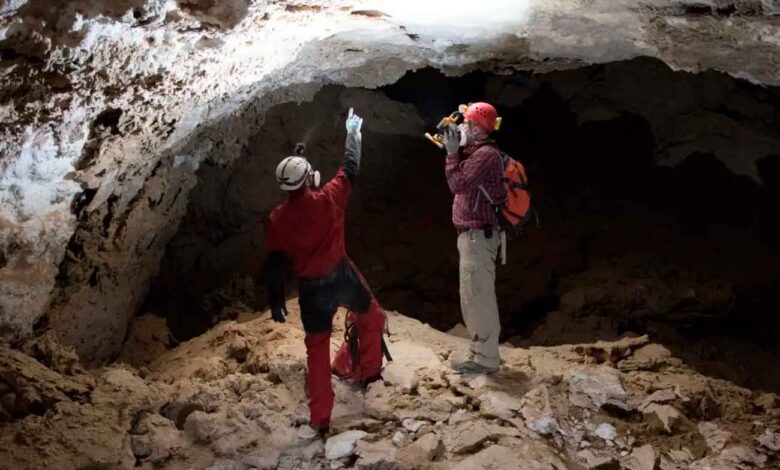
Most archaeological research in Arabia had previously focused on the coasts and southern parts of the peninsula. The interior regions remained largely unexplored for a long time. The team led by Huw Groucutt of the University of Malta set out to fill this gap, focusing their efforts on the northeast of the region. Here, researchers surveyed 79 caves and the surrounding areas, paying special attention to places where flint surfaces.
Flint was a crucial material for making tools. Its deposits, accessible right at the surface, attracted ancient craftsmen. Caves served not only as shelters but also as unique repositories of archaeological and climate evidence.
Artifacts and bones
In one of the caves, right at the entrance, archaeologists uncovered a cluster of more than 400 stone tools. This distinctive “carpet” of artifacts points to active occupation by hominins—members of the genus Homo and their closest extinct relatives. Inside the caves, bones of various animals were also found: from reptiles and bats to camels, gazelles, hyenas, and wolves. Many of the remains are exceptionally well preserved, helping researchers reconstruct the region’s ancient ecosystems.
Particularly noteworthy were mineral formations called speleothems, which form from water. They hold information about past climates and help determine when the desert became green and habitable.
Dating and chronology
Analysis of the techniques and shapes of the stone tools made it possible to date these finds. It turns out people inhabited these places from 10,000 to 100,000 years ago. Most of the artifacts date to the Middle Paleolithic, but evidence of human presence is also found in more recent layers. This suggests that the interior regions of Arabia were settled multiple times throughout different eras.
Until now, there were no confirmed records of human presence in these parts of the peninsula. The new discoveries fill an important gap in the archaeological record and offer fresh insights into the migration routes of early humans from Africa.
Expert assessment
Groucutt’s team’s work has been highly praised by specialists. Monika Markowska from Northumbria University in the UK noted that, for the first time, a comprehensive picture of the settlement of northeastern Arabia has been achieved. Evolutionary biologist Michael Petraglia from Griffith University in Australia believes that such research brings science closer to understanding how the peninsula’s ecosystems changed and how these changes affected the lives of humans and animals.
According to scientists, further excavations and analysis of findings will help reconstruct the history of human settlement in Arabia with even greater accuracy and shed light on how ancient people adapted to changing environmental conditions.
In case you didn’t know, Hugh Groucutt is a renowned archaeologist and anthropologist specializing in the study of ancient human migrations. His team brings together experts from various countries and universities, enabling comprehensive research at the intersection of archaeology, paleontology, and climatology. Thanks to their work, science continues to gain new insights into humanity’s past and the evolution of Middle Eastern ecosystems.