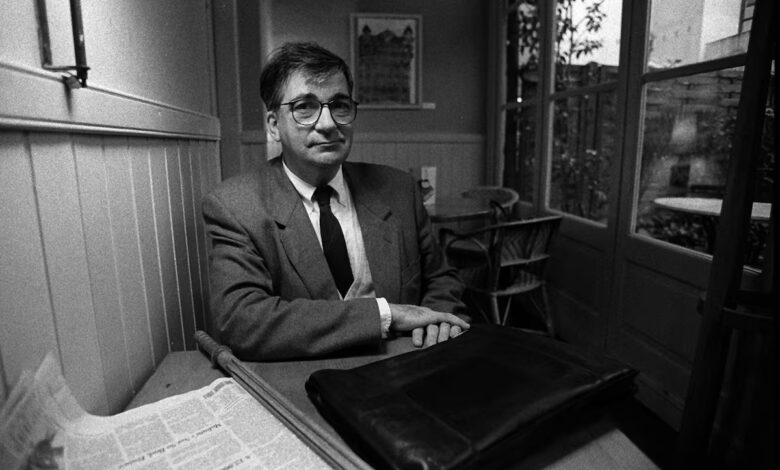
Life Between Barcelona and the Basque Country
On the morning of November 21, 2000, the mayor of San Sebastián, Odón Elorza, began his day discussing new initiatives to promote peace. He called Ernest Lluch, who was in Barcelona, to arrange a meeting. That same evening, tragedy struck—the former Spanish Minister of Health, known for his reforms, was killed by ETA terrorists.
Ernest Lluch, a professor of economic history, frequently visited San Sebastián after stepping down as rector of the Universidad Menéndez Pelayo in Santander. Inspired by his mother’s stories about the city’s beauty, he bought a home there. For him, it became not only a refuge but also a place for scholarly work and reflection.
Lluch quickly became part of the local community. His interest in the culture and politics of the Basque Country (Euskadi) led him to close cooperation with local politicians and public figures. He did not limit himself to academic circles, but actively participated in city life, serving as an unpaid adviser to the mayor’s office and making many friends among prominent anti-Francoists and nationalists.
Contributions to Politics and the Fight for Dialogue
At the university, Lluch worked alongside leading historians and legal scholars, taking part in summer courses that focused on coexistence and federalism. His views were marked by openness and a search for compromise. Lluch believed that ending violence was the main challenge for the region, and he sought to involve nationalists in the constitutional process.
In the late 1990s, as independence sentiments grew stronger in the Basque Country, Luc was actively involved in civic movements, supporting dialogue platforms and advocating for finding common ground. His public appearances sparked heated reactions, especially among radical nationalists who saw him as an outsider interfering in their affairs.
In 1999, during the election campaign in San Sebastián, Luc supported the socialists, provoking a wave of outrage among his opponents. His remarks about the advent of democracy and his call to end violence were widely discussed in the press and became a symbol of hope for change.
The final months and tragic end
After terrorist activity resumed in 2000, Luc felt an increasing sense of danger. He realized he had become a prominent figure and could no longer remain in the shadows. Despite his anxiety, he refused to leave the city, believing that would be a sign of weakness, especially after losing friends to terrorist attacks.
In the summer of 2000, as usual, Luc traveled to the music festival in San Sebastián. Friends noted that he was deeply troubled by the situation. In August, he witnessed yet another act of violence in the city, which only heightened his anxiety. Nevertheless, he continued to participate in political life, supported young leaders, and spoke at public events.
In October, Lluch presented a book about the future of the Basque Country in Madrid, where he was once again confronted with news of new victims of terrorism. His analysis of the situation was precise: he understood that extremists were aiming to push out moderate nationalists and replace them with their own influence.
Legacy and Change After Tragedy
A week after attending a football match in San Sebastián, Lluch was killed in Barcelona. His death sparked mass protests and became a turning point for Spanish society. In Barcelona, thousands took to the streets demanding renewed dialogue and a search for paths to peace.
Under public pressure, political leaders were forced to return to negotiations. Soon, a new pact was signed, becoming an updated version of the agreement on fighting terrorism. This decision accelerated the isolation of extremists and led to their weakening, marking the beginning of a new chapter in the history of the Basque Country.
Ernest Lluch is remembered as a man who was not afraid to go against the current, who fought for peace and believed in the power of dialogue. His life and tragic death became symbols of change and hope for many Spaniards.