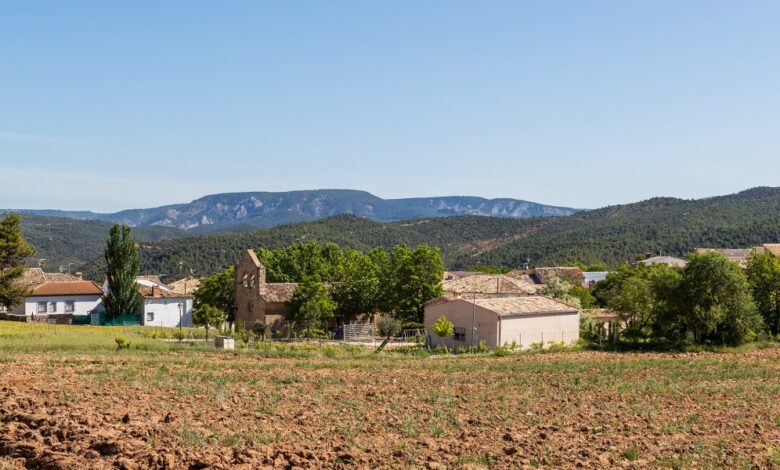
The issue of rural depopulation, known as the ‘Empty Spain’ phenomenon, affects many regions across the country, and the province of Cuenca is no exception. Among its hundreds of municipalities, one stands out for its unique fate. This tiny village has seen its population dwindle to a bare minimum, making it the least populated settlement in the province. Nestled in the heart of the Alcarria Conquense region, on the banks of the Río Vindel, it preserves the stories of generations past.
This is Arandilla del Arroyo, where, according to the latest data from the National Institute of Statistics for 2024, only 14 people are officially registered—seven men and seven women. While life bustles in Madrid, Barcelona, and Valencia, here silence reigns, broken only by birdsong and the rustling of leaves. This community stands as a living monument to the demographic crisis gripping Spain’s interior. Most of its residents are over 70, and you won’t find any young people here.
Portrait of a vanishing village
Arandilla del Arroyo is located about 74 kilometers from the provincial capital, Cuenca. Surrounded by picturesque landscapes, the village offers its few residents a peaceful, unhurried life far removed from the bustle of big cities. Here, time seems to pass more slowly. The streets are empty, and many houses have long been abandoned—their windows looking out at the world in silent reproach. The stone walls of old buildings preserve the memory of times when life thrived here, children were born, and laughter echoed through the air.
Today’s reality is one of silence and solitude. For those seeking refuge from urban noise and stress, this place might seem like paradise. Yet behind this idyllic scene lie real challenges: the absence of shops, medical facilities, and other basic services that are part of everyday city life. Living here is a daily choice in favor of nature and tranquility, but also a sacrifice of many modern conveniences.
Echoes of the Past: When Life Thrived Here
The history of Arandilla del Arroyo goes back centuries. In the 17th century, this land produced the renowned Baroque artist Pedro Ruiz González. During the 19th century, it was a small yet quite self-sufficient rural hub. The village had around forty houses, a functioning parish church, and even its own primary school. The local economy depended entirely on agriculture: residents grew wheat, produced wine, kept bees, and cultivated hemp.
Interestingly, until 1916 the municipality was simply called Arandilla. The ‘del Arroyo’ addition (meaning ‘by the stream’) was introduced to avoid confusion with other places of the same name in Spain. Throughout the 19th and early 20th centuries, the population remained stable at around 200 residents. The turning point came in the 1960s. Industrialization and the search for better prospects in larger cities like Sevilla or even the regional capital Toledo, led to a mass exodus. In just a decade, the village lost more than half its inhabitants, and from there the process could not be reversed.
The Reality of Life: Pros and Cons of Seclusion
Living in Arandilla-del-Arroyo today means enjoying nearly untouched nature and a sense of harmony. Everyday life follows a slow, steady rhythm, and neighbors—who are few enough to count on your fingers—know each other by sight and form one big family. Here, quality of life is measured not by the number of available services, but by direct contact with nature, clean air, and the preservation of centuries-old traditions.
Despite its limited infrastructure, the village is not completely cut off from the world. Cuenca or Guadalajara can be reached by car in about an hour, offering residents access to all the comforts of modern civilization. This proximity to major centers allows locals to combine a secluded lifestyle with the option to make use of urban services when needed. Arandilla del Arroyo continues to exist—albeit at its own unique pace—remaining a silent witness to the significant changes taking place in Spanish society.