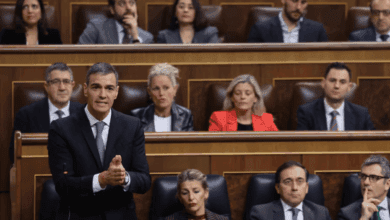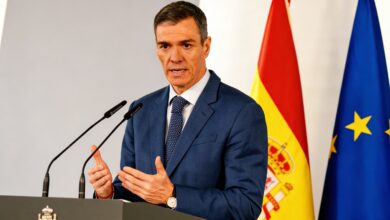
The issue of transferring the IRPF (Personal Income Tax) has become a key factor for Catalonia’s future budget. The outcome of the negotiations between Esquerra Republicana (ERC) and the Socialists (PSC) will affect not only the region’s financial stability, but also the balance of relations between Barcelona and Madrid. For Catalonia’s residents, this could mean changes in tax distribution and the management of regional finances.
According to El Pais, the government led by Salvador Illa has presented the draft budget despite lacking the required support. Without ERC’s approval, the document cannot be adopted. Republican representative Isaac Albert stated that the party is preparing an amendment that fully rejects the proposed accounts, but also does not rule out further negotiations. The main goal is to achieve real progress in transferring the IRPF in favor of Catalonia.
Negotiations and disagreements
Meanwhile, in Madrid, Deputy Prime Minister María Jesús Montero has indicated that there is still no agreement on the IRPF. She emphasized that talks are ongoing and compared the situation to previous disputes over the autonomous financing model. Montero expressed hope that the parties can reach a compromise if they move away from extreme positions and remain open to dialogue.
ERC insists it is not asking for anything beyond what was already agreed upon during the investiture of Illa and confirmed at the bilateral commission in summer 2025. According to Albert, the real test for the Socialists will come at the upcoming meeting of the Fiscal and Financial Policy Council, where the new regional financing scheme will be discussed. If Catalonia supports the changes, the majority will be secured.
Possible scenarios
The date of the key meeting has not yet been set, but it is expected to take place before summer. ERC emphasizes its openness to dialogue and does not rule out compromise. However, the party plans to introduce an amendment completely rejecting Illa’s budget proposals if it does not see concrete progress on IRPF. At the same time, consultations continue with the Socialists about possibly postponing the vote on contentious issues by a week.
Deputy Prime Minister Montero, commenting on the situation, noted that the experience of developing the regional financing model could also help in addressing the issue of IRPF. She called for continued negotiations and avoiding harsh statements that only complicate the search for a solution. ERC believes that the meeting of the Fiscal and Financial Policy Council is an opportunity to take a step towards changing the legislation needed to transfer taxation powers.
Context and consequences
The situation surrounding Catalonia’s budget and the transfer of IRPF reflects a broader conflict between Spain’s regional and central authorities. In recent years, issues of tax autonomy and revenue redistribution have repeatedly sparked intense debates. For example, in 2024, talks over a new financing model for the autonomous communities were also marked by protracted negotiations and threats to block the budget. A compromise was reached at the last moment, allowing the regions to avoid a financial crisis.
In such cases, decisions about taxes and funding often become the subject of political bargaining, with each side seeking the greatest possible concessions. For Catalonia, the ability to independently manage IRPF revenues is not only about money but also a symbolic step toward greater autonomy. As past experience shows, these negotiations are rarely swift or painless, and their outcome affects the whole country.