The emergence of electric cars with extended range has truly challenged conventional ideas about personal transportation. While the charging station infrastructure is developing slowly and long-distance journeys on electric power still raise concerns, these vehicles have the potential to change perceptions of electrification. Their main advantage is the ability to cover hundreds of kilometers without lengthy stops to recharge—a crucial factor for those who frequently travel between cities or are not ready to sacrifice familiar comfort for new technologies.
In China, such cars have already become commonplace, while in Europe—and especially in Spain—they remain a rarity. The reasons lie not only in a conservative attitude toward new technologies, but also in the limited market offering. In recent years, only a handful of models have appeared for sale, quickly vanishing from dealerships. Nonetheless, interest is growing, and more drivers are considering making the switch to these vehicles to avoid being dependent on the whims of charging infrastructure.
Technology and advantages
Unlike traditional electric cars, which rely entirely on a battery, range-extended vehicles use an additional gasoline engine-generator. This engine doesn’t drive the wheels but simply charges the battery when its level drops. Thanks to this approach, the driver enjoys all the advantages of electric propulsion—immediate response, smooth ride, no vibrations—while eliminating the worry of running out of power far from the city.
The system operates on a series hybrid principle: the gasoline engine converts fuel into electricity, which then powers the electric motor. This approach preserves the dynamics and handling typical of electric cars, yet removes limitations on driving range. Notably, such vehicles in Spain are classified as “zero emissions,” which gives them access to various benefits and privileges, including free entry to city centers and tax reductions.
Comparison with other types
Many people mistakenly equate these vehicles with regular electric cars, but the differences are fundamental. The main advantage is independence from scarce charging stations: if the battery runs low, it’s enough to fill the gas tank and continue your journey. This is especially relevant for those living in areas with underdeveloped infrastructure or for drivers frequently traveling long distances.
Unlike hybrids, which can run on both electricity and fuel, range-extended electric vehicles always use an electric motor for propulsion. This ensures consistent performance and predictable handling on the road. However, there are downsides: although fuel consumption is low, it is still present, and the system’s efficiency is below that of pure electric cars. Additionally, these vehicles are more complex and expensive to produce, which affects their price.
Spanish market and new trends
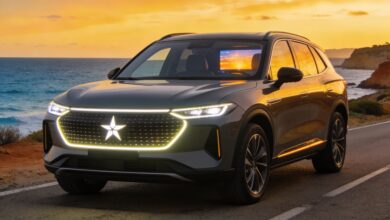
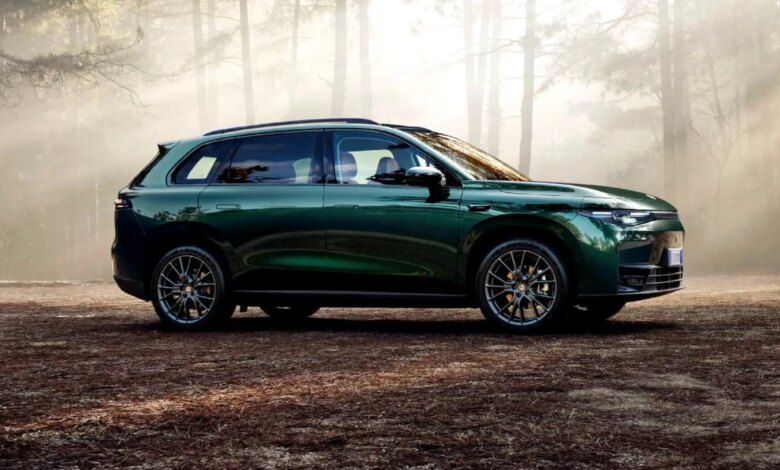
In 2026, the Spanish market offers an extremely limited selection of such vehicles. In fact, the only new model available is the Chinese-made Leapmotor C10 REEV—a midsize crossover with 215 hp, a 28.4 kWh battery, and an electric driving range of up to 145 km. Thanks to a 50-liter fuel tank, the total range reaches 970 km, making it a unique option for those not ready to accept the limitations of pure electric vehicles. Prices start at €29,800, which is quite attractive compared to competitors.
There are virtually no alternatives on the primary market. The secondary market remains the only hope, where it’s still possible to find rare examples of the BMW i3 REX, Opel Ampera, or Mazda MX-30 with range extenders. However, their numbers are rapidly declining as demand grows. Meanwhile, in China, electric vehicles are becoming more affordable and widespread, which is further confirmed by record-breaking electric car sales growth in 2025, where models like the Geely EX2 are already changing the game and challenging European manufacturers.
Future outlook and prospects
While European car manufacturers remain cautious, Chinese brands are actively conquering the market, offering not only affordable prices but also technological solutions that once seemed like science fiction. Spanish buyers are increasingly paying attention to new formats, especially as fuel prices rise and environmental standards tighten. However, the lack of choice and the slow development of infrastructure are holding back the mass adoption of such vehicles.
In the coming years, the situation could change if European manufacturers start offering more models with extended range. For now, buyers have to choose between expensive electric cars, hybrids with limited mileage, and rare offerings from China. For many, this prompts them to consider buying on the secondary market or even to temporarily postpone updating their vehicle fleet.
Leapmotor is a Chinese automotive brand that quickly attracted the attention of European customers thanks to its innovative solutions and affordable prices. The C10 REEV model became one of the first mass-market cars with extended range offered in Spain. The company focuses on simple design, reliability, and adaptation to European requirements, enabling it to compete with established global manufacturers. At a time when traditional brands are in no rush to introduce new formats to the market, Leapmotor is emerging as a symbol of change and technological progress.